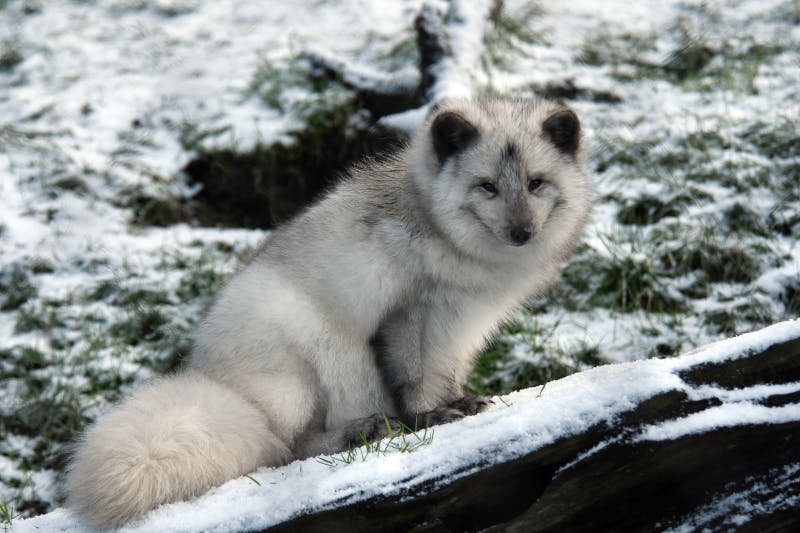
The white of the snow can be seen on the ice-cold tundra. Suddenly, a white figure appears above the plain, diving face-first into the snow. This Arctic fox is a true survivor in the Arctic, travelling kilometres in search of lemmings hiding below the snow. But when summer comes, the fox changes its appearance and no longer stands out among the green and brown. Discover everything about the two sides of the Arctic fox here.
Vulpes lagopus
± 12 years
± 28 centimetres
♀ 50 – 65 centimetres
♂ 55 – 75 centimetres
(excluding tail)
♀ 3.1 – 3.7 kilograms
♂ 3.6 – 4.2 kilograms
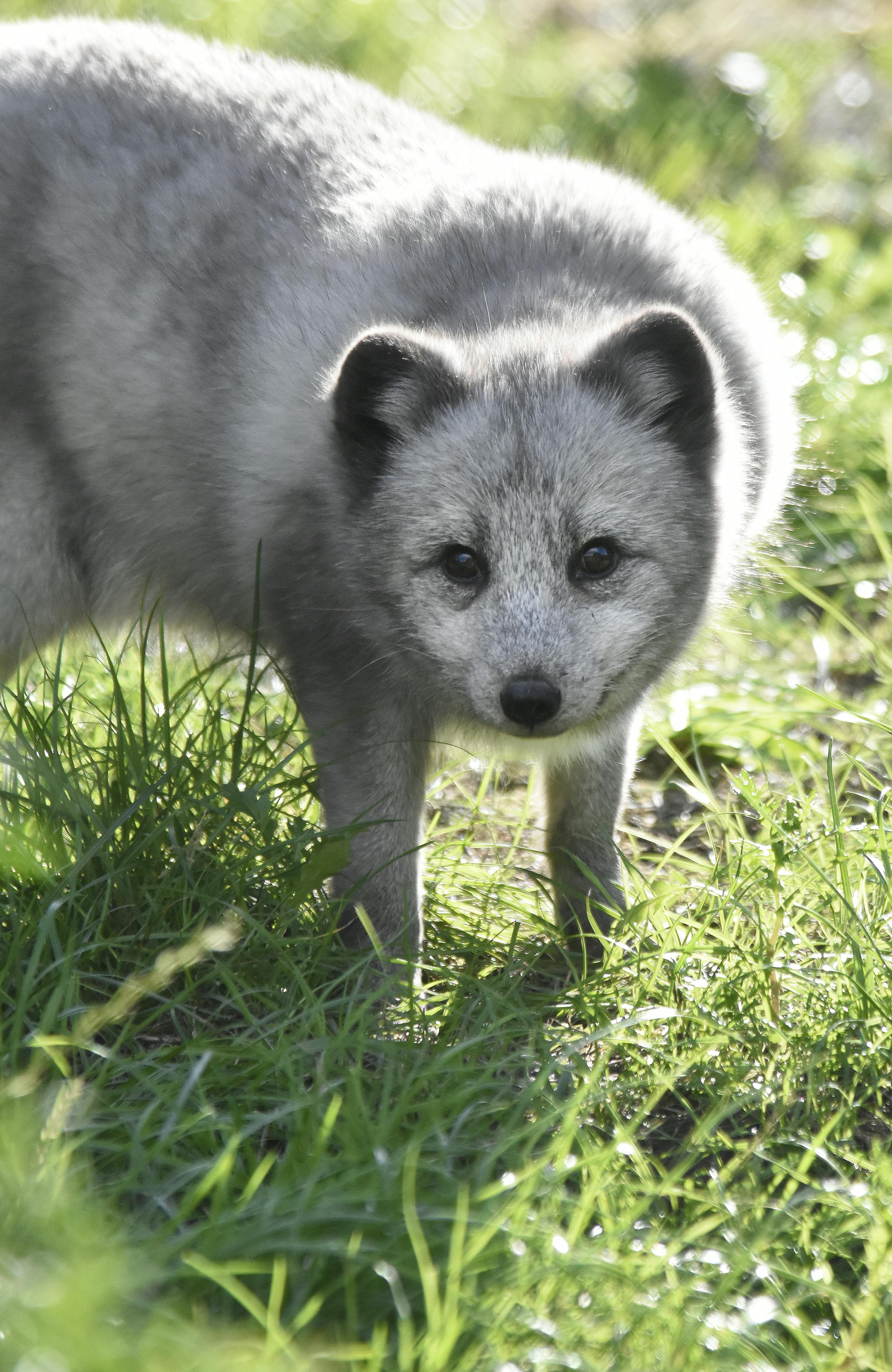
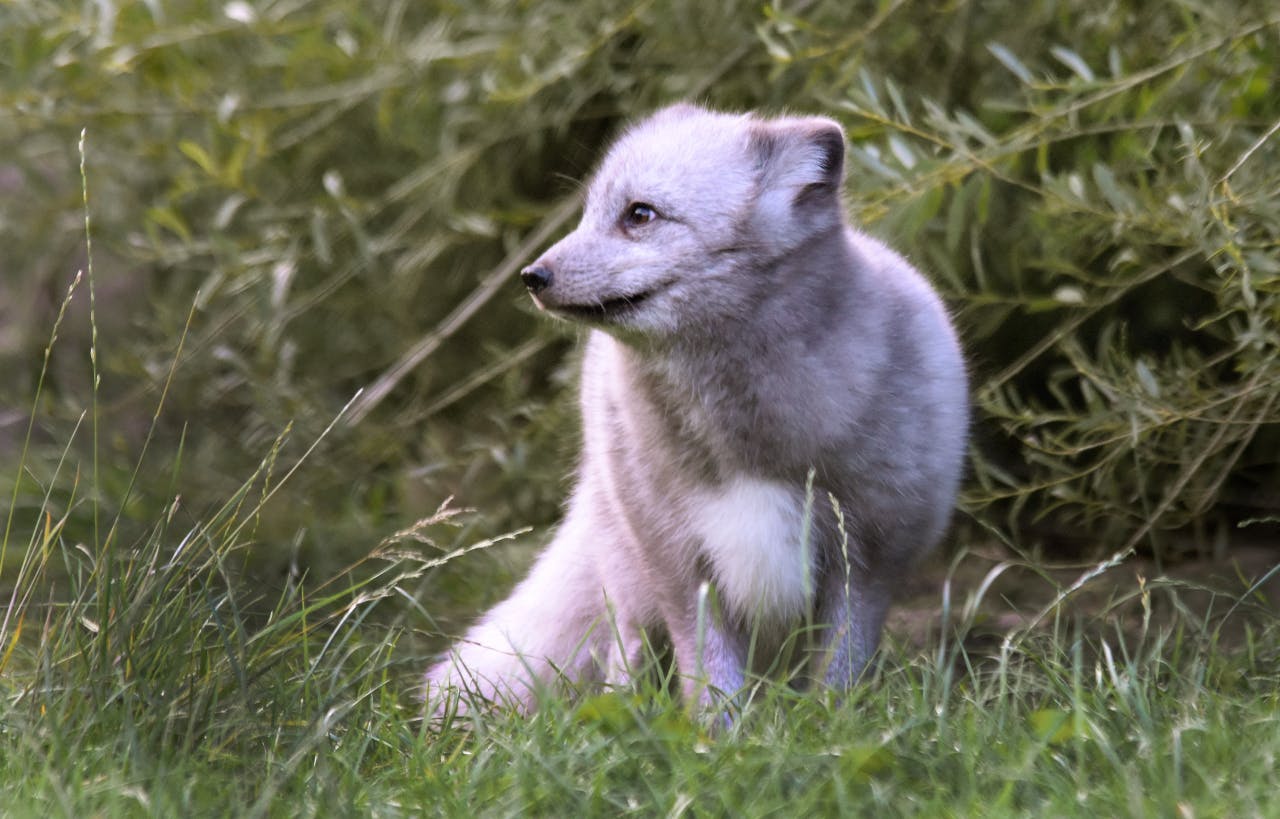
Arctic foxes are small foxes with short legs. Everything about these animals is adapted to the cold conditions in which they naturally live. Their white winter coat is so thick that they can withstand temperatures as low as -70°C! Their summer coat is slightly thinner and greyish brown in colour. Thanks to the colour change, the Arctic fox never stands out too much in its environment.
Arctic foxes also have smaller ears than other foxes. This means they lose less heat. Arctic foxes are therefore almost never cold: they even use their fluffy tails as warm blankets.
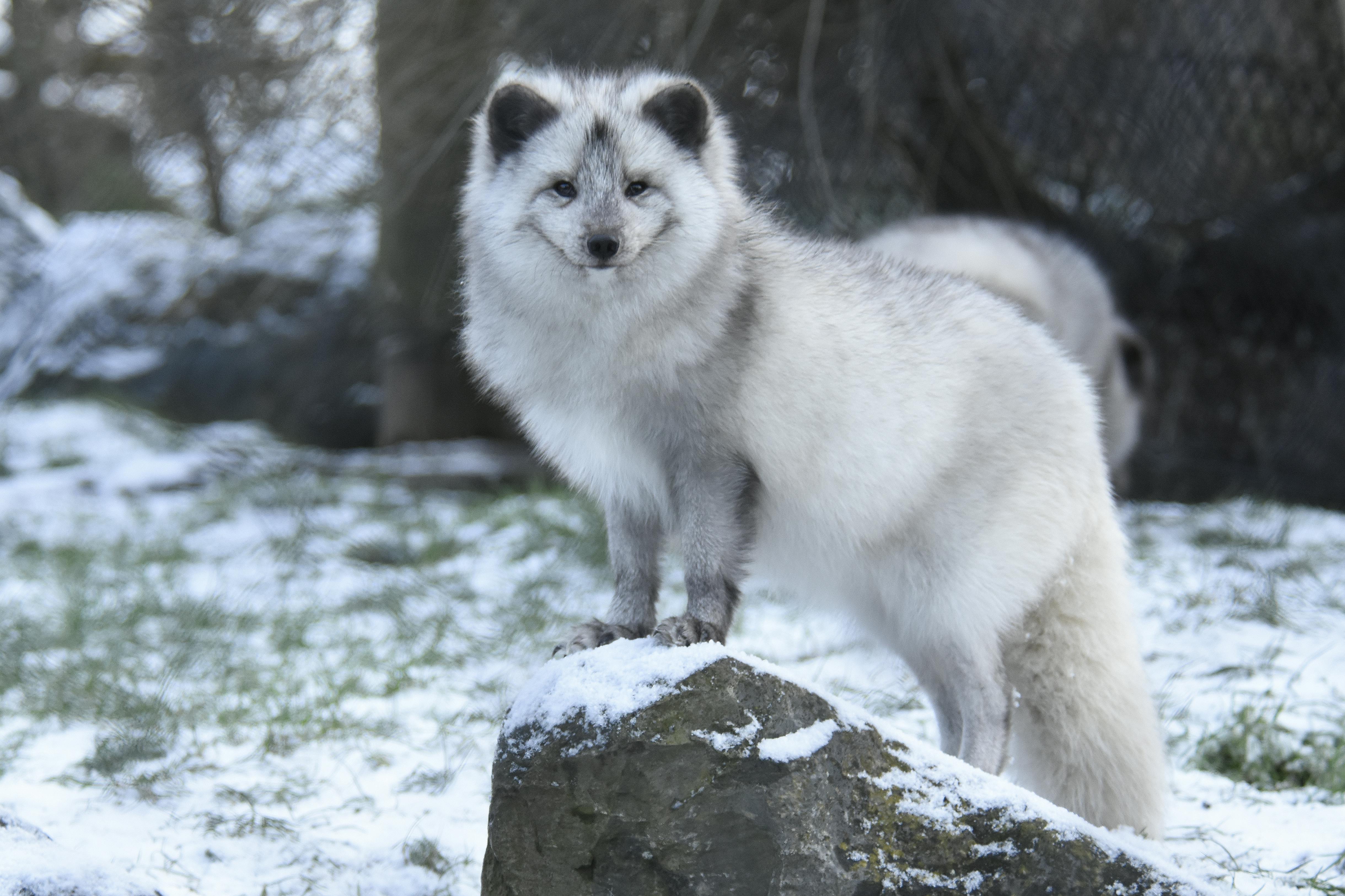
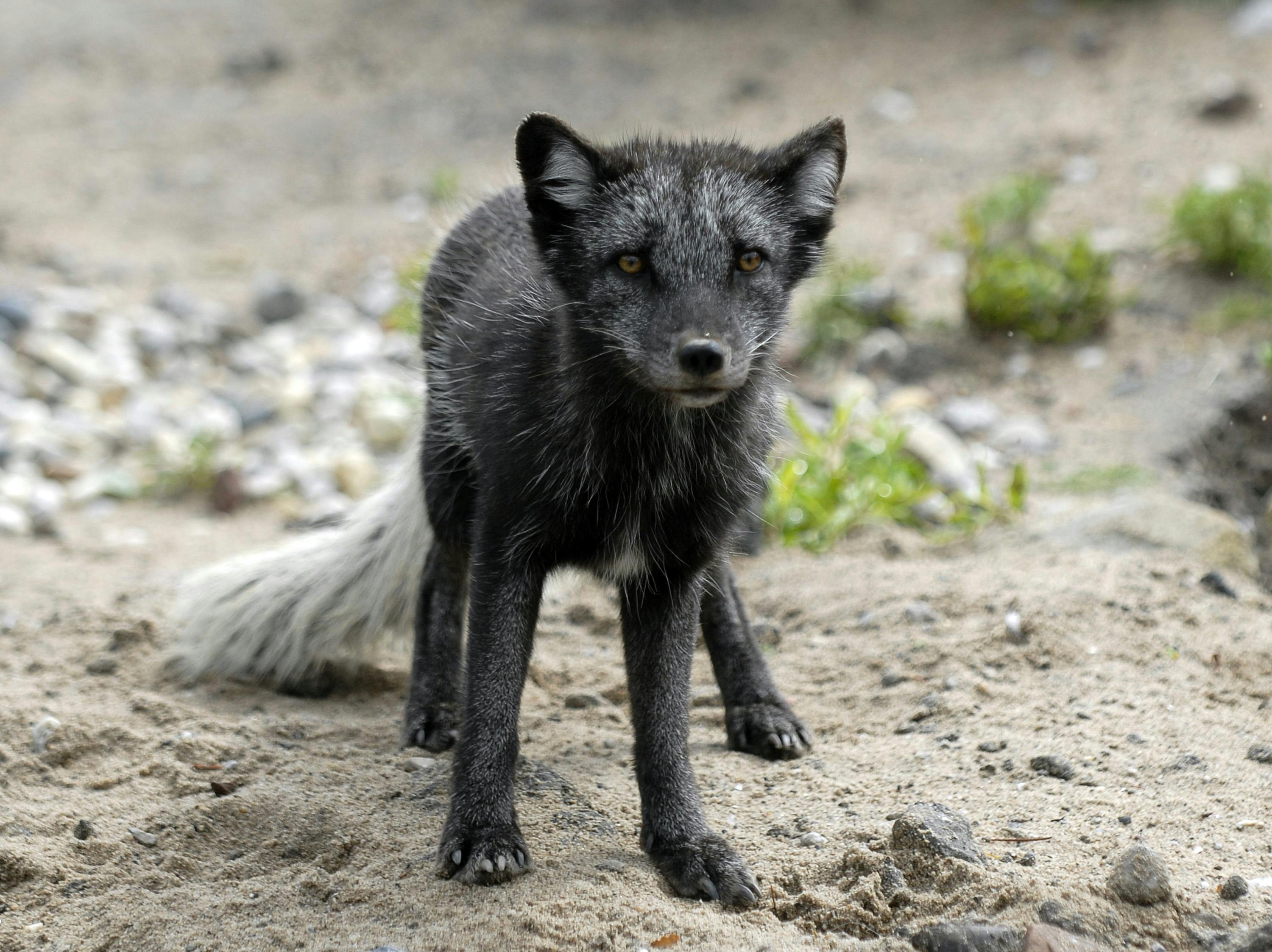
Arctic foxes are found almost everywhere in the Arctic region: from Scandinavia and Russia to Alaska and Canada. They can also be found on most islands in the Arctic Ocean. They mainly live in tundras: open plains with herbs and mosses that are too cold for trees to grow. Arctic foxes sometimes travel long distances across the pack ice in search of food.
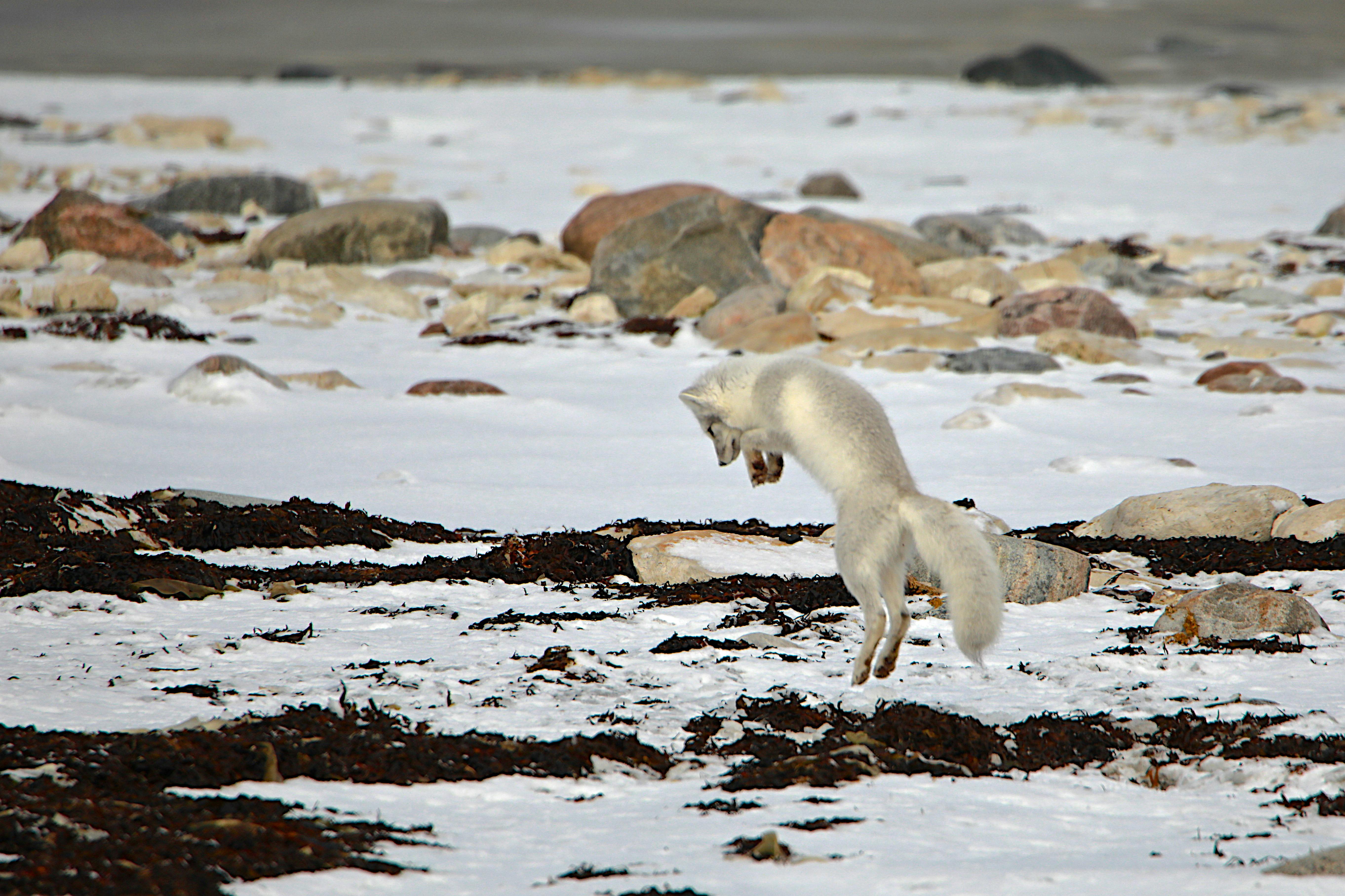
Arctic foxes are very flexible eaters. They have to be, because in the cold of the Arctic, food is not always readily available. They prefer to hunt small rodents, such as lemmings. In winter, these animals often hide in burrows under the snow. Fortunately, the Arctic fox has a keen sense of smell, which it uses to track down even these prey. Once it has found one, it jumps into the air and dives into the snow face-first to grab its prey.
Arctic foxes also feed on seabirds and sometimes rob nests. In addition, an Arctic fox will never leave a dead reindeer, sheep or goat lying around. Arctic foxes are not exclusively carnivores: they also eat berries when they can find them.
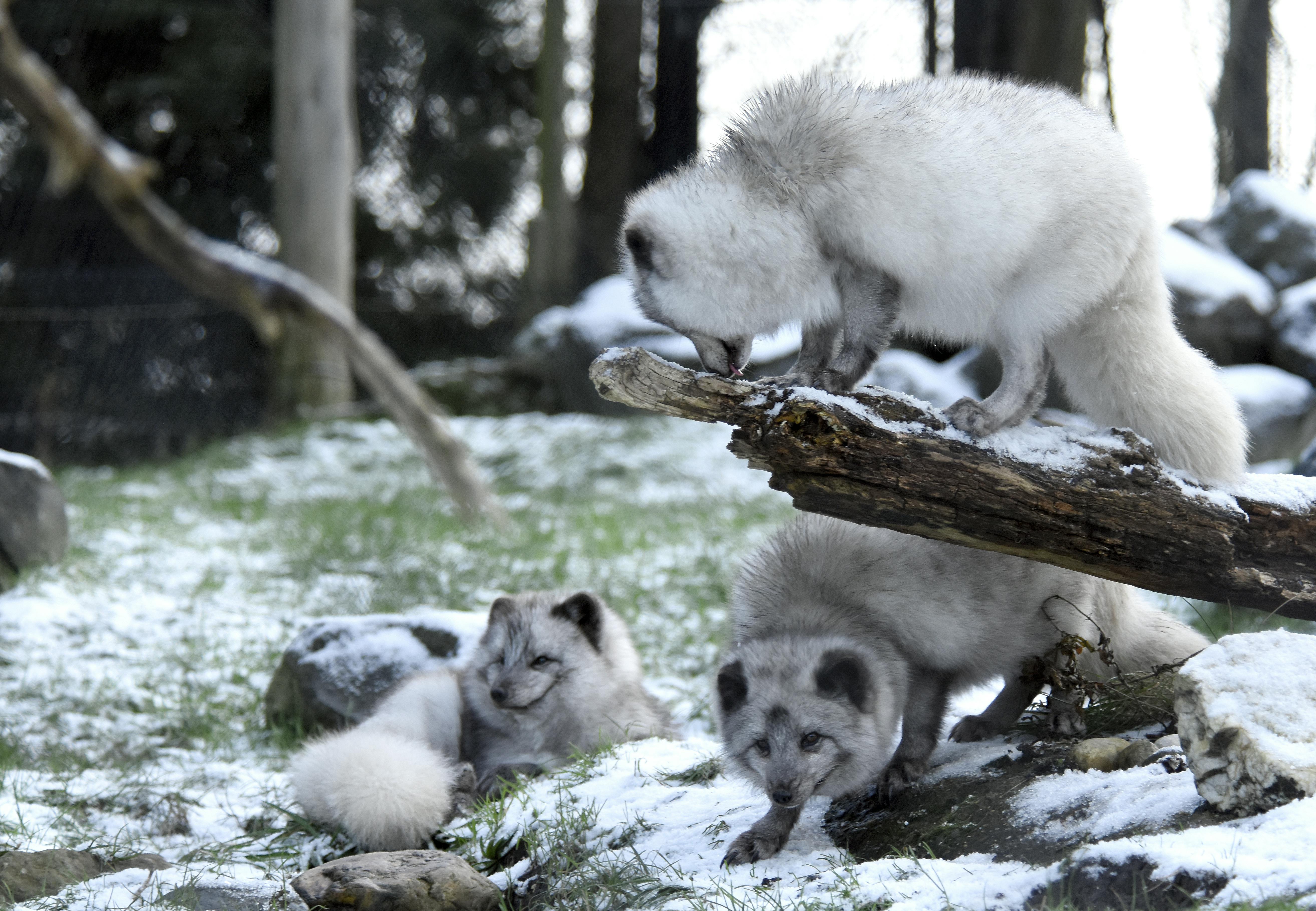
There is a lot of variation in the group compositions of Arctic foxes. Some Arctic foxes roam the cold polar plains alone. Others stay together as a pair, often with their young. There are also areas where several pairs live together in one territory. However, different groups often keep their distance from each other.
Arctic foxes scent mark their territory with urine. If an Arctic fox from another group does intrude, the Arctic fox adopts a threatening posture with its tail held upright.
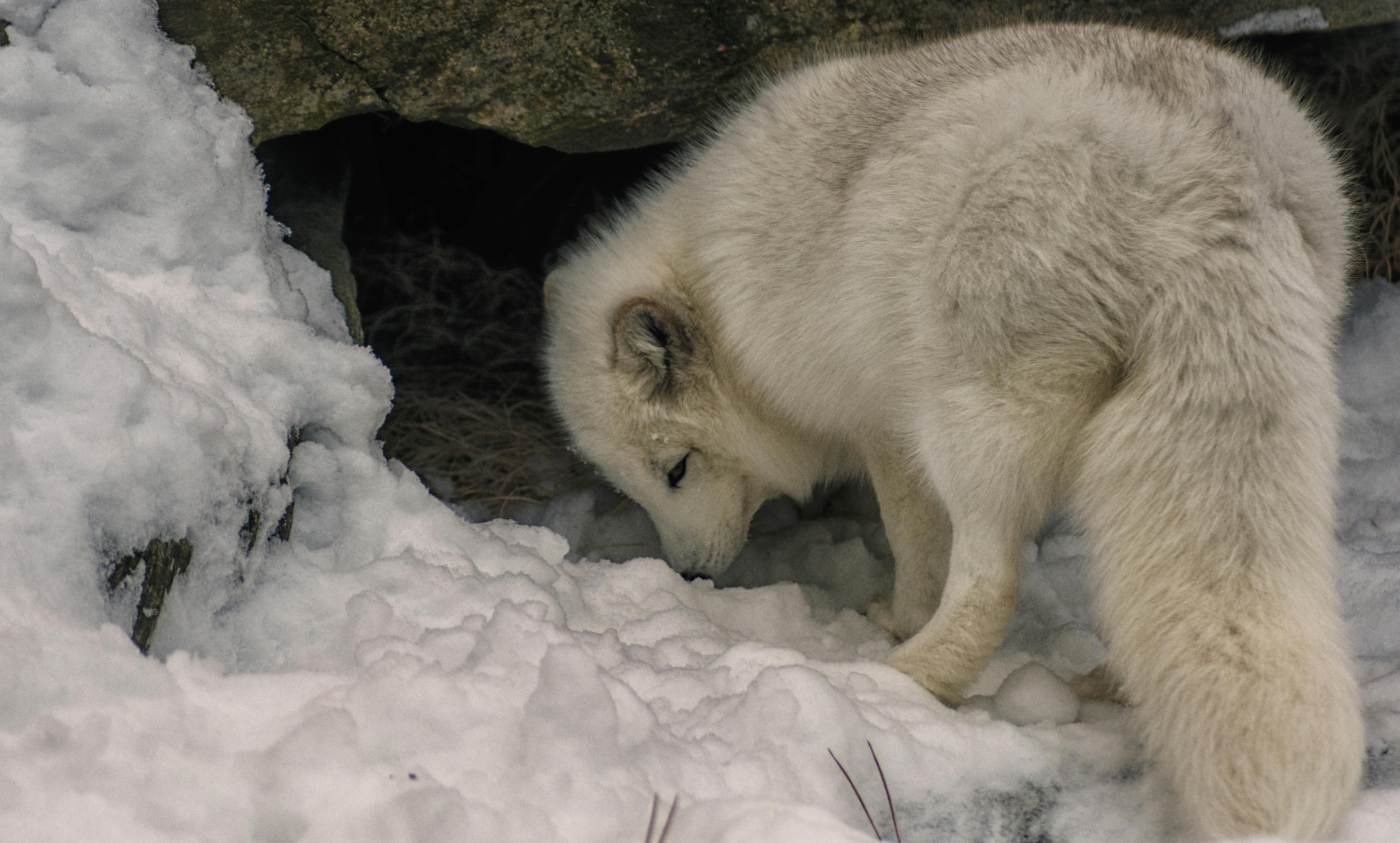
Like practically all canines, Arctic foxes are monogamous animals. Arctic fox pairs usually stay together for life to mate and raise their young. Most Arctic foxes mate between February and May. The two foxes search for a suitable place for a den together, with enough food in the area to raise their young. In Canada, dens were found that are believed to have been in use for 330 years!
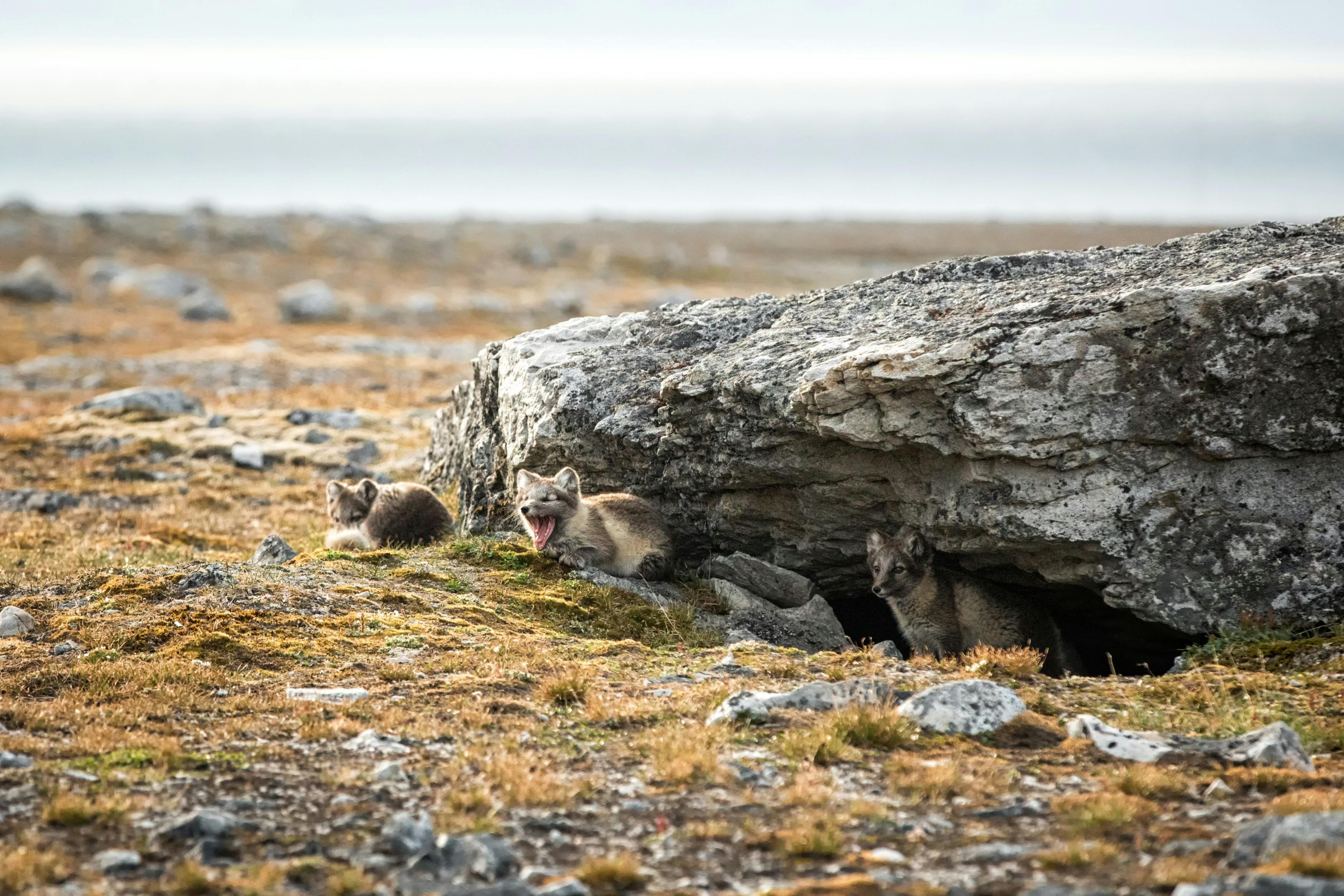
At birth, an Arctic fox pup weighs about 80 grams and is blind and deaf. The mother protects the pups and feeds them milk, while the father goes out in search of food. After two to four weeks, the pups are big enough to leave their den for the first time. The young stop suckling after ten weeks, after which their parents teach them to find food for themselves. Arctic foxes are reach sexual maturity at 10 months, but many young remain close to their parents to help raise new litters instead.

Arctic foxes are small predators that are themselves prey to other animals. Polar bears, arctic wolves, wolverines and birds of prey can all catch an inattentive Arctic fox. Nevertheless, Arctic foxes do follow these large predators from a distance: the carcasses they leave behind after they have eaten make a tasty meal for a hungry Arctic fox. So they keep a close eye out for anything to scavenge!
It is difficult to determine exactly how many Arctic foxes there are in the wild. Experts estimate that there are a few hundred thousand throughout the Arctic region. That number fluctuates slightly depending on the availability of food but seems fairly stable on average.
In some areas, disease or hunting does cause a decline in the number of foxes. The use of pesticides and other poisons can also be dangerous if they end up in the foxes' drinking water. Nevertheless, the Arctic fox is generally less likely to become extinct than many other animals. That is why the Arctic fox is considered “Least Concern”.
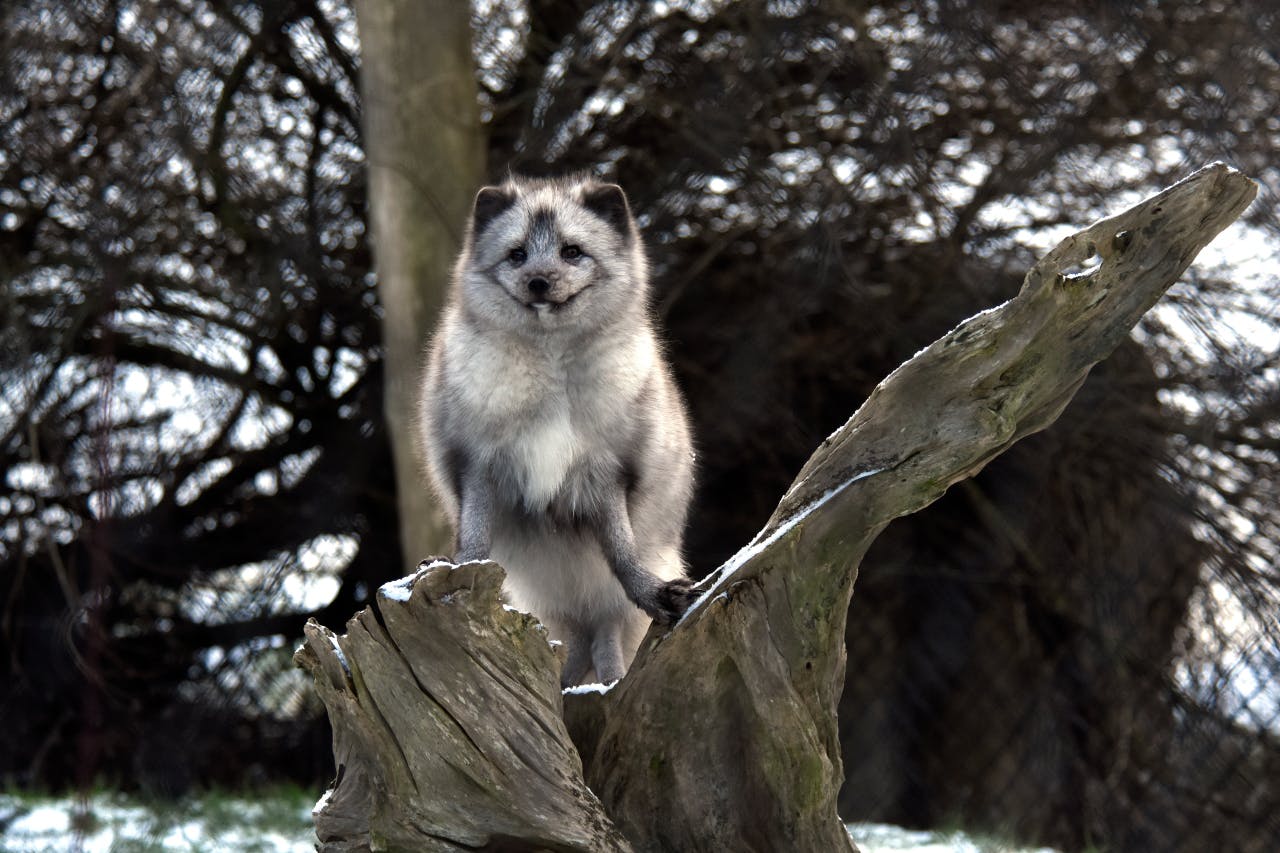
The Arctic foxes at Rotterdam Zoo came from a zoo in Ukraine. They could not stay there because of the war raging in that country. Fortunately, there was room for four of these animals at Rotterdam Zoo. Animal welfare organisations first took them to a zoo in Poland. From there, they were transported to Rotterdam. They have adapted well and can live their lives in safety here.