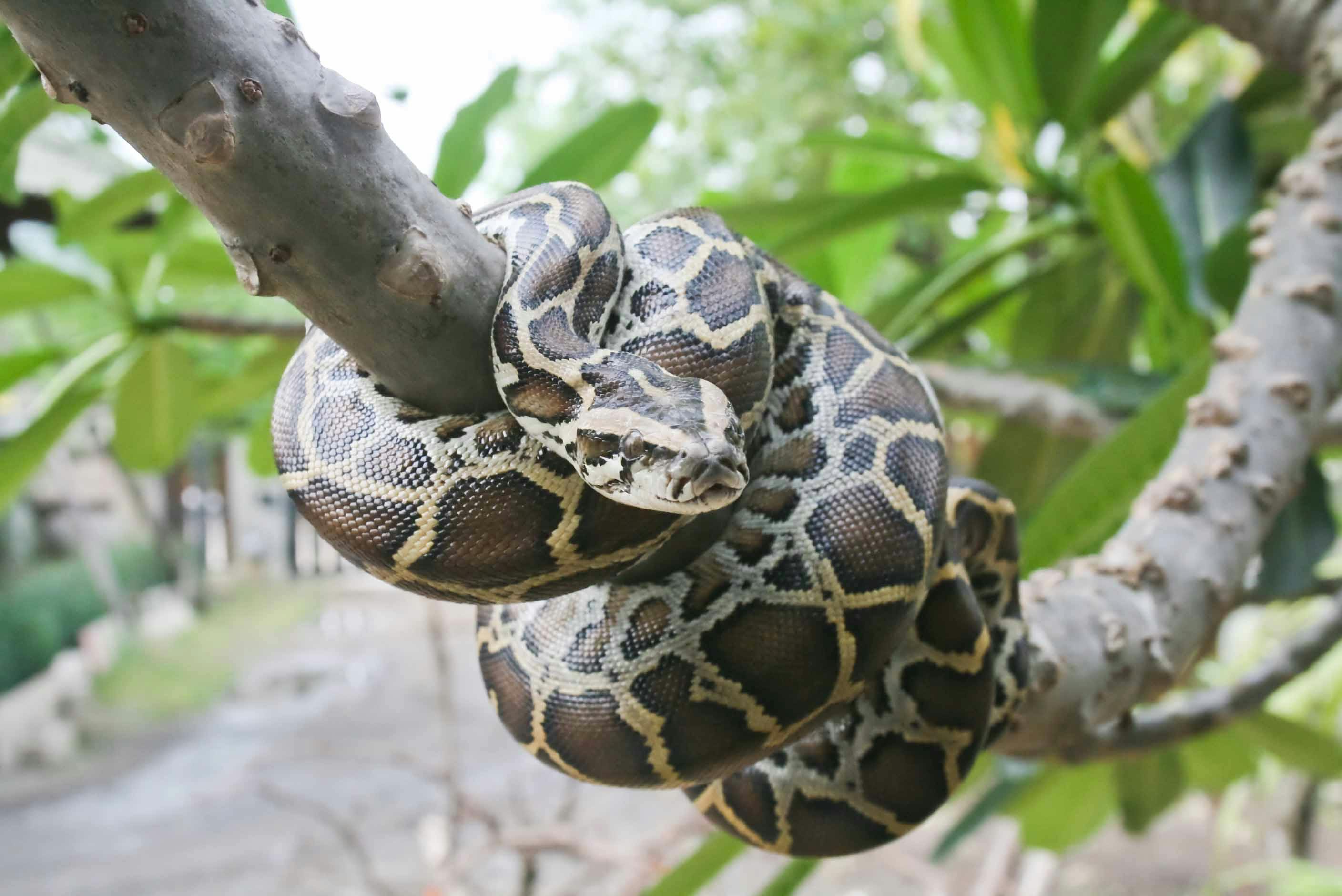
Slithering across the ground, climbing through a tree or swimming through the water, this flexible snake can go anywhere in the Asian rainforest. There, it uses its natural camouflage to lie in wait at night. As a predator, the Burmese python keeps prey populations in check. In this way, it plays an important role in its habitat. Find out more about this remarkable snake here.
Python bivittatus
25 years
4 - 6 metres
175 kilograms
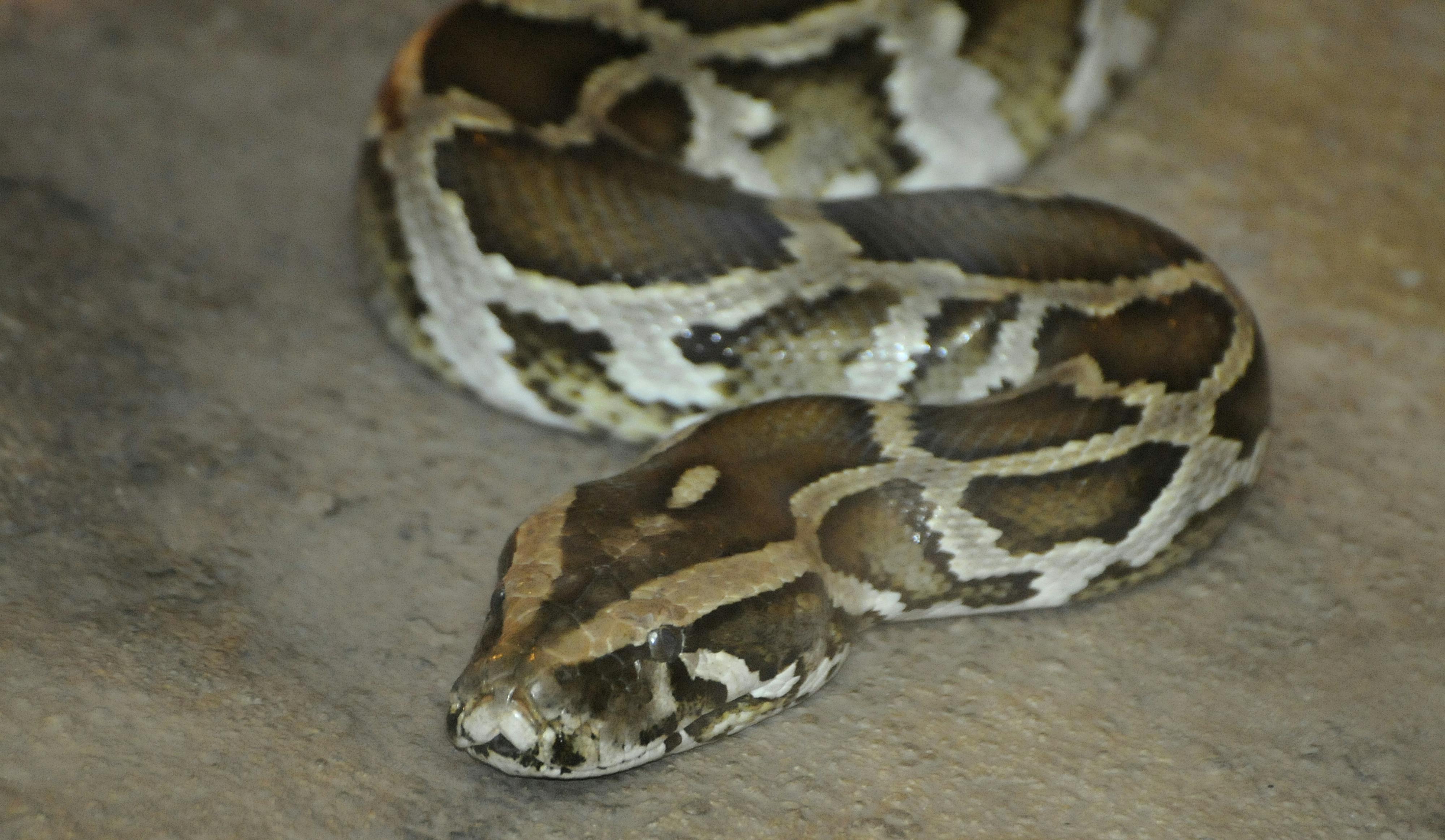
Burmese pythons are among the largest snakes in the world. Their bodies are light brown in colour with dark spots that have black edges. This makes them look similar to the Indian python, but they are slightly longer and darker in colour. Like all pythons, they are non-venomous and hunt their prey using their powerful muscles.
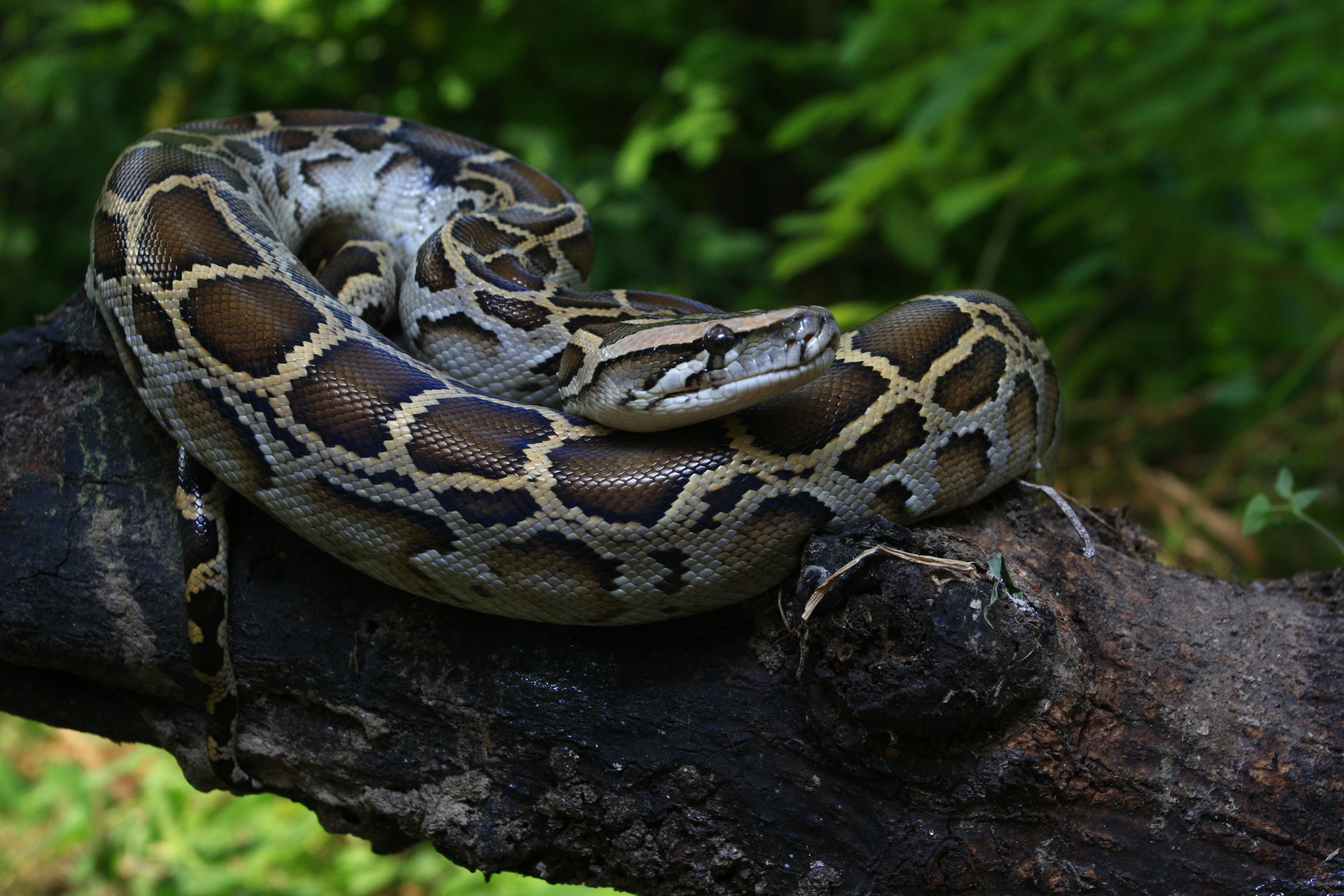
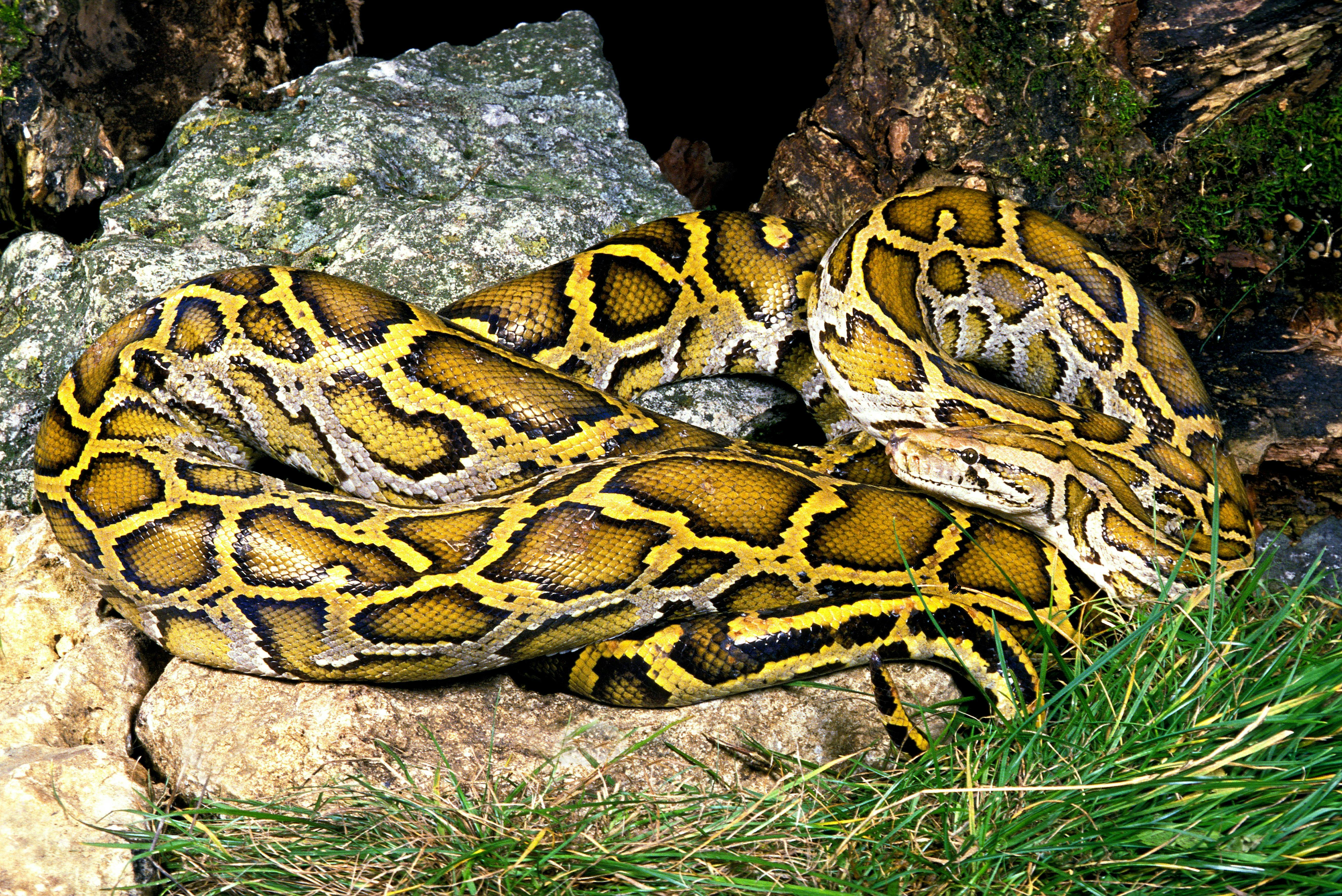
Burmese pythons are found throughout much of Southeast Asia. There they live in many different areas, including forests, swamps and grasslands. However, they prefer to live near water and are good swimmers. They spend most of their time hiding in burrows or dense vegetation.
Burmese pythons have recently also established themselves in Florida. They probably escaped there after a hurricane destroyed a python breeding facility in 1992. They have been able to establish themselves there because Florida is very similar to the Burmese python's native habitat. However, they are doing so well that the animals they eat there have almost completely disappeared.
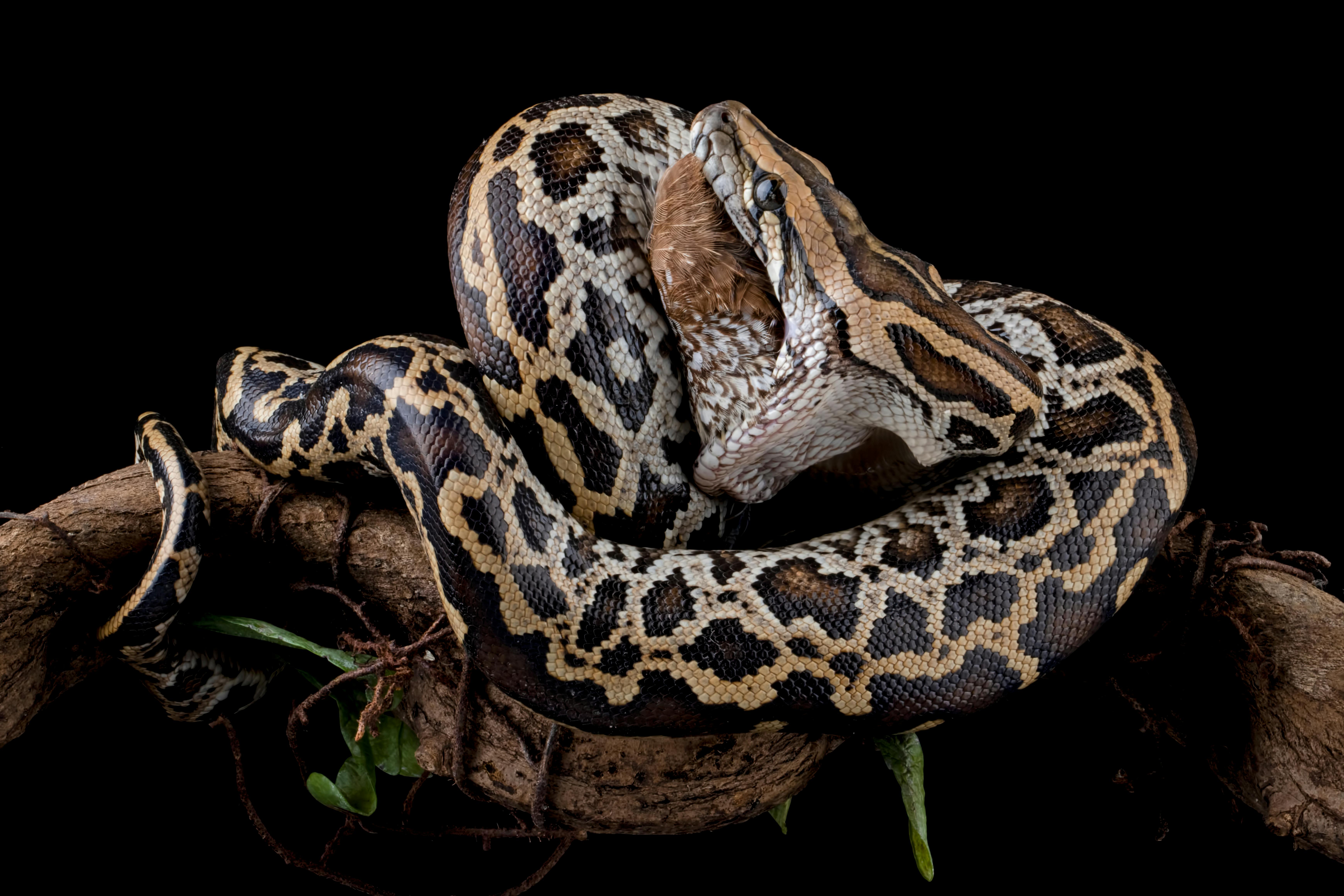
When suitable prey comes too close, the Burmese python shoots towards it at lightning speed and wraps itself around the prey. Once it has succeeded, it uses its powerful muscles to strangle the prey, after which it swallows it whole. Thanks to their stretchable jaws, they can do this even with prey many times larger than their heads.
As the python gets older, it hunts increasingly larger prey. Young snakes mainly eat rodents and small birds, but a fully grown specimen can even swallow a deer. After such a large meal, it can go weeks or even months without eating again.
To mimic this natural situation, the Burmese python at Rotterdam Zoo is fed once a month. Their diet consists mainly of rodents such as rats, rabbits and guinea pigs. Because it's such a big snake, it gets 4 to 6 at a time!
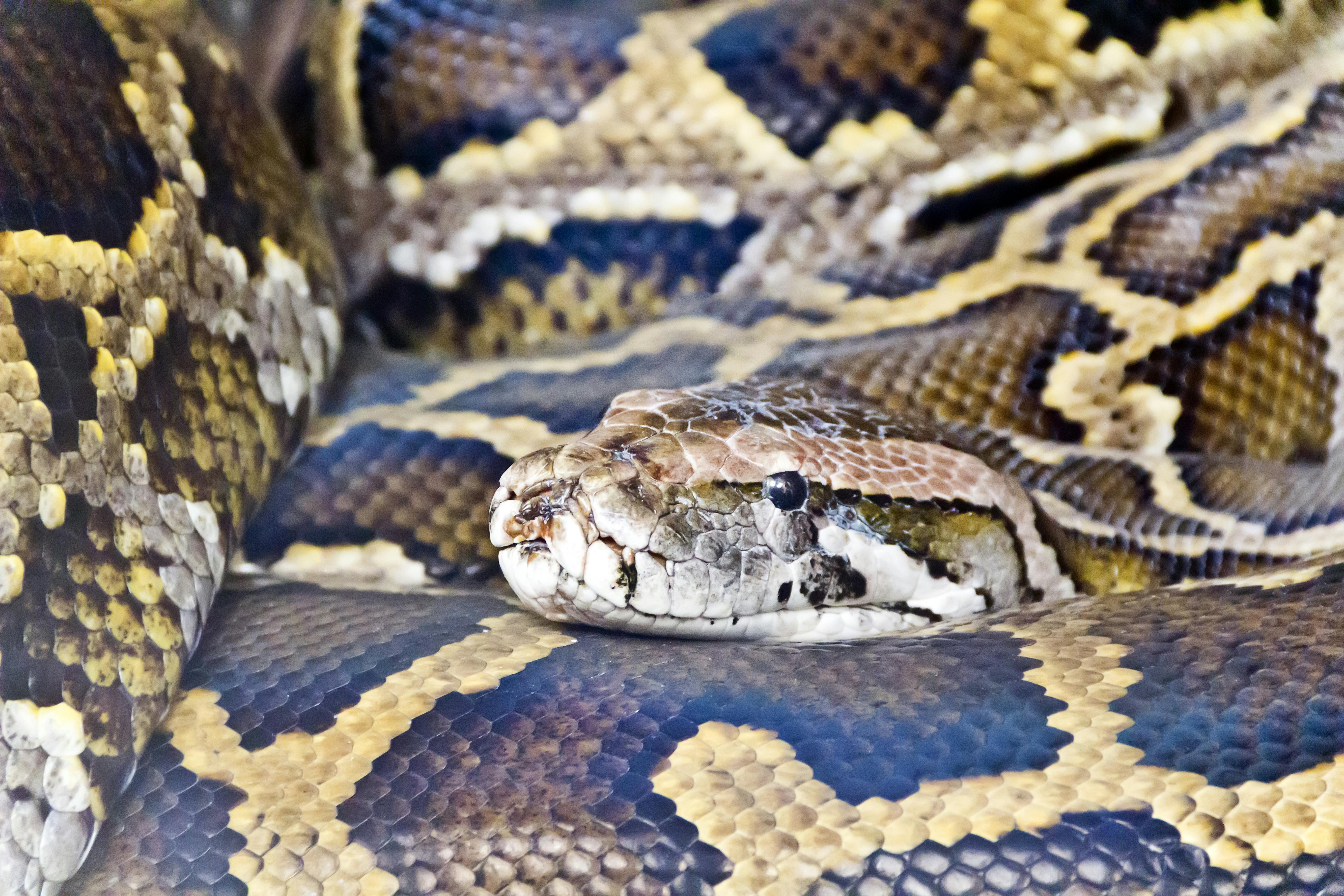
Burmese pythons are solitary animals and only come together to mate. They are territorial animals and will drive each other away if they do encounter each other. In extreme cases, one of the pythons may eat the other during such a conflict.
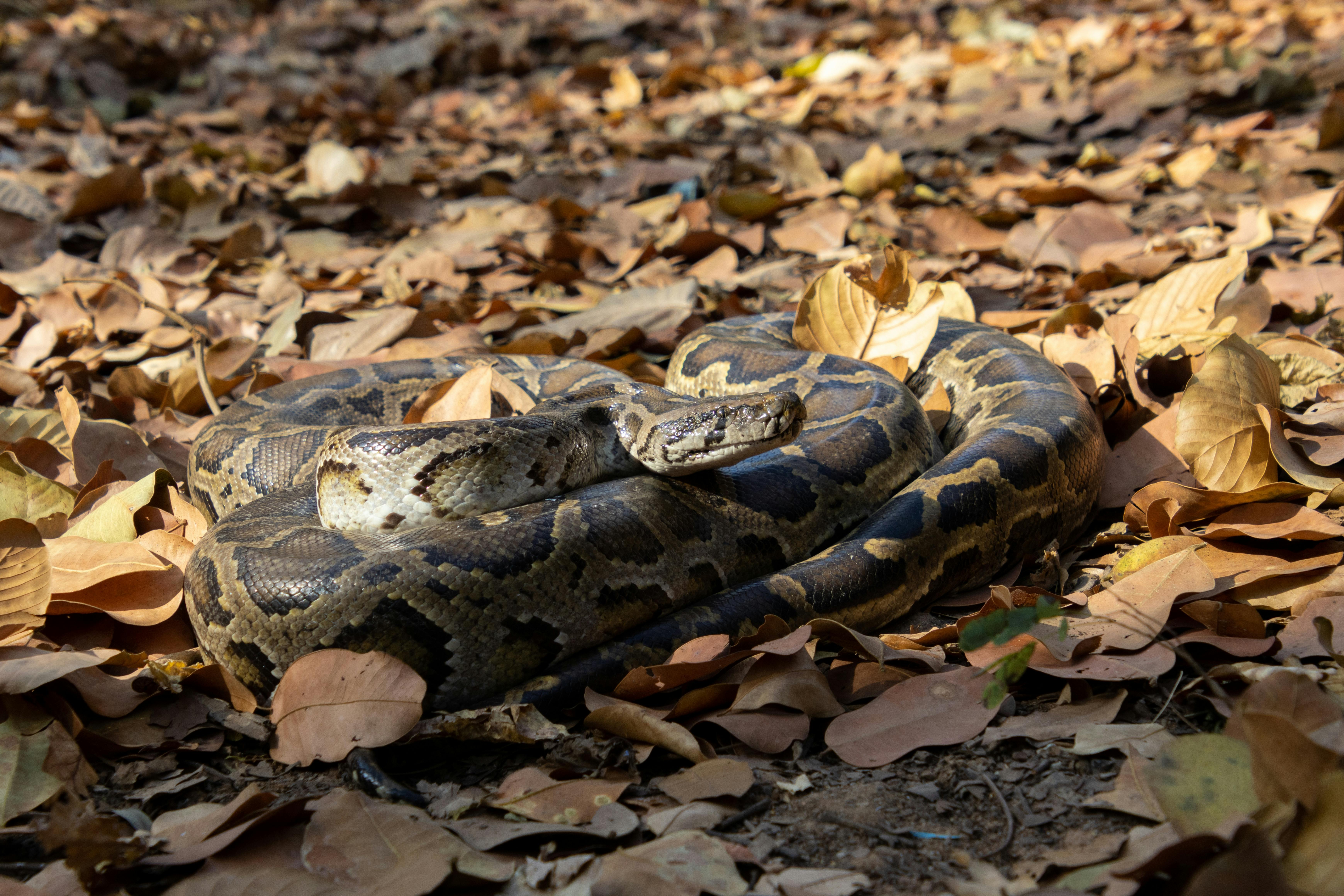
Burmese pythons mate at the beginning of the year. The female will then leave a scent trail. When a male finds this trail, he follows it to the female. Once the male has found the female, they wrap themselves around each other to mate.
In rare cases, females can also lay eggs without mating with a male. The young that hatch from these eggs will be identical to their mother.
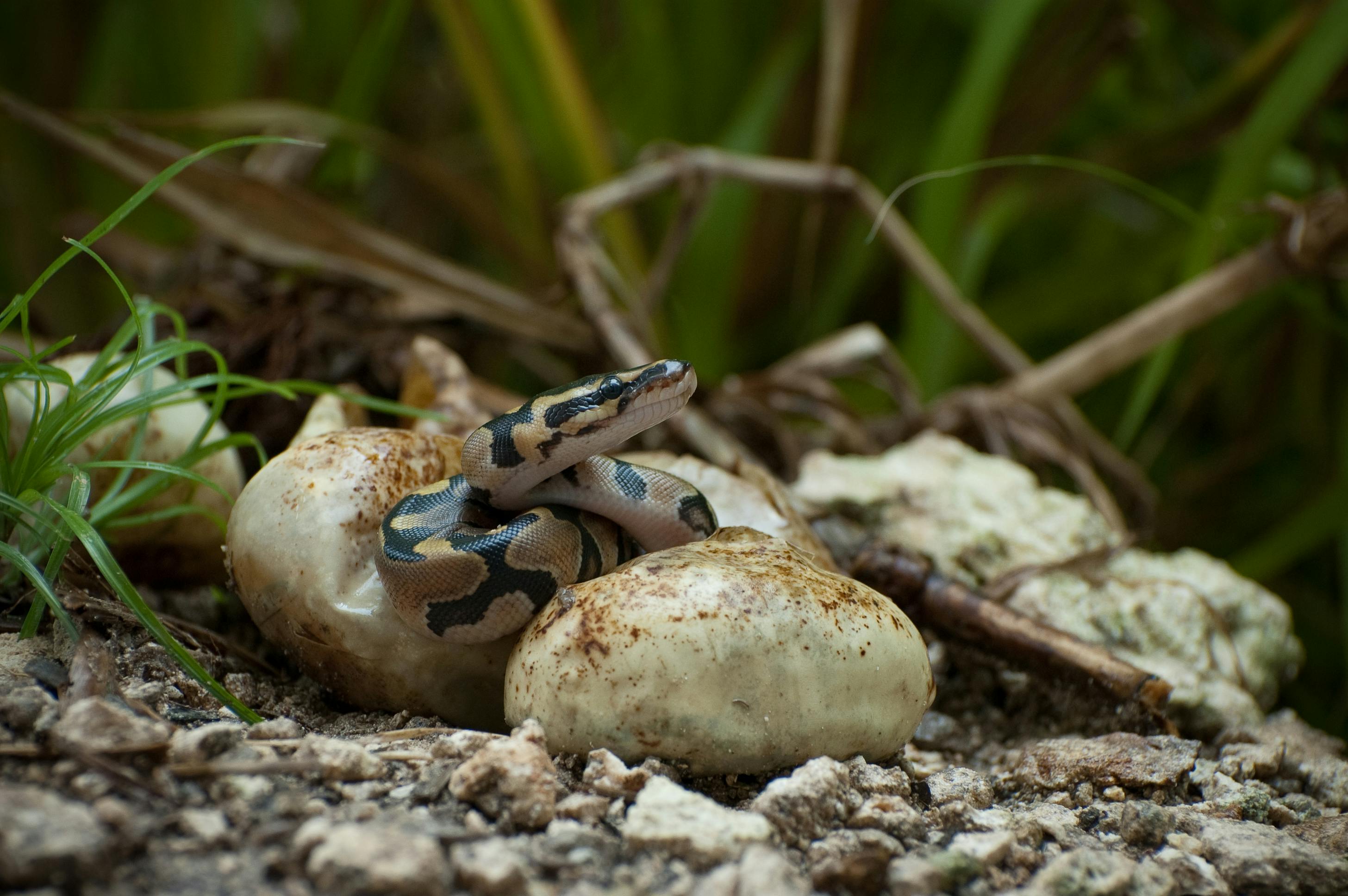
Once the mother has laid her eggs, the Burmese python is one of the only snakes that cares for her eggs. She does this by wrapping herself around the eggs and vibrating. This produces heat, keeping the eggs at a stable temperature. After the eggs have hatched, the mother does not continue to care for her young, who are immediately left to fend for themselves.
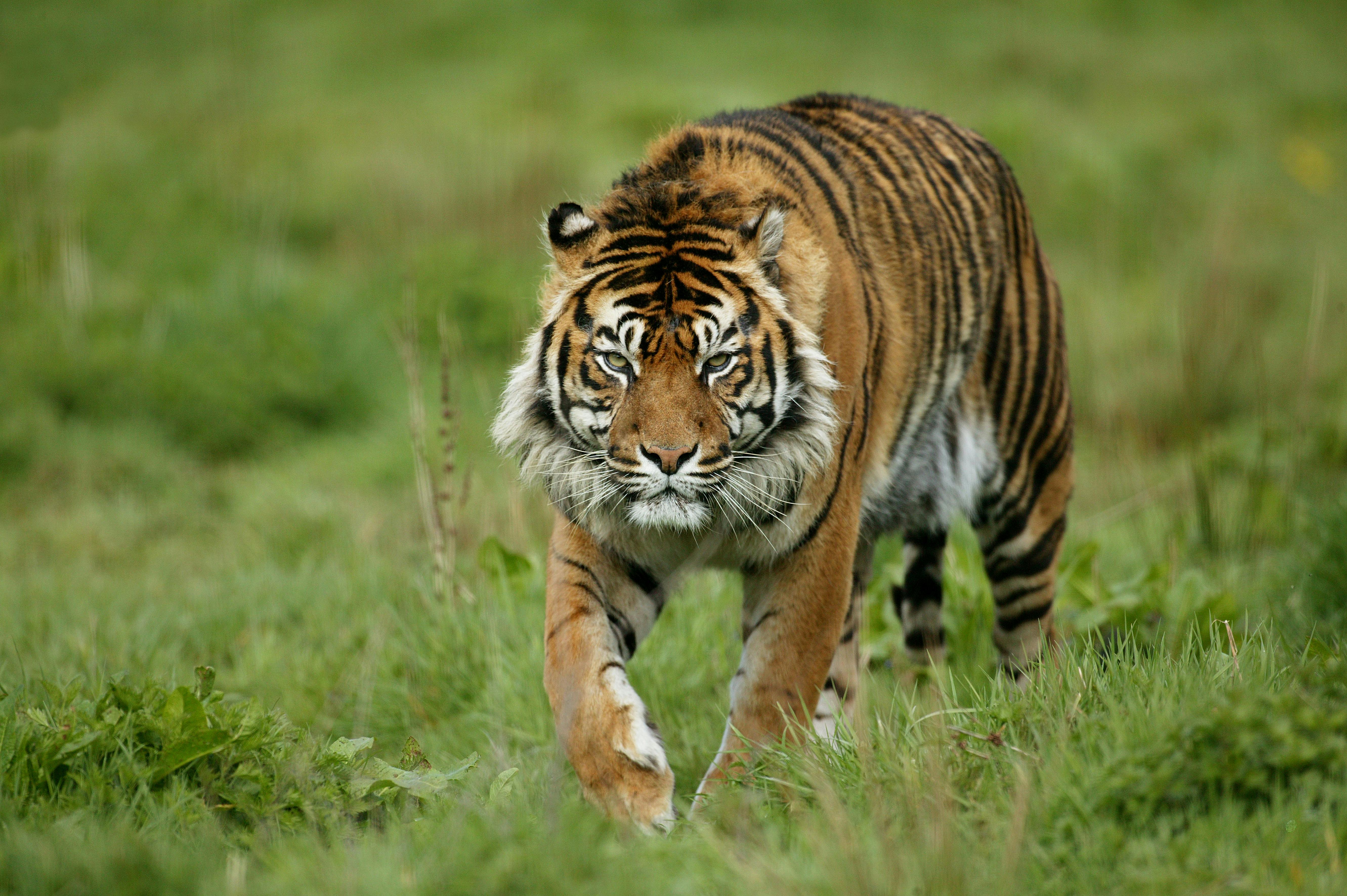
When Burmese pythons are fully grown, they are mostly safe from other predators. Occasionally, they are hunted by large felines such as tigers and, to a lesser extent, by crocodiles. When they are still young, they also need to watch out for birds of prey, monitor lizards and various meat-eating mammals such as dholes.
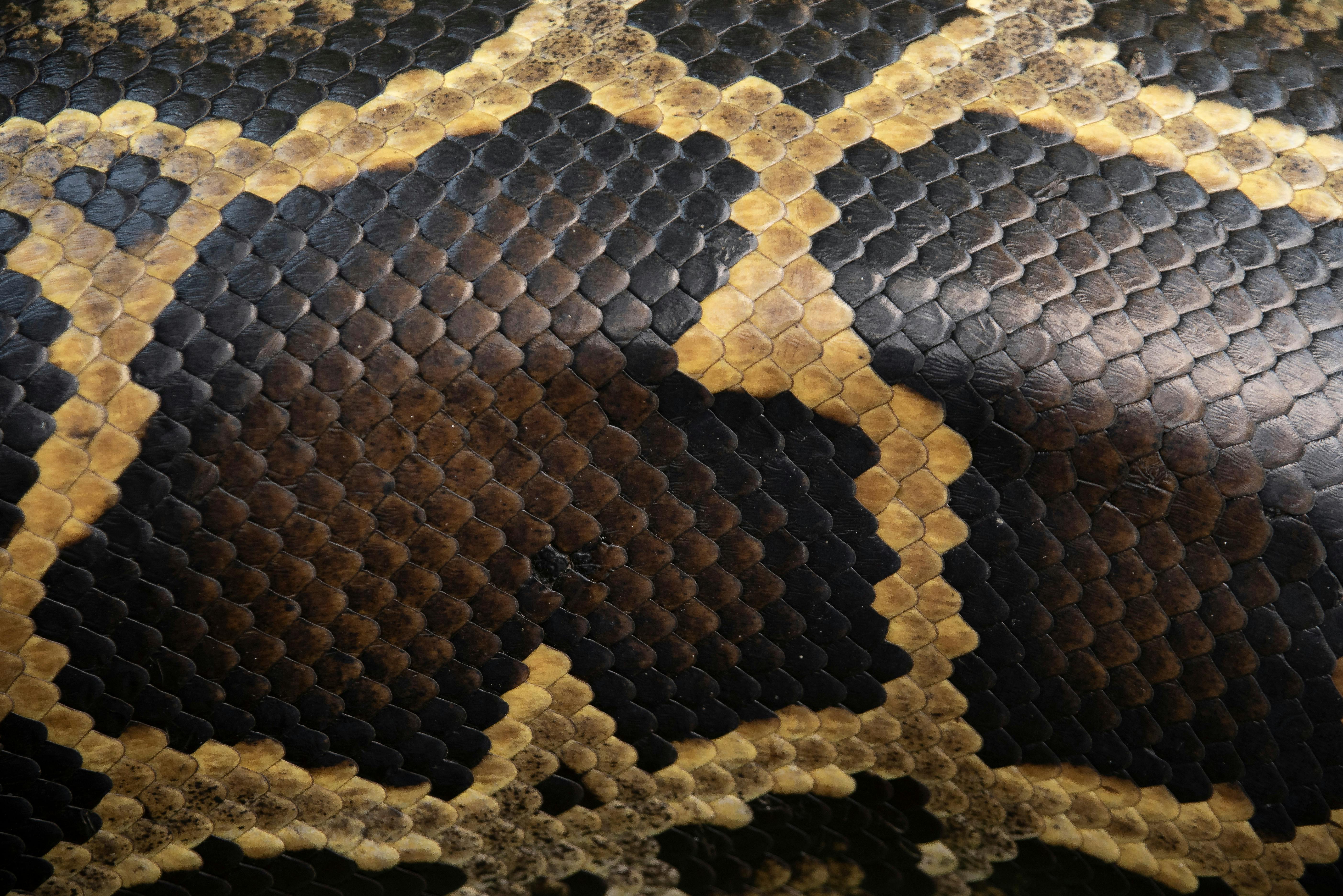
The greatest threat to Burmese pythons is humans who hunt them. They are hunted for their meat and skin. The skin is used to make leather and for the production of traditional musical instruments. They are also used to make snake wine. This is an alcoholic drink in which a whole snake is placed. This is done so that the essence of the snake enters the drink. People believe that this has medicinal properties, but there is no scientific evidence for this. In addition, they are caught to be sold as pets. Due to all these threats, the Burmese python is considered vulnerable according to the IUCN Red List.