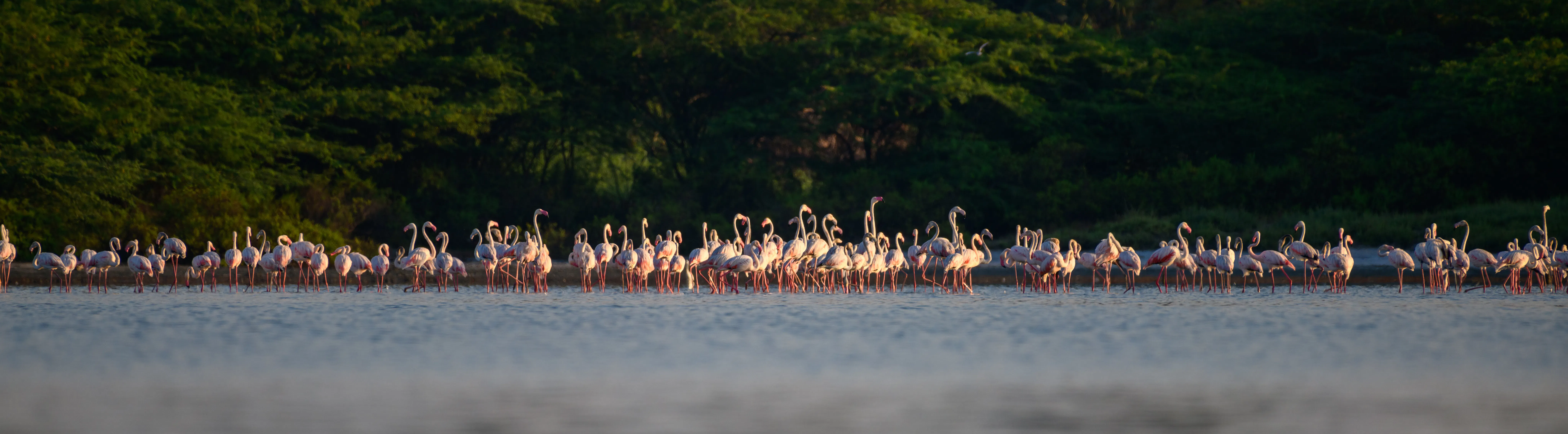
You can hear greater flamingos chattering loudly from a long way off in the salt wetlands. There, you’ll see these pink birds dancing in large numbers through the shallow water. With their long legs, they keep their bodies dry whilst filtering food from the water with their curved beaks. Read more about these unique birds here.
Phoenicopterus roseus
Up to 40 years
1.2 - 1.45 metres
2 - 4 kilograms
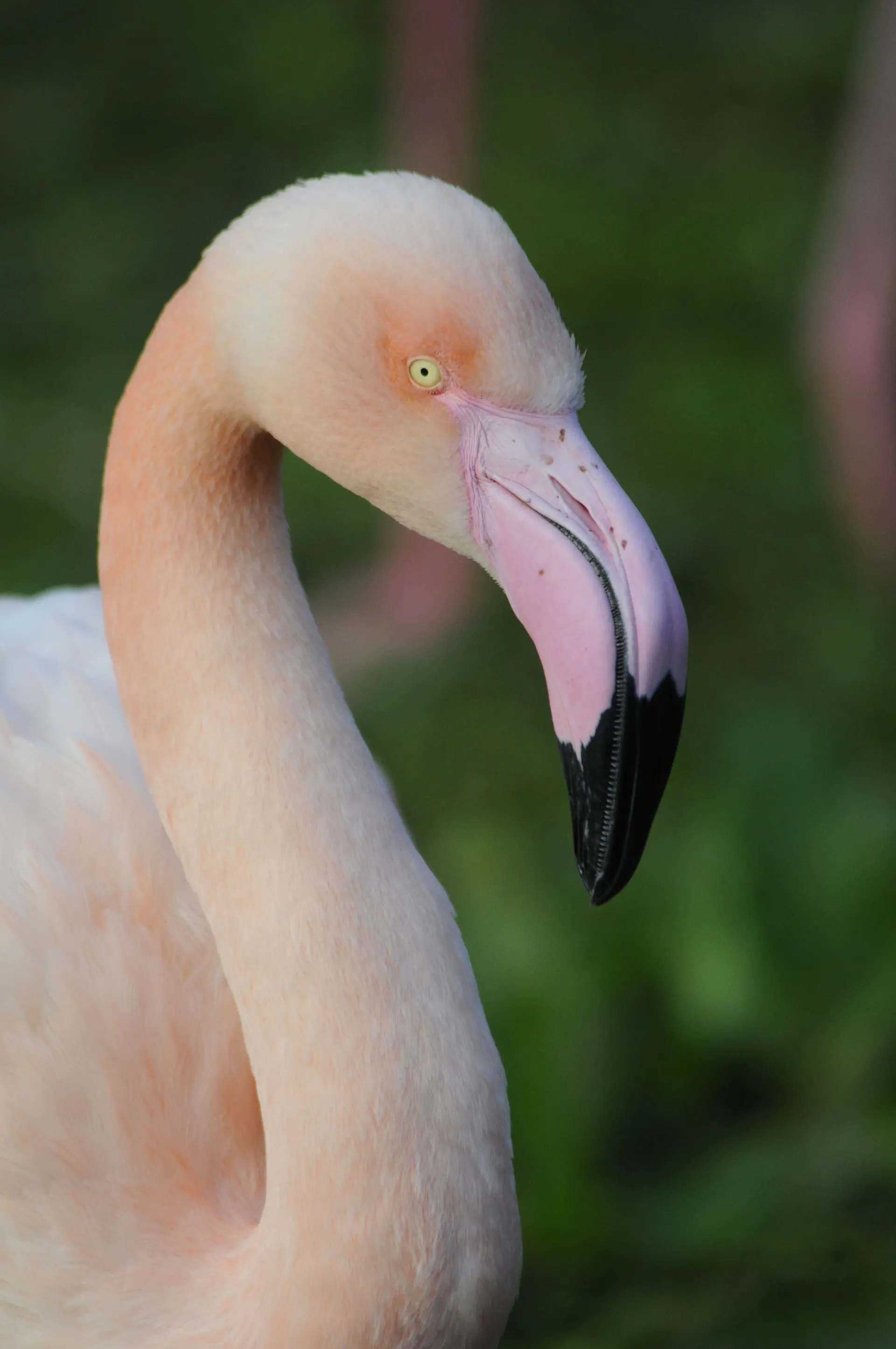
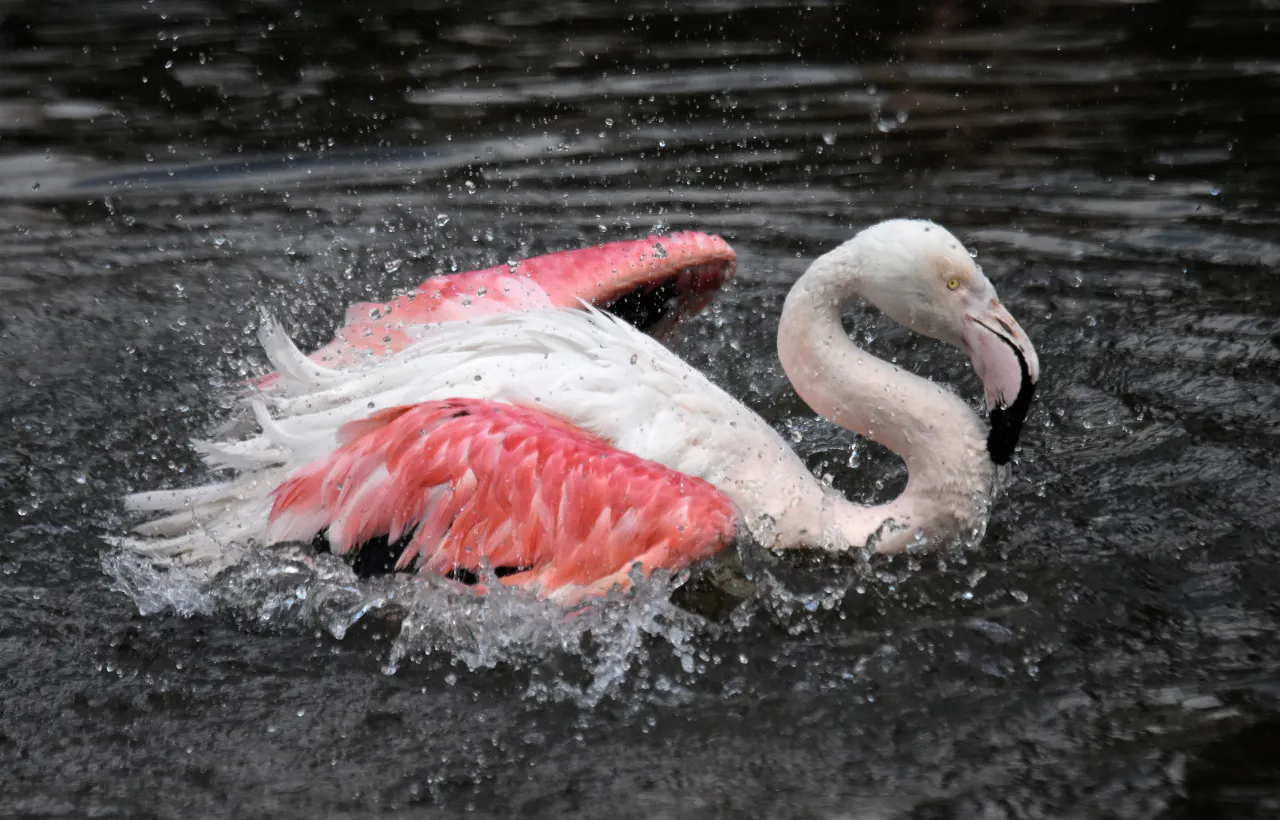
The greater flamingo is a large pink bird, easily recognisable by its long legs and neck. It is the largest species of flamingo, with a wingspan of up to 180 centimetres. It has a large, downward-curving beak with a black tip. Unlike many other birds, the lower part of this beak is bigger than the upper part.
Sometimes you see greater flamingos standing on one leg. When doing this they tuck the other leg into their plumage to keep it nice and warm.
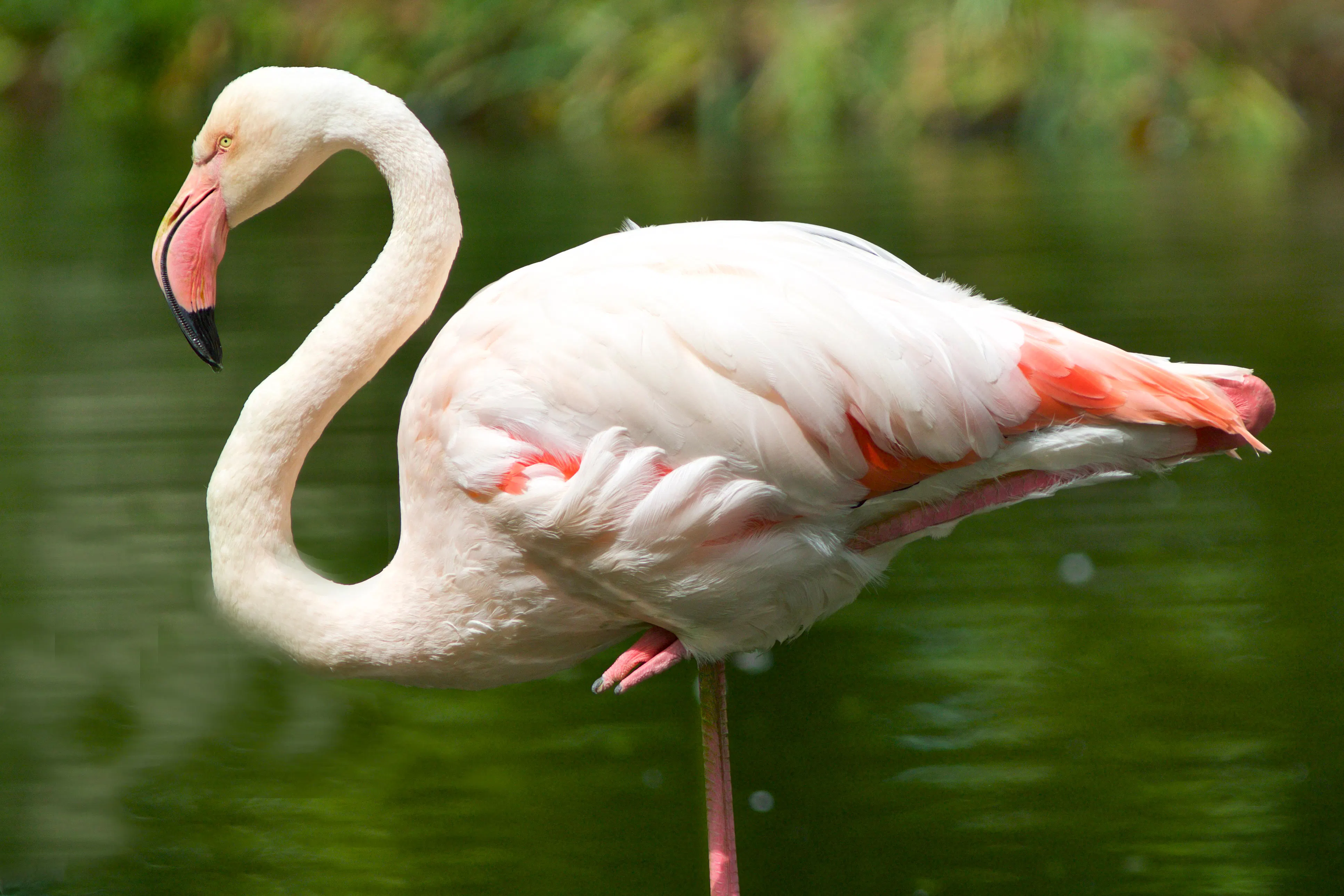
The greater flamingo is mainly found in parts of Africa, Western Asia and Southern Europe. Here, they make their home in shallow and often salty wetlands such as lakes, coastal lagoons and mudflats.
Although flamingos might make you think of tropical regions, the greater flamingo has actually been found as far north as the Netherlands since 1983. This population breeds just across the border in Germany, but comes to the Netherlands outside the breeding season. Your best chance of spotting them in the wild here is in Zeeland, near the Grevelingenmeer.
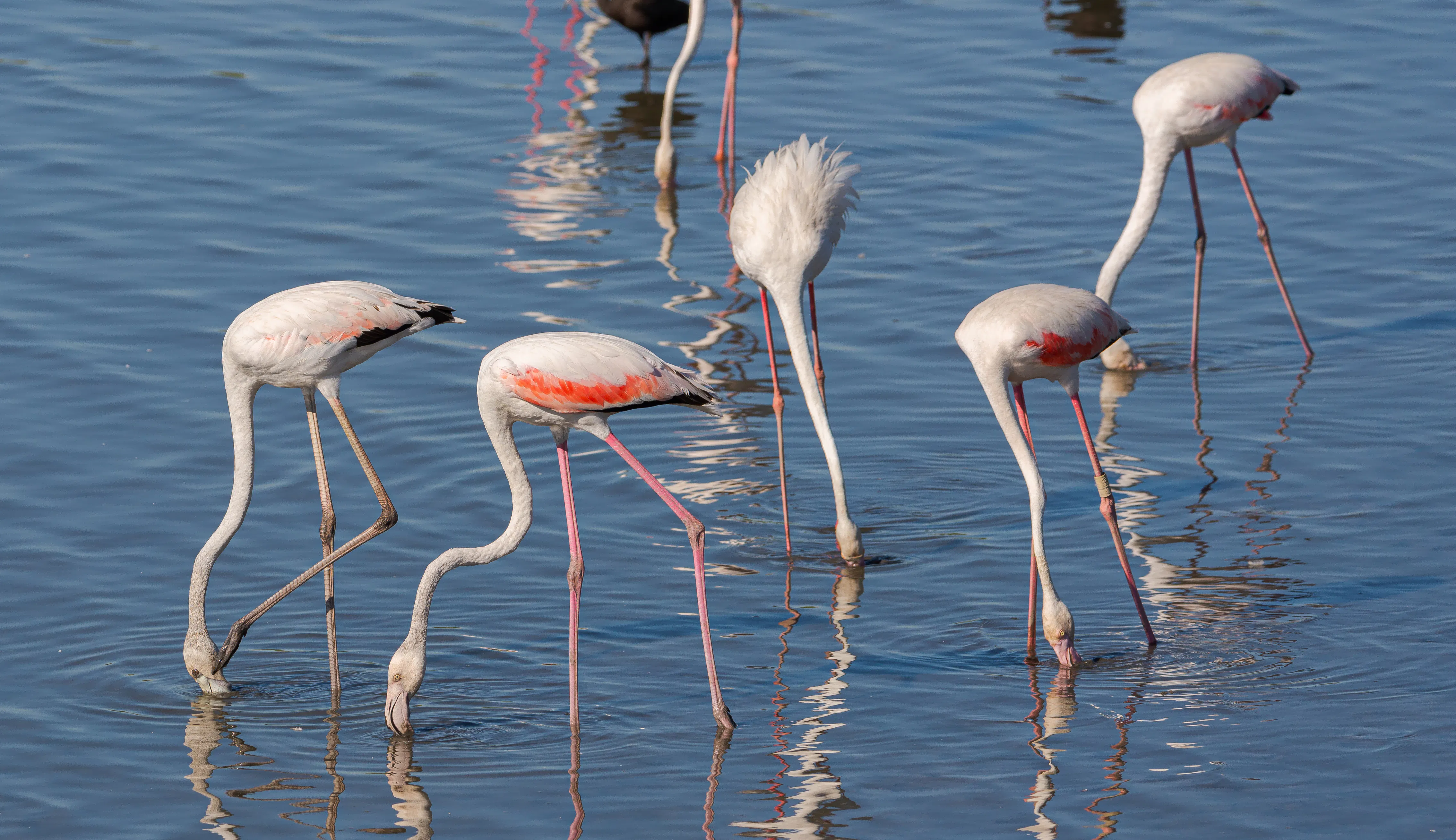
When a greater flamingo wants to eat, it holds its beak upside down in the water. It then uses its large, round tongue to pump water in and out of its beak. The inside of the beak is lined with lots of thin plates that act like a sieve. This allows them to filter the tiny plants and animals they eat out of the water.
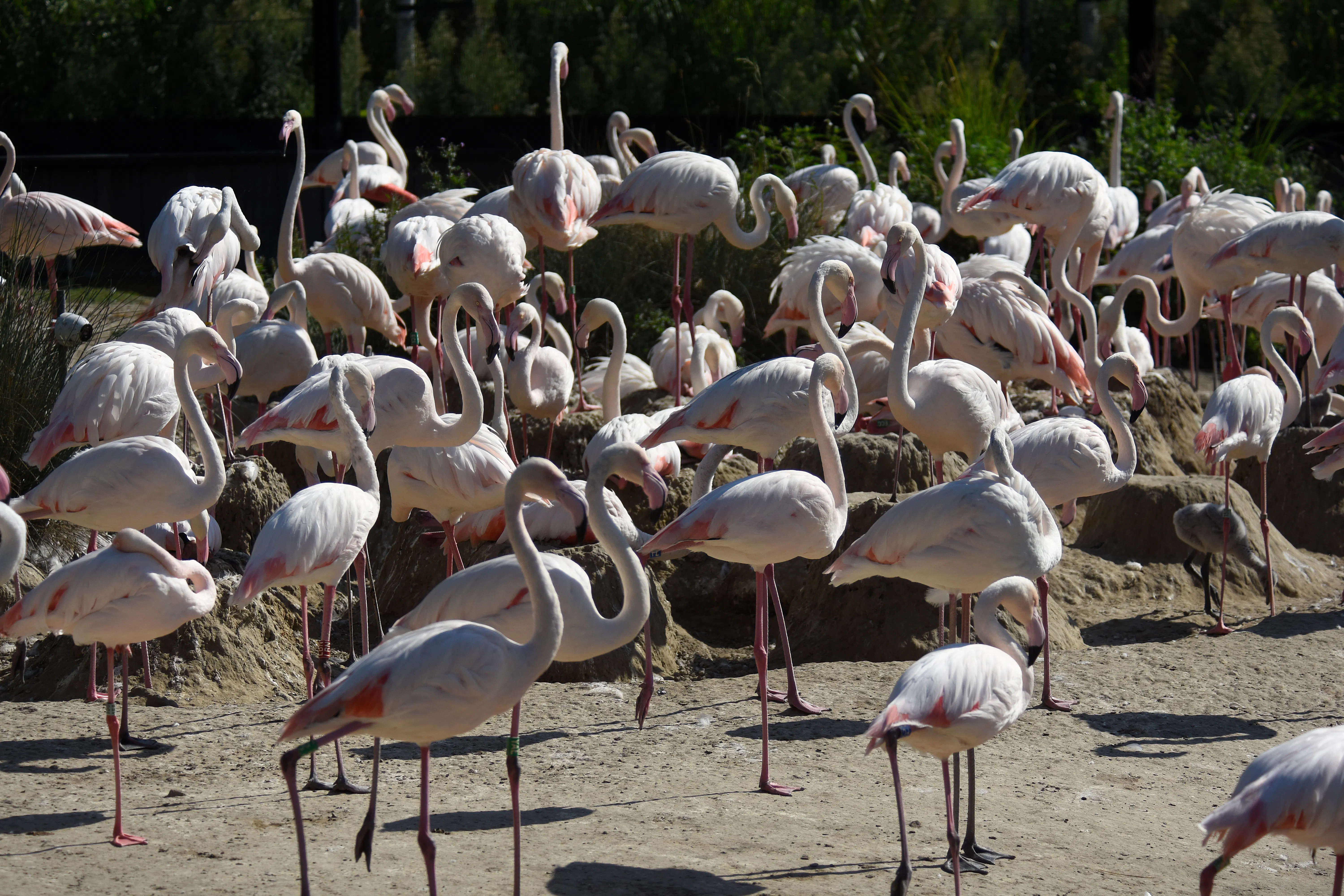
Greater flamingos live in large flocks, which often number more than a hundred individuals. If there is enough food, flocks can even number in the thousands. These flocks often stay in one place for a while and move on when the food runs out.
Greater flamingos are not territorial animals and generally do not chase each other away. The exception is during the breeding season, when possible nest material thieves are pecked away.
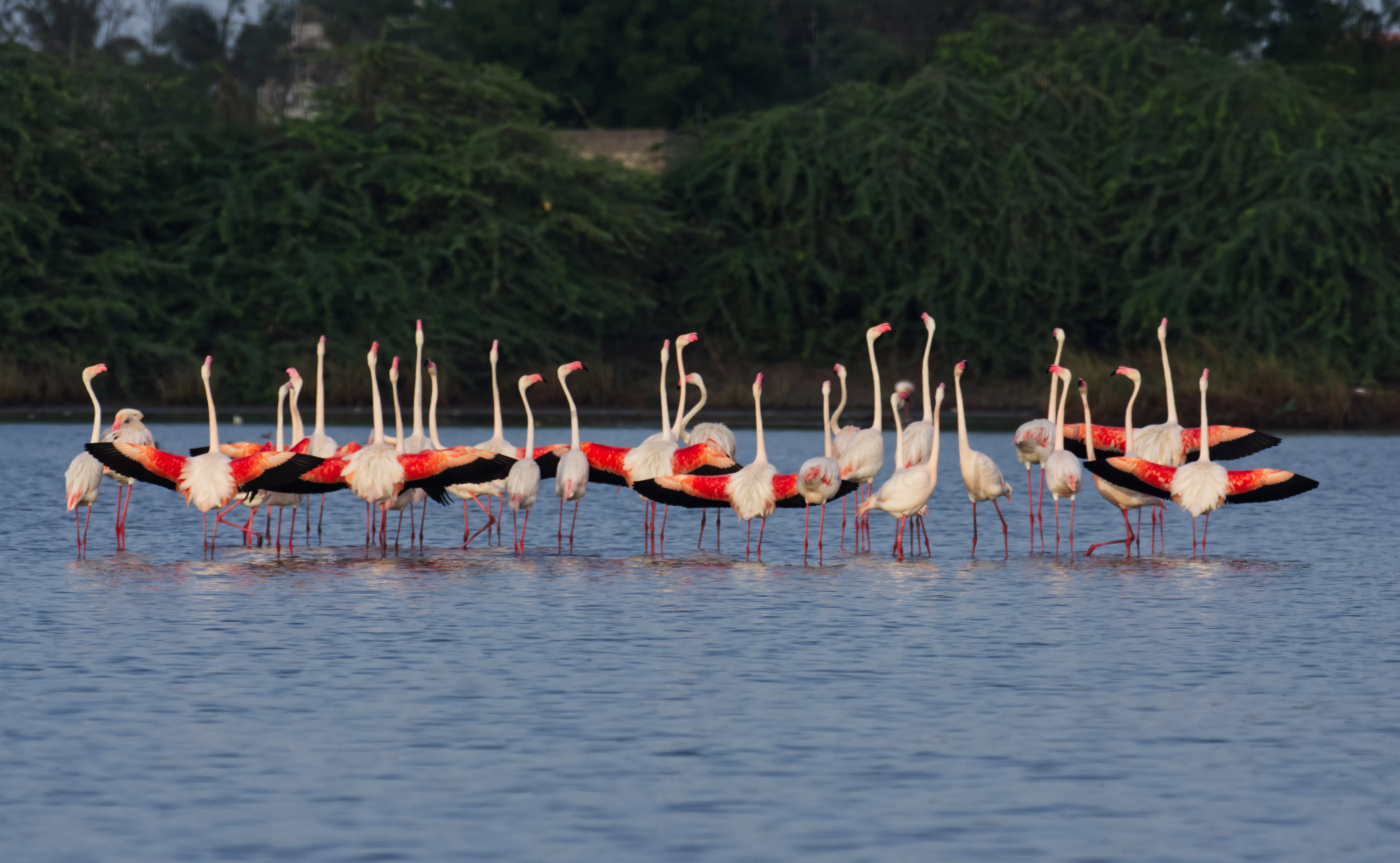
Months before the breeding season begins, greater flamingos start looking for a mate. They do this by gathering in large groups and all performing a courtship dance. This dance consists of various ‘steps’. For example, the flamingos stand as upright as they can and spread their wings, or they quickly dip their heads into the water. The more different moves a flamingo performs in a short space of time, the more attractive he or she is to other flamingos. Once two greater flamingos have formed a pair, they stay together for a single breeding season. The following year, they often choose a different mate.
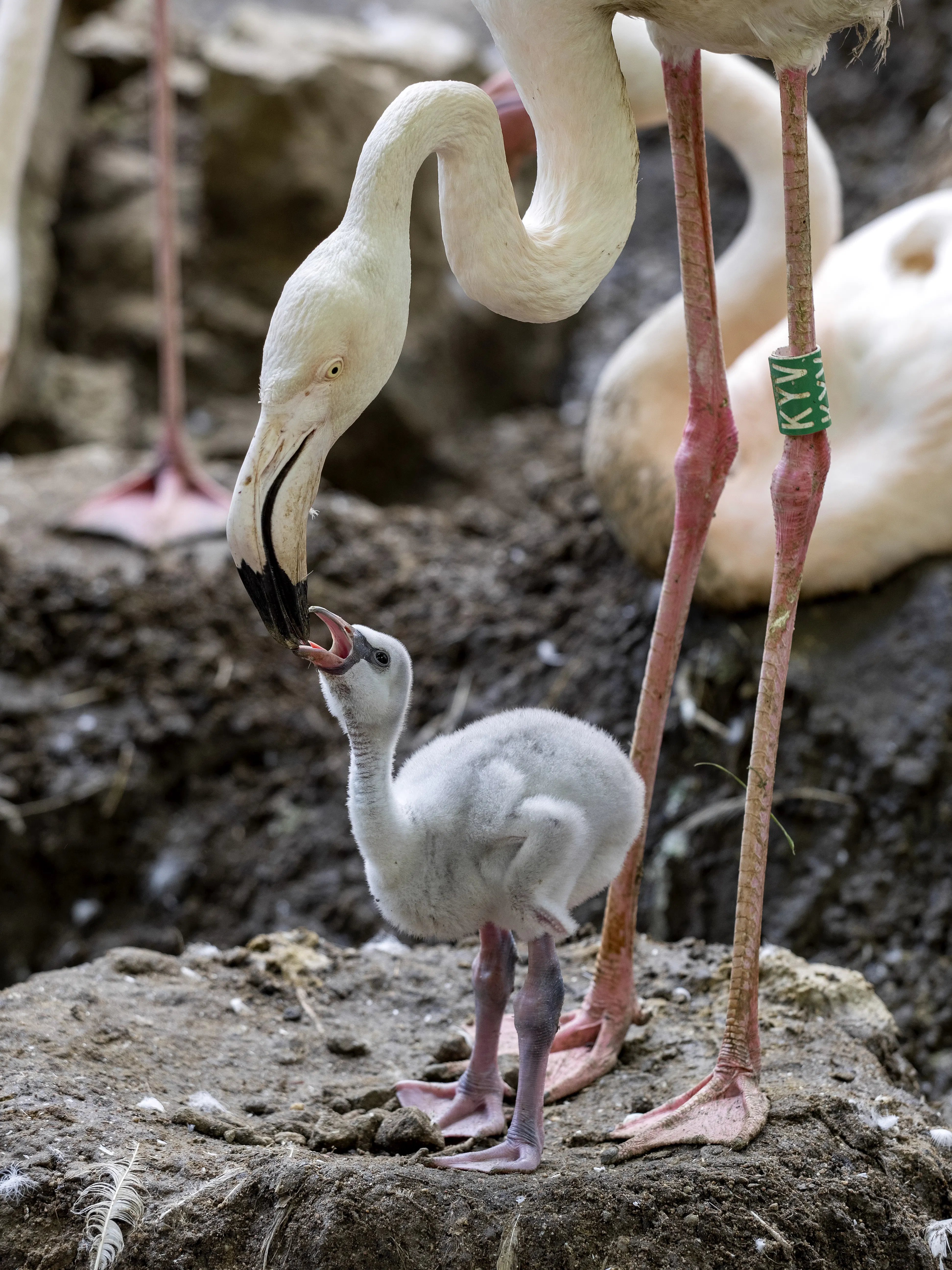
Greater flamingo parents build a nest by scraping together a pile of mud. The female then lays a single egg in this nest. When a chick hatches, it does not yet have a curved beak. This means it cannot eat the greater flamingo’s usual food. To feed their young anyway, the parents produce a red, milk-like substance which they feed to the chick via their beaks. They do this until the chick is about three months old. After that, it is independent.
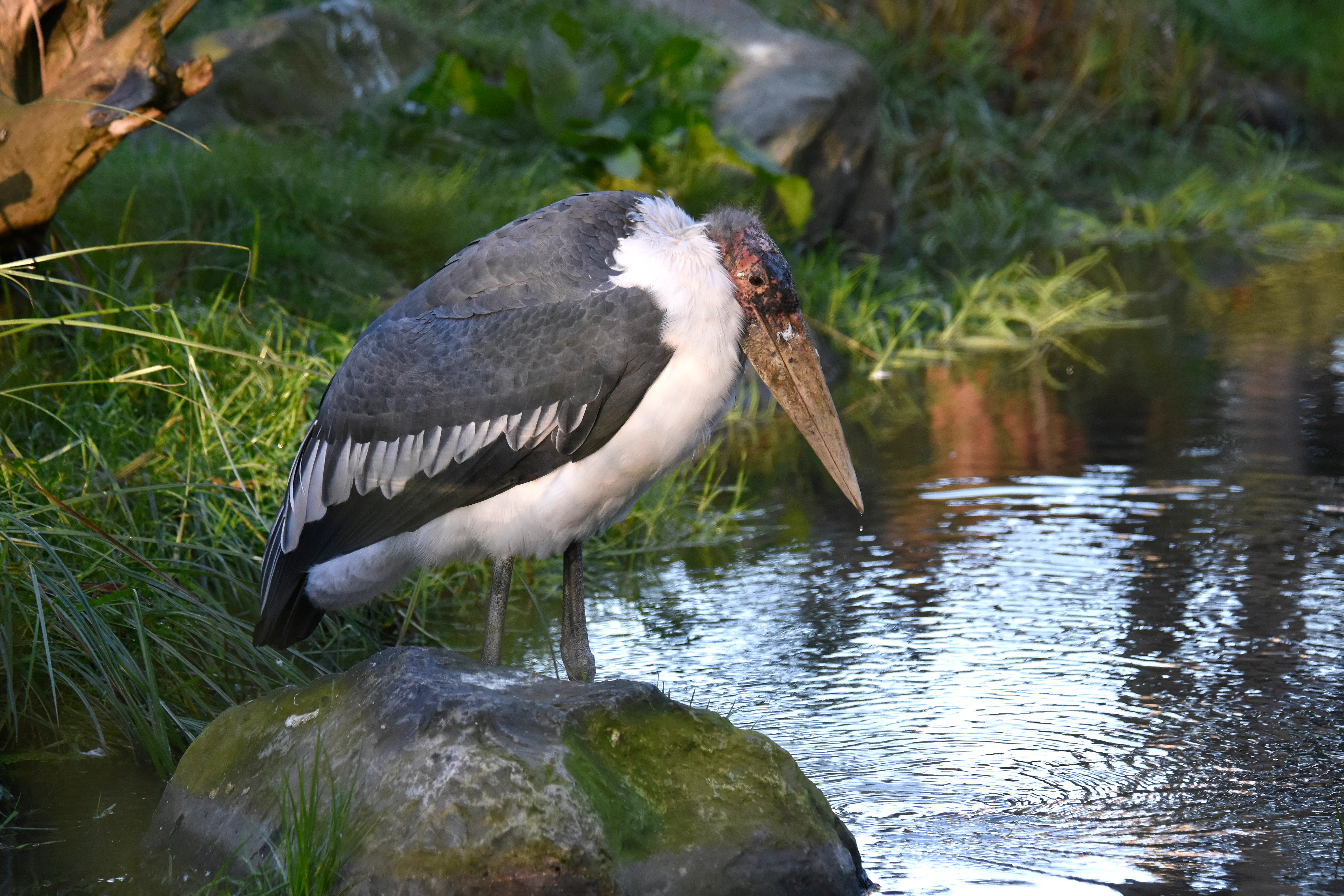
The main enemies of greater flamingos are predators that eat their chicks and eggs. These include other birds such as marabou storks and gulls, and mammals such as mongooses and warthogs.
To protect themselves against these predators, flamingo parents build their nests surrounded by deep water. This makes it difficult for land-based predators to reach them. Apart from this, the parents do not protect their young and will abandon their nest if a predator does manage to get there. As a result, even a few predators reaching a breeding colony can cause the entire colony to go extinct.
The main threats to greater flamingos are habitat loss, hunting, lead poisoning and lowering water levels. Lower water levels are a threat because they make it easier for predators to reach the flamingos’ nests.
Despite the fact that these threats exist, they are fortunately not significant enough to endanger the species. It is therefore listed as ‘Least Concern’ on the IUCN Red List.