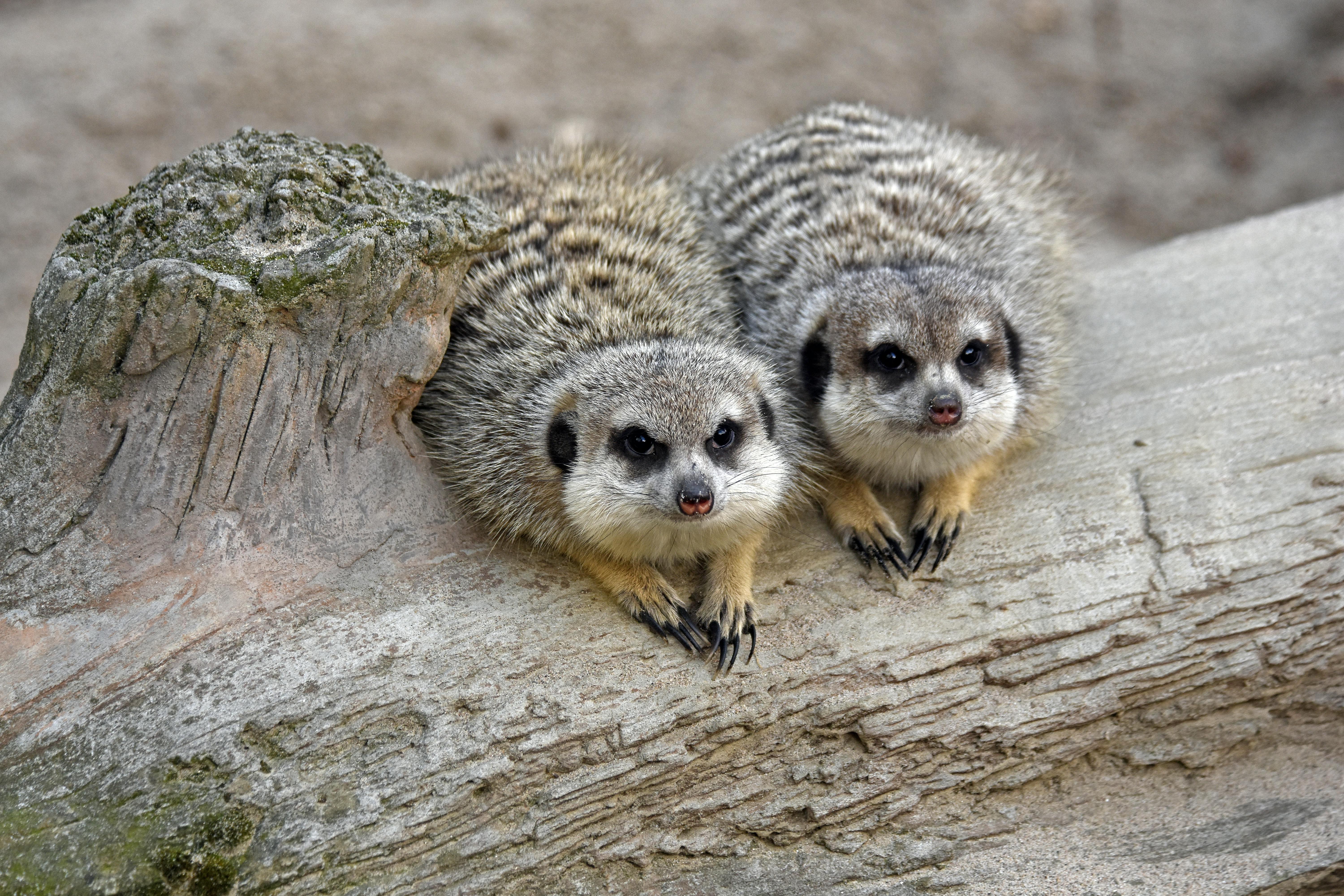
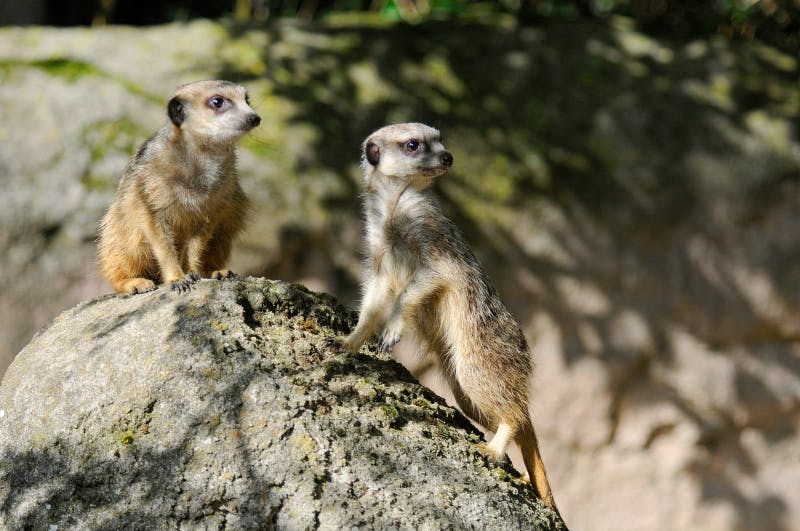
From a rock in the middle of the dry African savannah, a meerkat looks out over the landscape. She keeps a close eye on the sky, because if a bird of prey appears, she must sound the alarm. Meanwhile, her clan mates scurry through the sand. Meerkats may seem cute and defenceless, but they are formidable predators that eat all kinds of animals that are very dangerous to us. Dig in and discover everything there is to know about meerkats.
Suricata suricatta
± 10 years
± 30 centimetres
600 - 900 grams
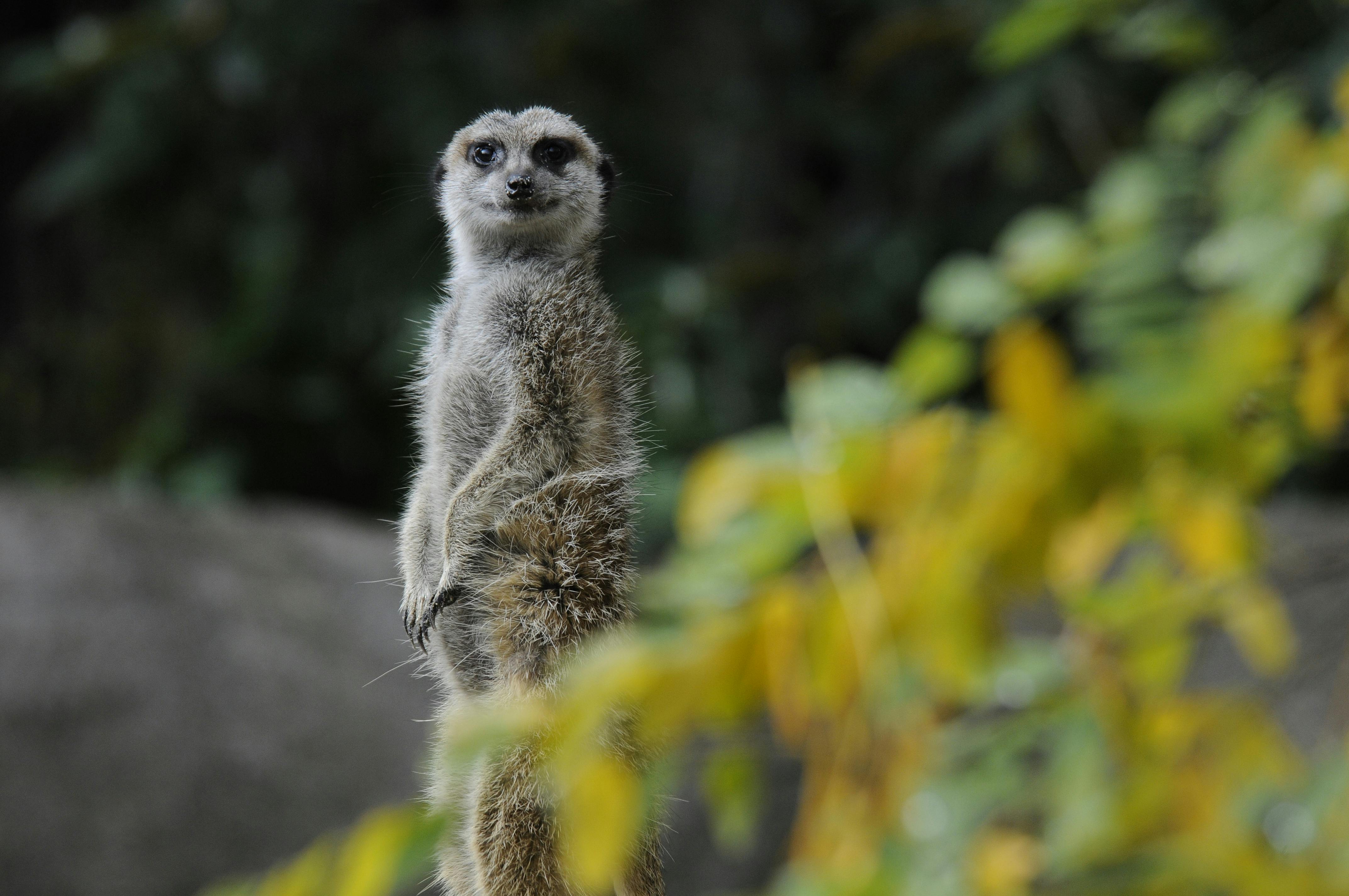
Meerkats belong to the mongoose family. They can be recognised by their light brown fur with dark stripes running across their backs. The tips of their tails are black, and they also have black spots on their faces. These act as a kind of natural sunglasses!
Despite their cute appearance, meerkats also have sharp teeth and claws. With their short, agile legs, they are also excellent diggers.
Meerkats are native to south-western Africa. There, they live in dry areas such as savannahs, shrublands and grasslands. They live in underground burrows, where they are protected from the heat of the sun and the sight of predators. They often dig these burrows themselves, but they also like to use existing cavities. Sometimes they share their burrows with yellow mongooses or ground squirrels!
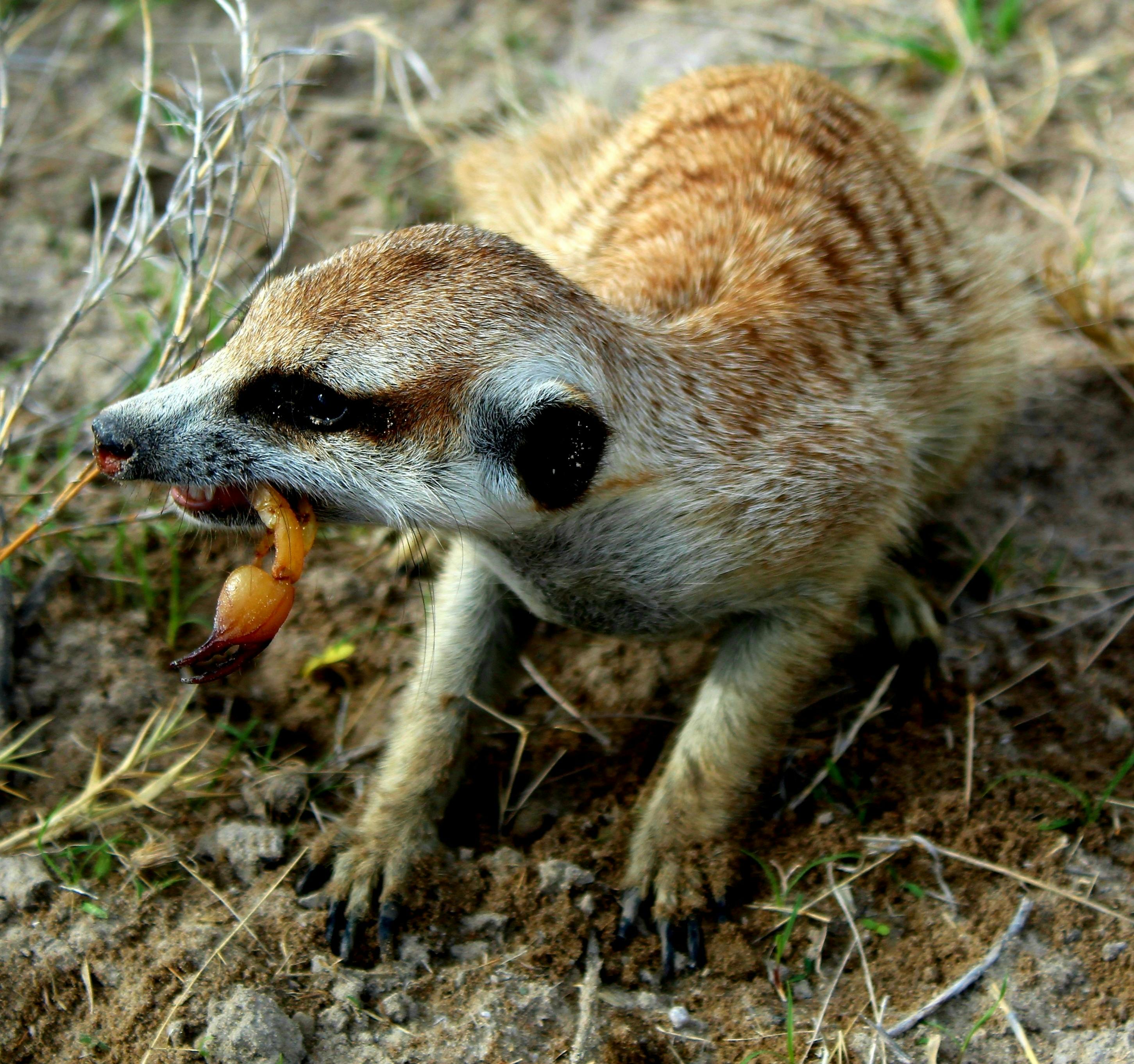
Meerkats may well have the most dangerous diet in the world: they are completely adapted to eating snakes, spiders and scorpions. To do so, you need to know how to catch such animals. Meerkats often bite scorpions in the rear so that the venomous stinger cannot move to sting the hunter. Meerkats learn this skill from their parents, who bring weakened (often still living) scorpions to their young to practise on. These are essential lessons for survival on the African savannah!
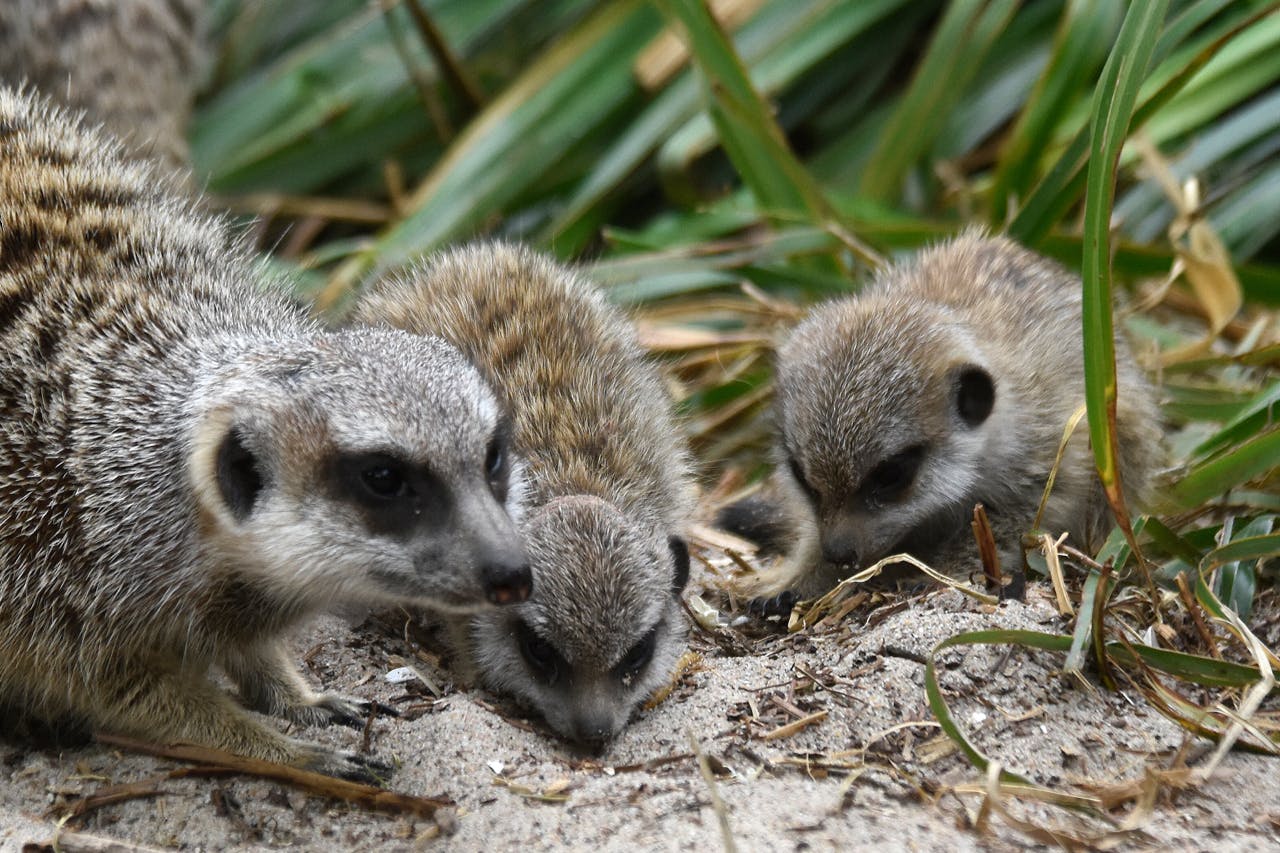
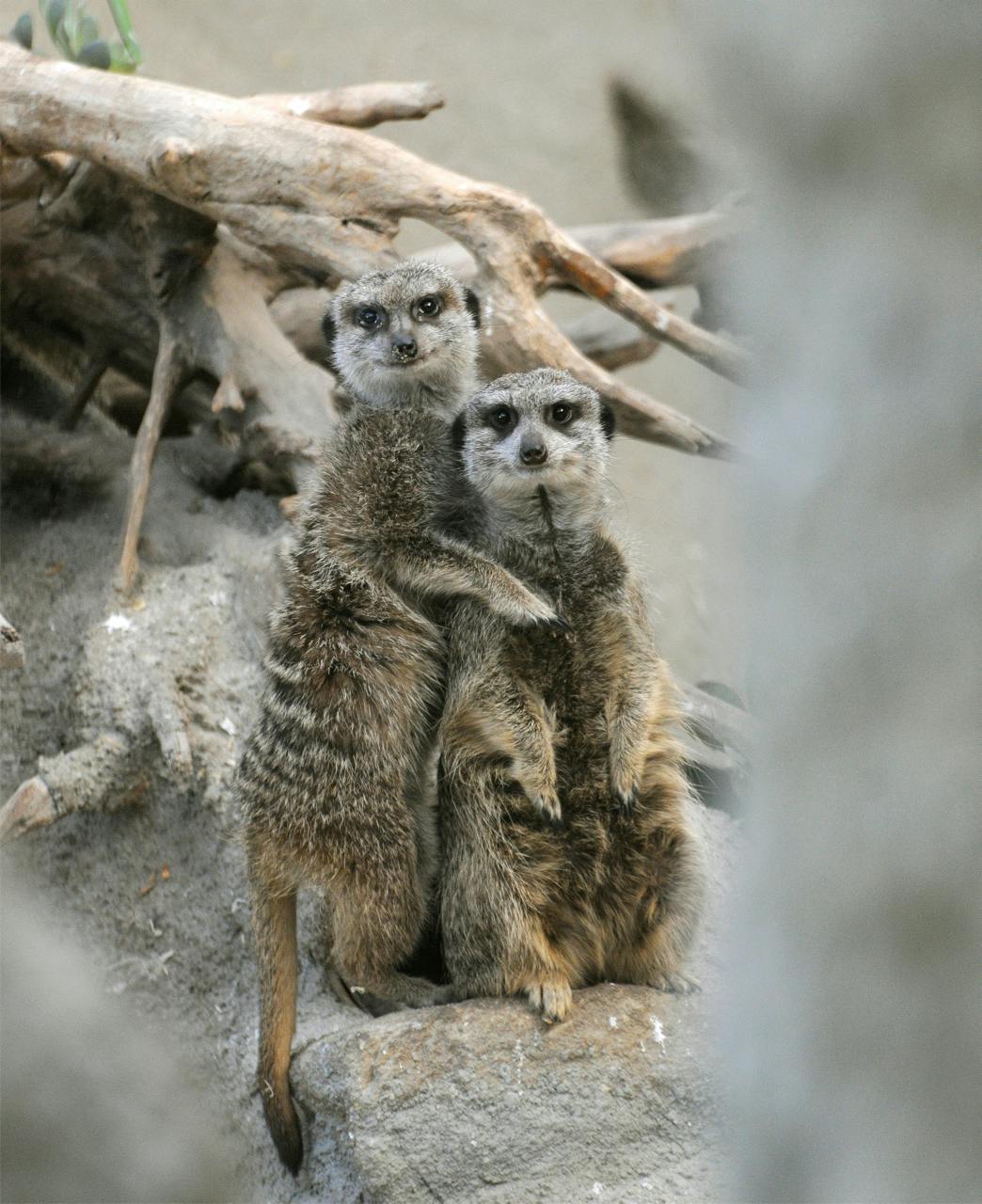
Meerkats are highly social animals. They live in so-called “clans”: family groups of usually three to twenty animals, although the record is 49. These clans are often led by one dominant pair.
Meerkats communicate with each other in various ways. They use glands near their anus to leave scents, for example to mark their territory. They also make sounds to keep track of each other or to warn each other of danger. Meerkats take turns standing guard to prevent themselves from being surprised by a predator.
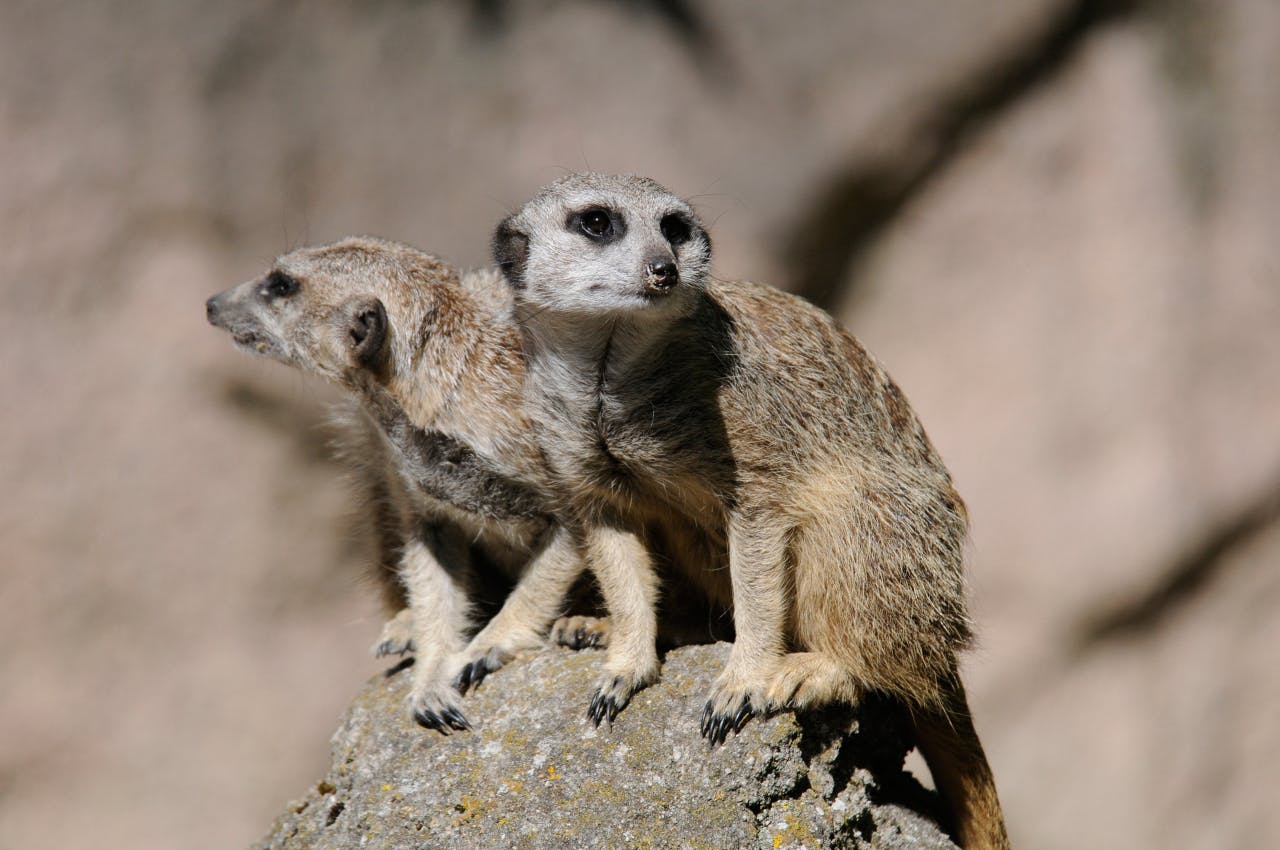
Meerkats are monogamous animals. This means that a meerkat generally mates with one partner. Together, this dominant pair cares for their offspring and takes charge of their clan. Other adult animals in the group rarely reproduce; and when they do, the young are not always welcome and are sometimes even killed by the dominant pair. This also prevents inbreeding.
Not much is known about how meerkats mate. This is mainly because meerkats mate underground, which makes it more difficult to observe.
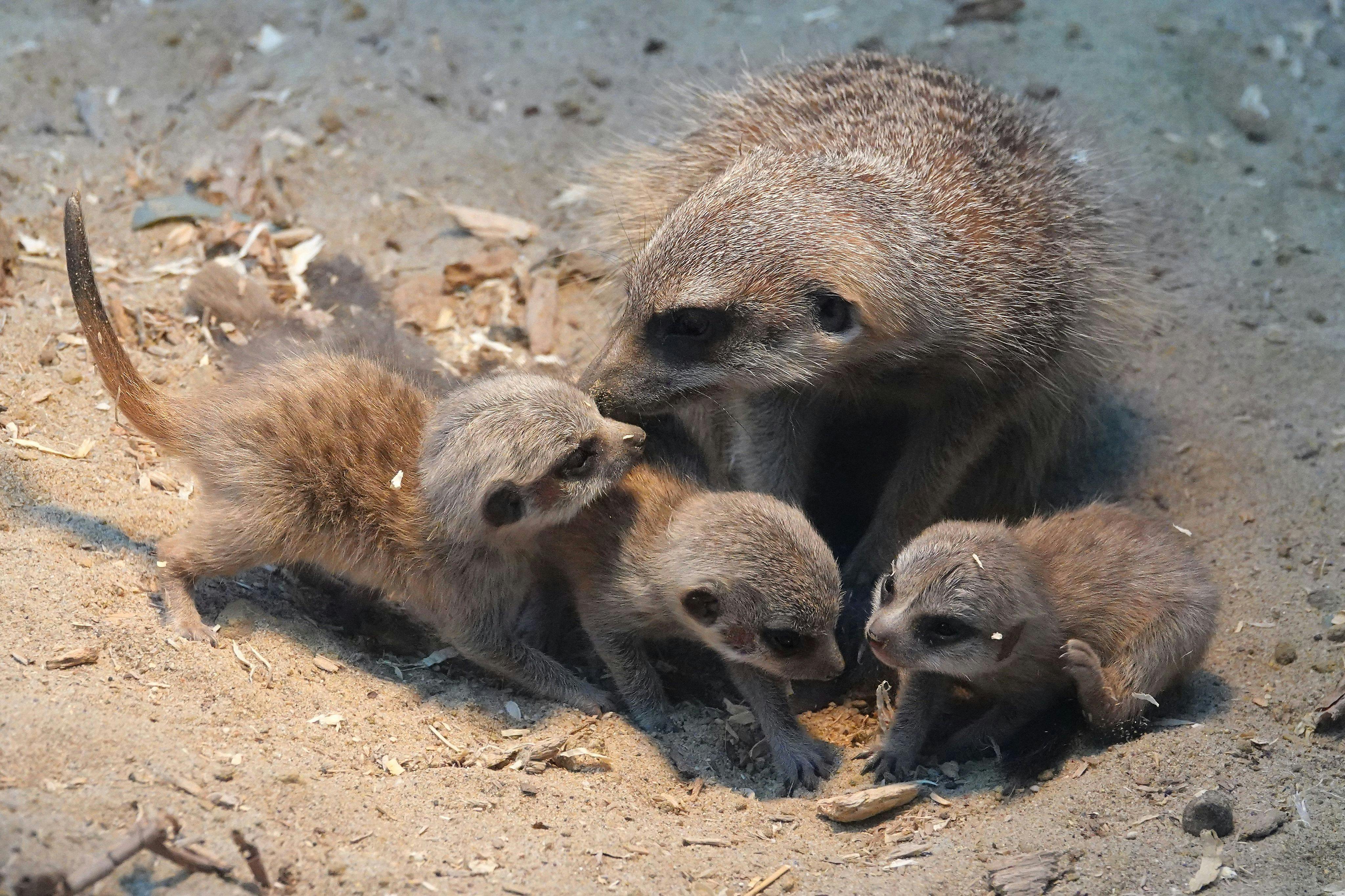
Meerkats are born blind and almost bald in an underground burrow. It usually takes about three or four weeks before the pups see their first sunlight. All adult meerkats in the clan help with raising the young. They take turns “babysitting” the young animals, keeping them warm and protecting them from predators. Young meerkats also suckle from other females in the clan. After about two months, they stop suckling and “beg” for food from their clan mates before learning to hunt themselves. When they reach adulthood, they usually look for a new group to help with the next generation.
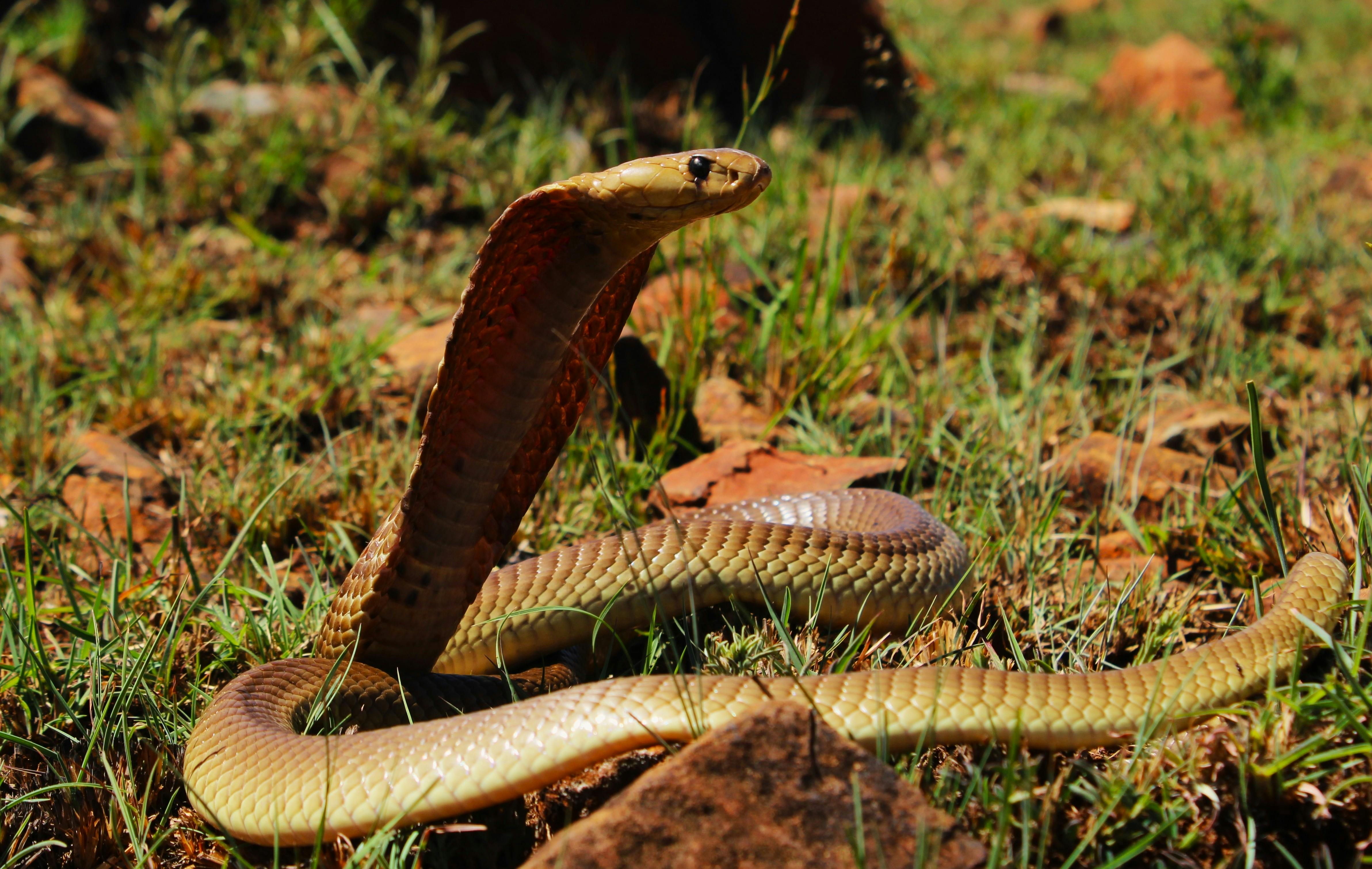
Meerkats must be very vigilant in the wild. The African savannah is home to many larger predators, such as jackals and birds of prey. Large snakes such as the Cape cobra also lurk in the grass.
When meerkats spot a predator, the sentry gives an alarm call. The meerkats run at speeds of up to 32 kilometres per hour to burrows in the ground. They do not always manage to escape, but meerkats reproduce so quickly and so often that the clans recover quickly enough when they lose a family member.
As far as we know, there are no threats to meerkats in the wild. Although some people try to keep them as pets (for which they are unsuitable), the exotic pet trade has not yet caused a large-scale decline in the meerkat population. According to the IUCN (International Union for Conservation of Nature), meerkats are therefore classified as “Least Concern”.
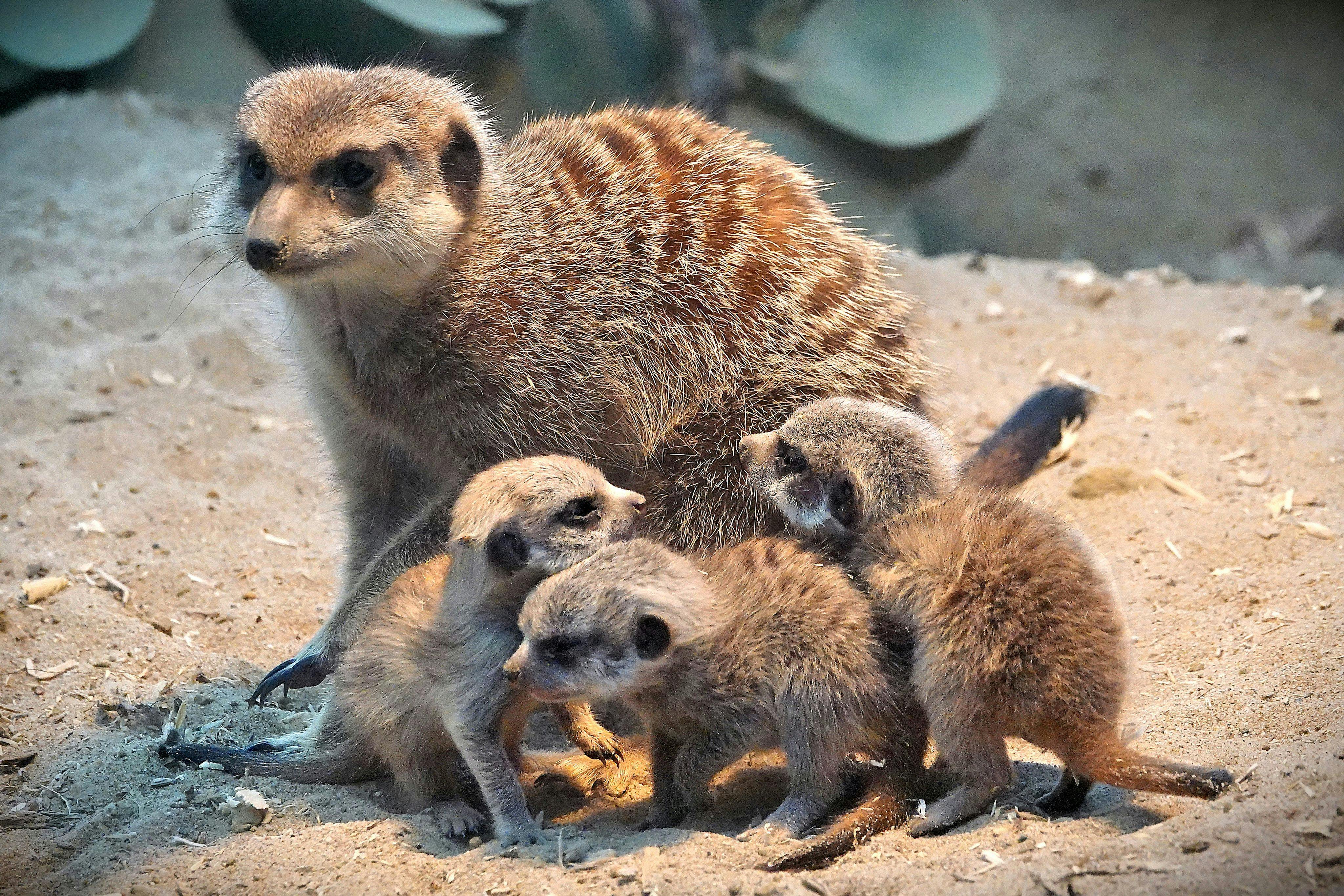
Rotterdam Zoo participates in the European population management programme for the meerkat. Based on the pedigree of meerkats in zoos, the coordinator determines which animals are best paired with each other to produce healthy offspring. These young are then moved to other zoos to form the next generation. In this way, we are building up a healthy population as a back-up for the wild animals, with the ultimate goal of returning meerkats to their natural habitat when conditions there are favourable.