
In the sunbeams shining through Madagascar's treetops, groups of ring-tailed lemurs sit warming up after a cold night. In a pose that reminds us a little of meditation, the ring-tailed lemur seems to lead a carefree existence. But with the disappearance of Malagasy forests the number of ring-tailed lemurs in the wild is steadily declining. Therefore, it is important to protect the ring-tailed lemur.
Lemur catta
± 19 years
± 42 centimetres (excluding tail)
39 - 46 centimetres (excluding tail)
2 - 3 kilograms
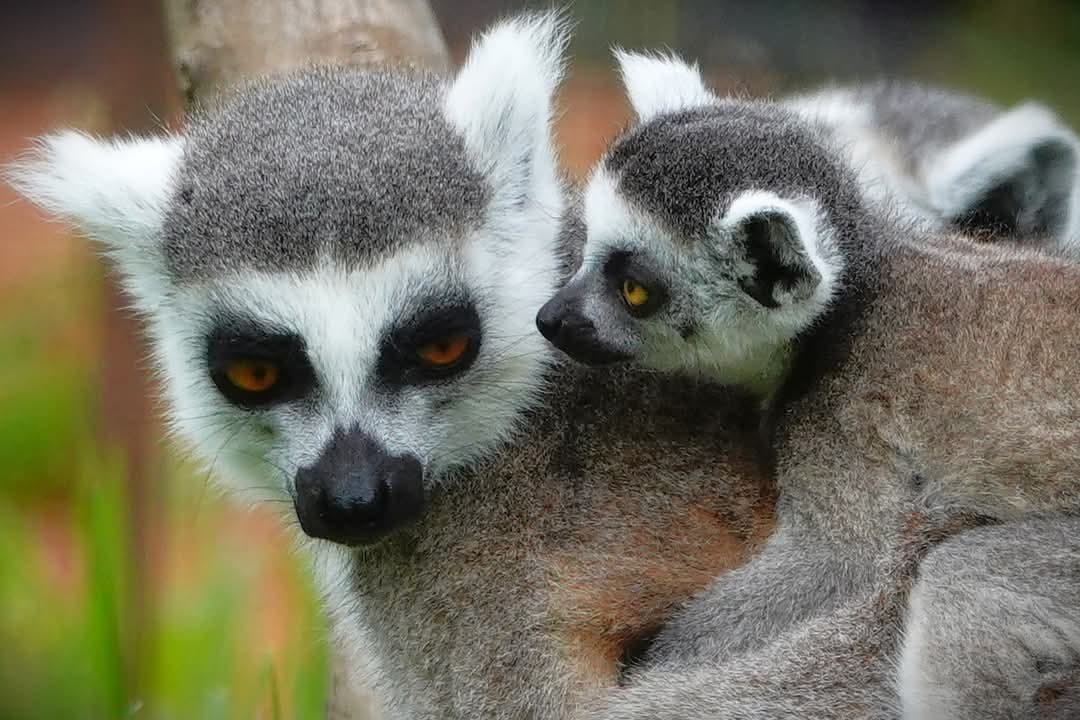
The ring-tailed lemur is a medium-sized lemur – a relative of monkeys and apes. It is recognisable by its black and white striped tail, grey fur on its back and white fur on its belly. Its face is also white, with black spots around its snout and around its yellow or red eyes. Young animals have blue eyes.
Ring-tailed lemurs have very agile hands that help them climb, even over thorny plants. The 60 centimetre tail helps the lemur to balance, but it does not use it to grab branches.
Ring-tailed lemurs are native to southern Madagascar. There, they live in a wide variety of wooded areas, from humid rainforests to dry “spiny forests” full of thorny plants.
Familial groups of ring-tailed lemurs naturally roam around in vast forests, covering up to 23 hectares. Sometimes a group will remain in the same area for up to 30 years!
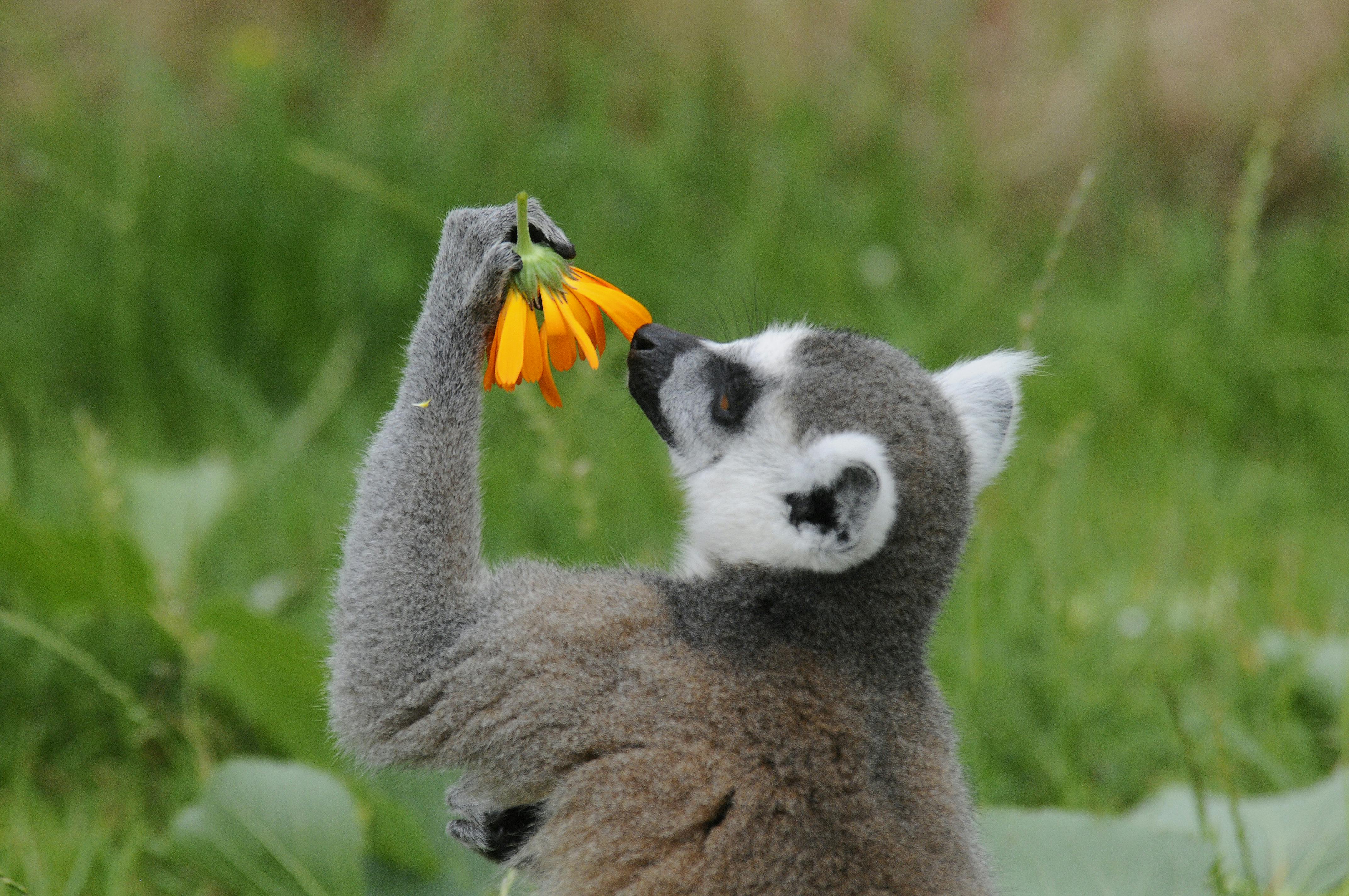
Ring-tailed lemurs mainly eat plants. They have a varied diet of fruit, herbs, flowers, leaves and tree bark. Their favourite foods are the fruit and leaves of the tamarind tree: if this plant grows in their territory, it can sometimes make up half of their diet. Thanks to the juicy fruit and leaves, ring-tailed lemurs hardly need to drink water.
Ring-tailed lemurs sometimes also eat insects and other small animals, such as lizards. In addition, they occasionally lick soil. They do this to consume enough minerals, such as salt!
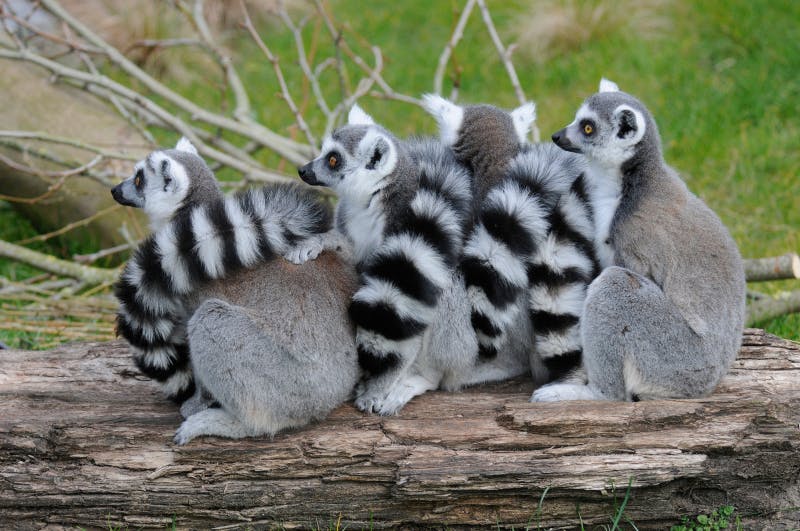
Ring-tailed lemurs are highly social animals that live in family groups, with several males and several females. The females usually lead the group: these are often mothers, sisters and aunts who stay together their entire lives. Our zookeepers therefore take great care when adding a new ring-tailed lemur to the group. By allowing the animals to get used to each other gradually, they reduce the risk of fighting.
As ring-tailed lemurs walk across the forest floor, their tails stick out above the plants. This helps group members stay together in the forest. In addition to their tails, lemurs use scents, sounds and facial expressions to communicate with each other.
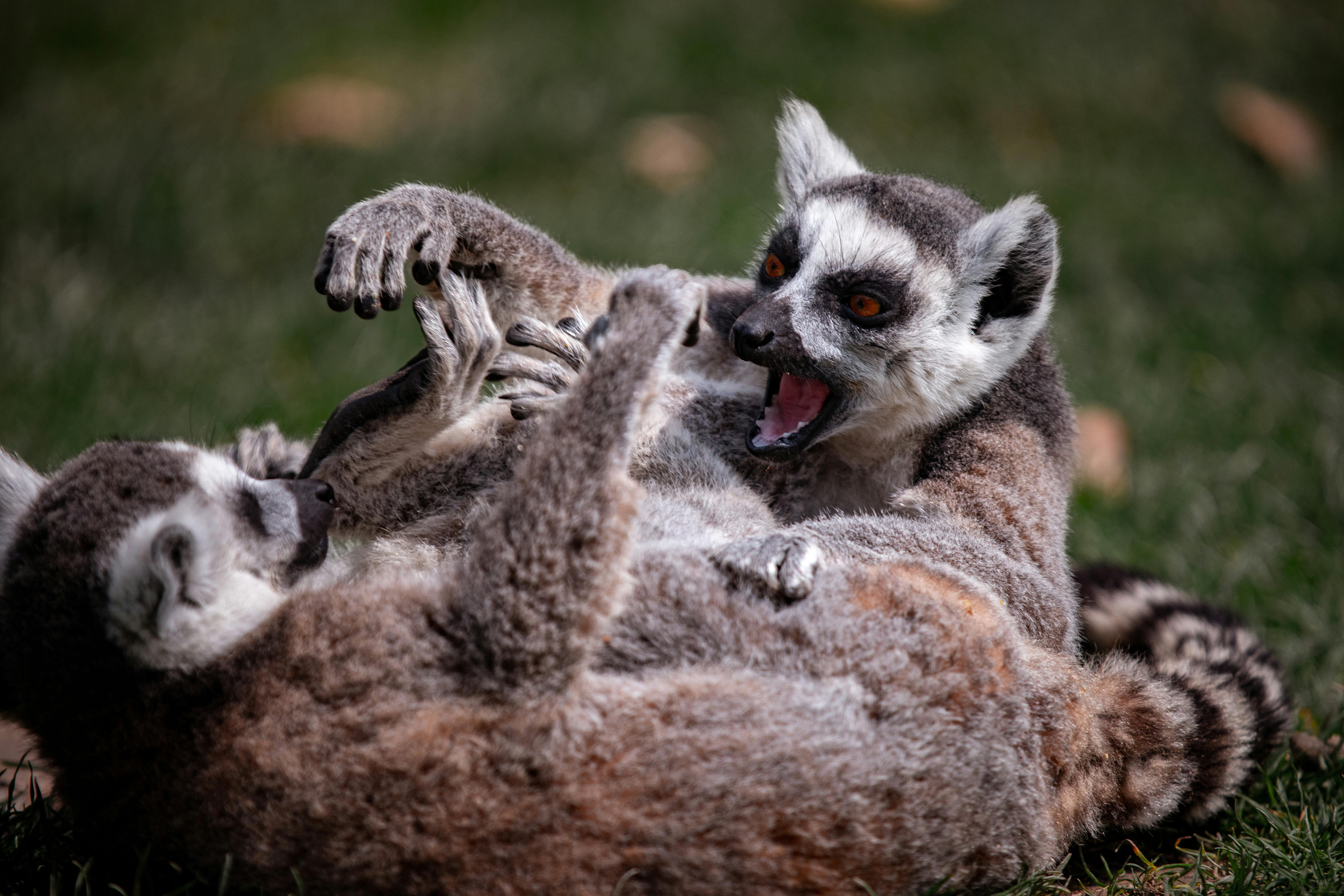
The battle for a female is fierce among ring-tailed lemurs. Males jump on each other and try to bite each other with their sharp canine teeth. In addition, males rub their tails with the scent glands on their front legs. With this stench, they try to chase away other males so that they can mate with the females themselves.
Males guard the females after mating to prevent other males from mating with them. However, most females end up mating with several males every mating season.
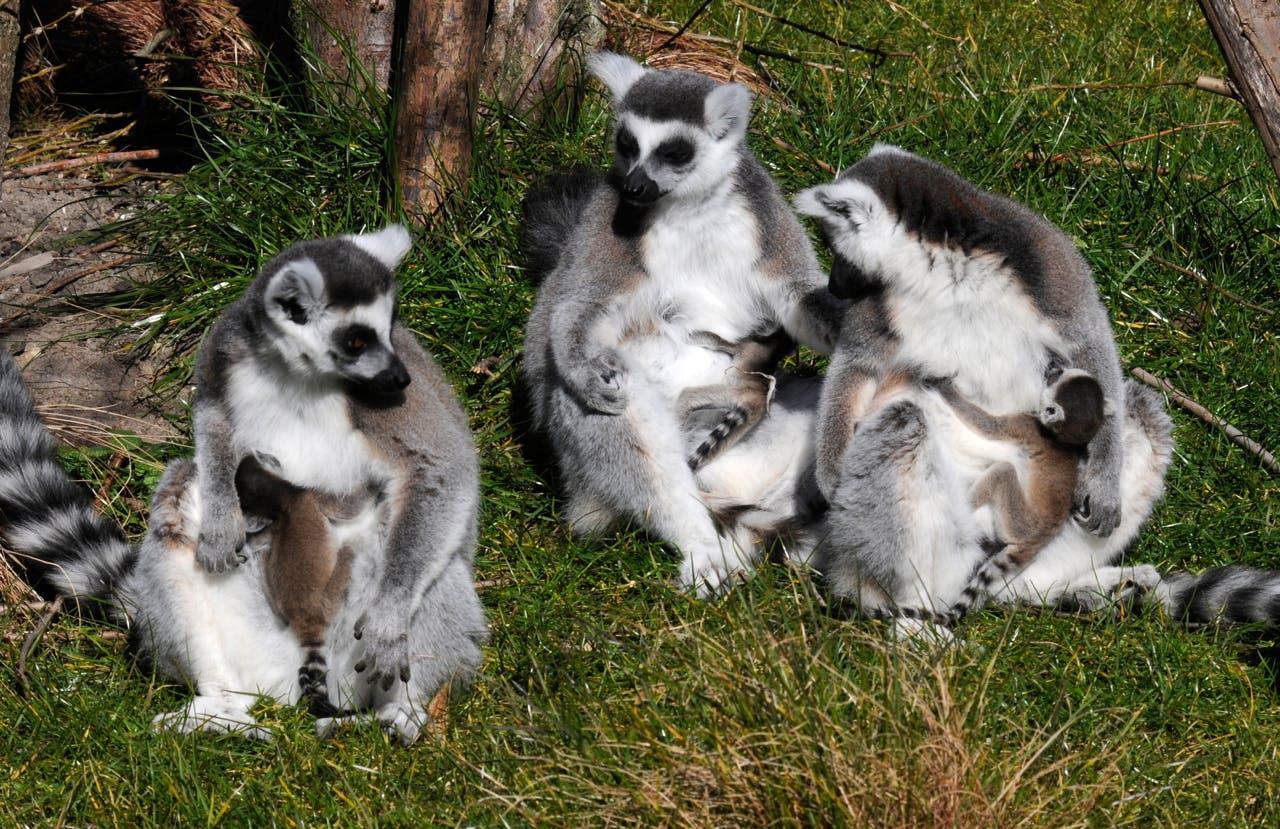
Just like humans, ring-tailed lemurs usually give birth to one young, but twins or triplets sometimes occur. The young clings tightly to their mother's belly for the first few weeks. After that, she carries it on her back. All females in a family group work together to raise their young and often take other people's children with them.
Ring-tailed lemurs stop suckling when they are three months old. After six months, they are big enough to walk with the group on their own. Most males leave the group when they are about three years old and ready to reproduce.
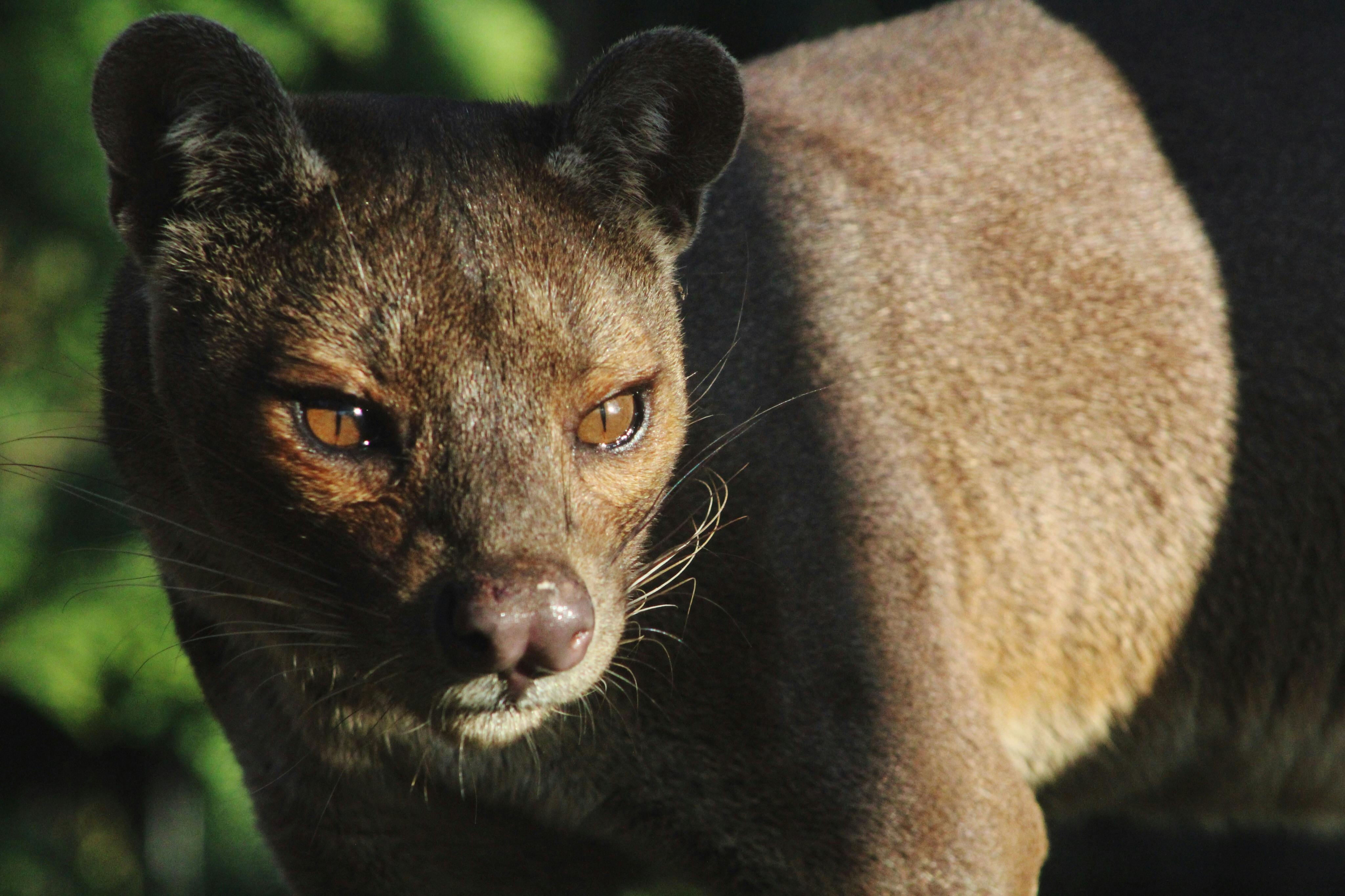
There are few large predators in Madagascar. But the fossa is definitely at the top of the food chain. This hunter is closely related to cats and mongooses. When a lemur sees a fossa, it calls loudly to its group members to hide. When warned, ring-tailed lemurs sometimes manage to escape this predator.
Ring-tailed lemurs also have to watch out for birds of prey, such as the harrier hawk. This agile flyer easily dives between the treetops to grab lemurs with its claws. Sometimes it even snatches a young lemur straight from its mother's back!
Given that ring-tailed lemurs can be found in almost every zoo, it may be difficult to imagine that they are an endangered species. In fact, there are not many left in the wild.
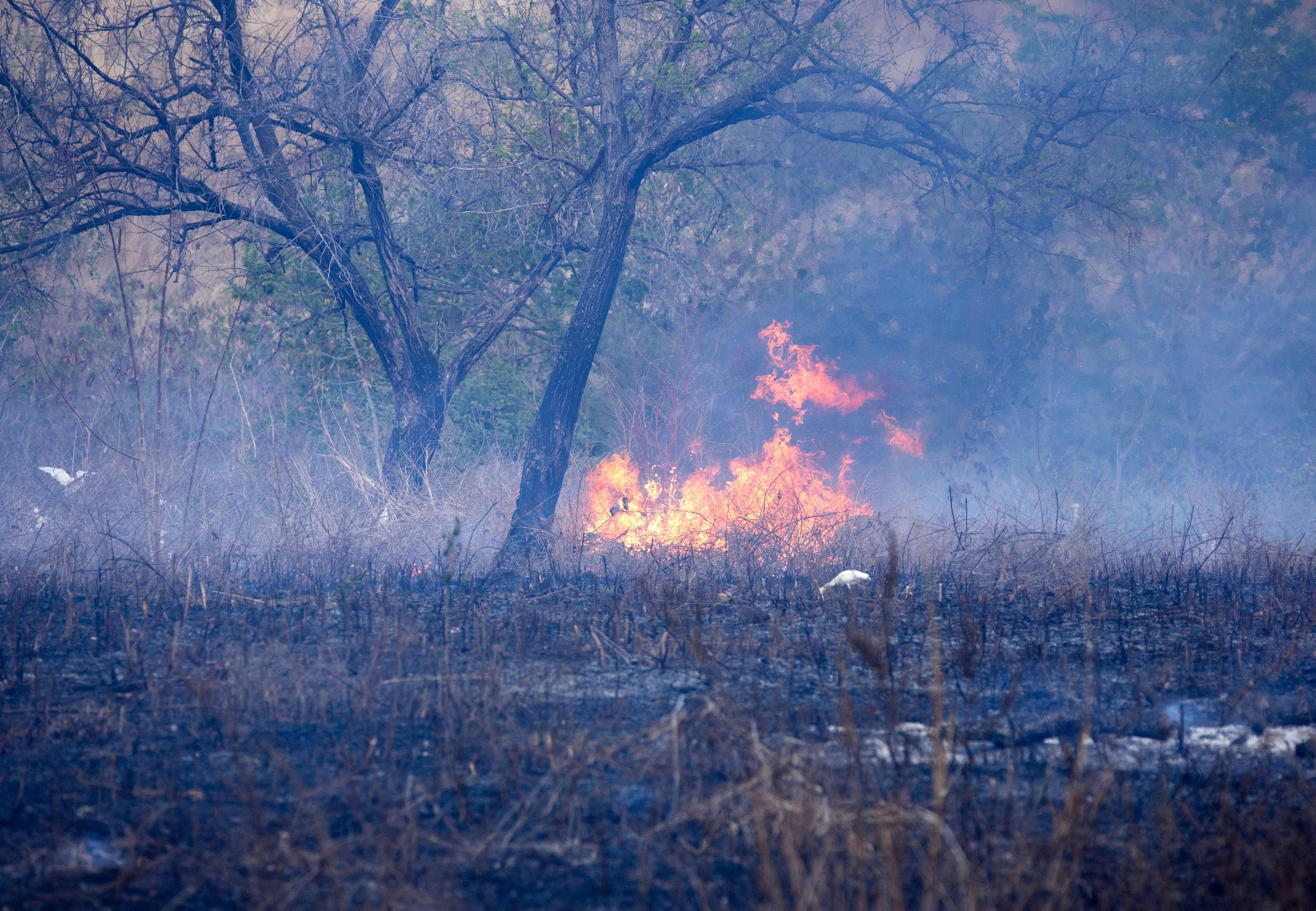
The ring-tailed lemurs' habitat is shrinking because large areas of rainforest are being burned down. This is done to make room for livestock. In addition, the often very poor population of Madagascar needs the wood from the trees for charcoal. The harvesting of special types of wood, such as rosewood and ebony, is also causing a sharp decline in the forests.
On top of that, climate change poses a major threat. Due to increasing droughts and cyclones, groups of lemurs are rapidly losing the areas where they have lived for generations.
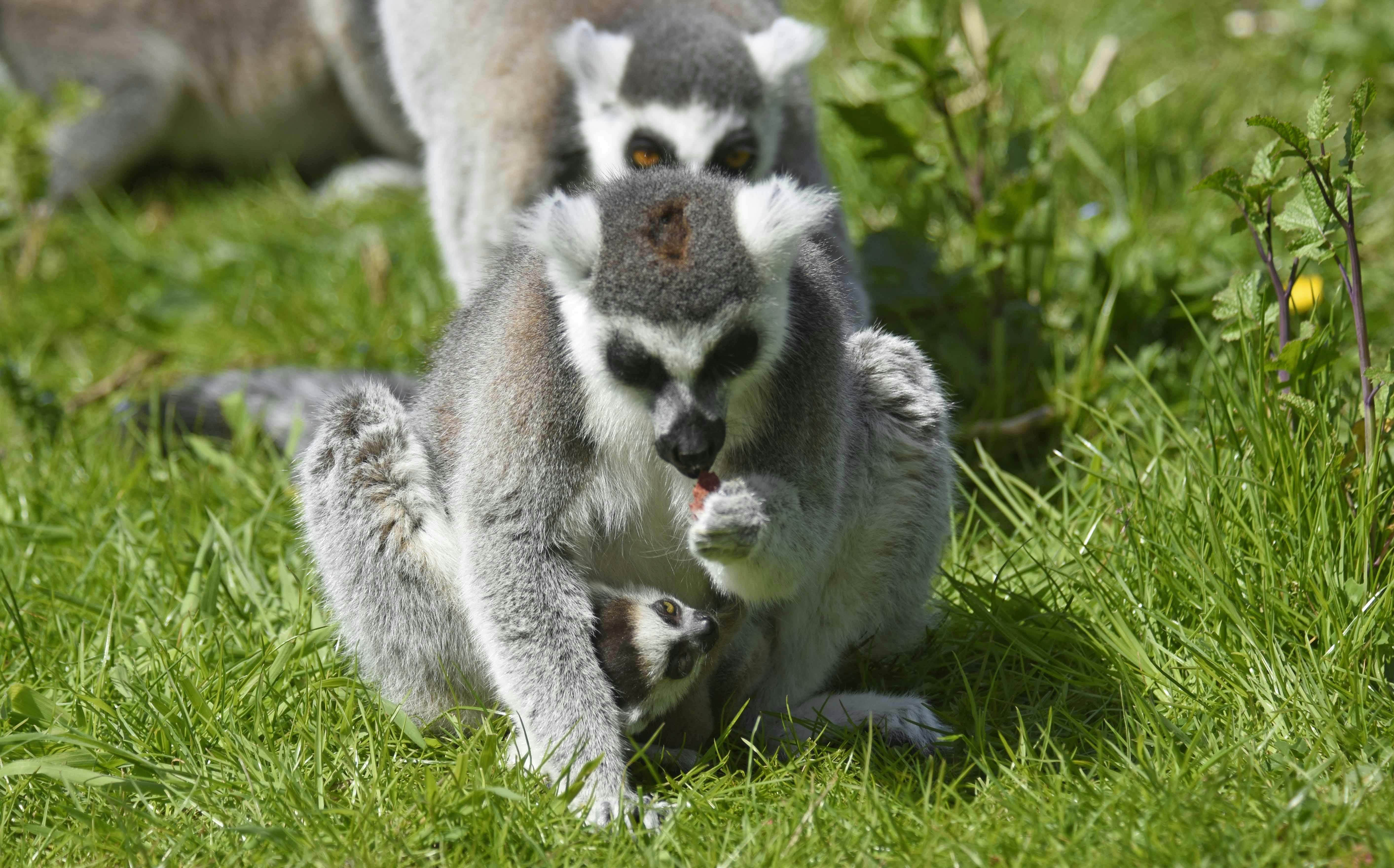
Rotterdam Zoo participates in the European ring-tailed lemur population management programme. Based on the pedigree of ring-tailed lemurs in zoos, the coordinator determines which animals are best paired with each other to produce healthy offspring. These young animals are then transferred to other zoos to form the next generation. In this way, we are building up a healthy population as a back-up for wild animals, with the ultimate goal of returning ring-tailed lemurs to their natural habitat when conditions there are favourable.