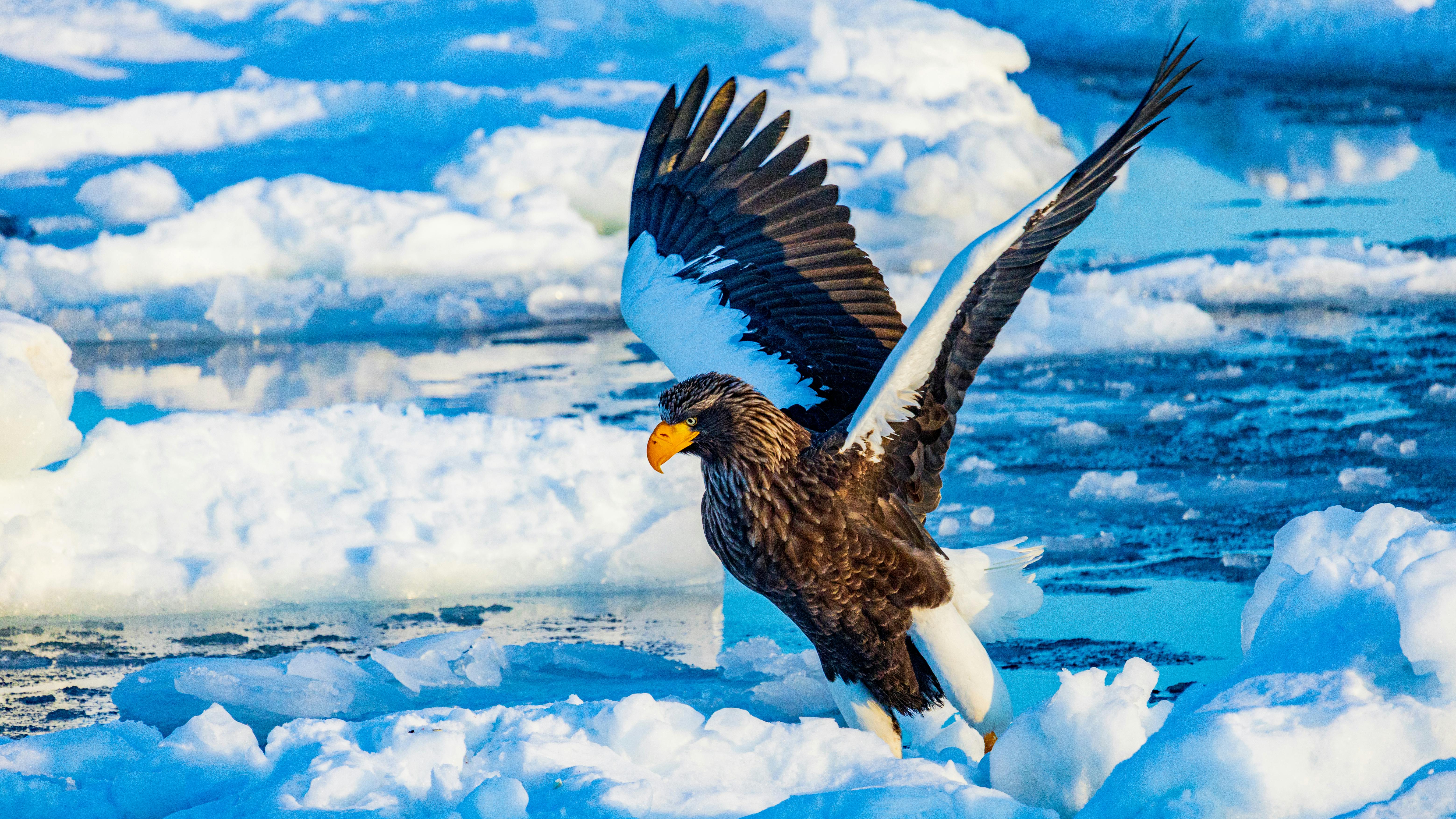
Above the cold coast of the Pacific Ocean, a giant bird of prey soars, searching for prey. Suddenly, it dives down. With its razor-sharp, curved talons, it snatches a fish from the water. The Steller's sea eagle is the largest of all sea eagles and therefore also one of the largest raptors in the world. Find out everything here about this beautiful bird.
Haliaeetus pelagicus
± 25 years
85 - 105 centimetres
♀ ± 6.8 - 9 kilograms
♂ ± 4.5 - 6 kilograms
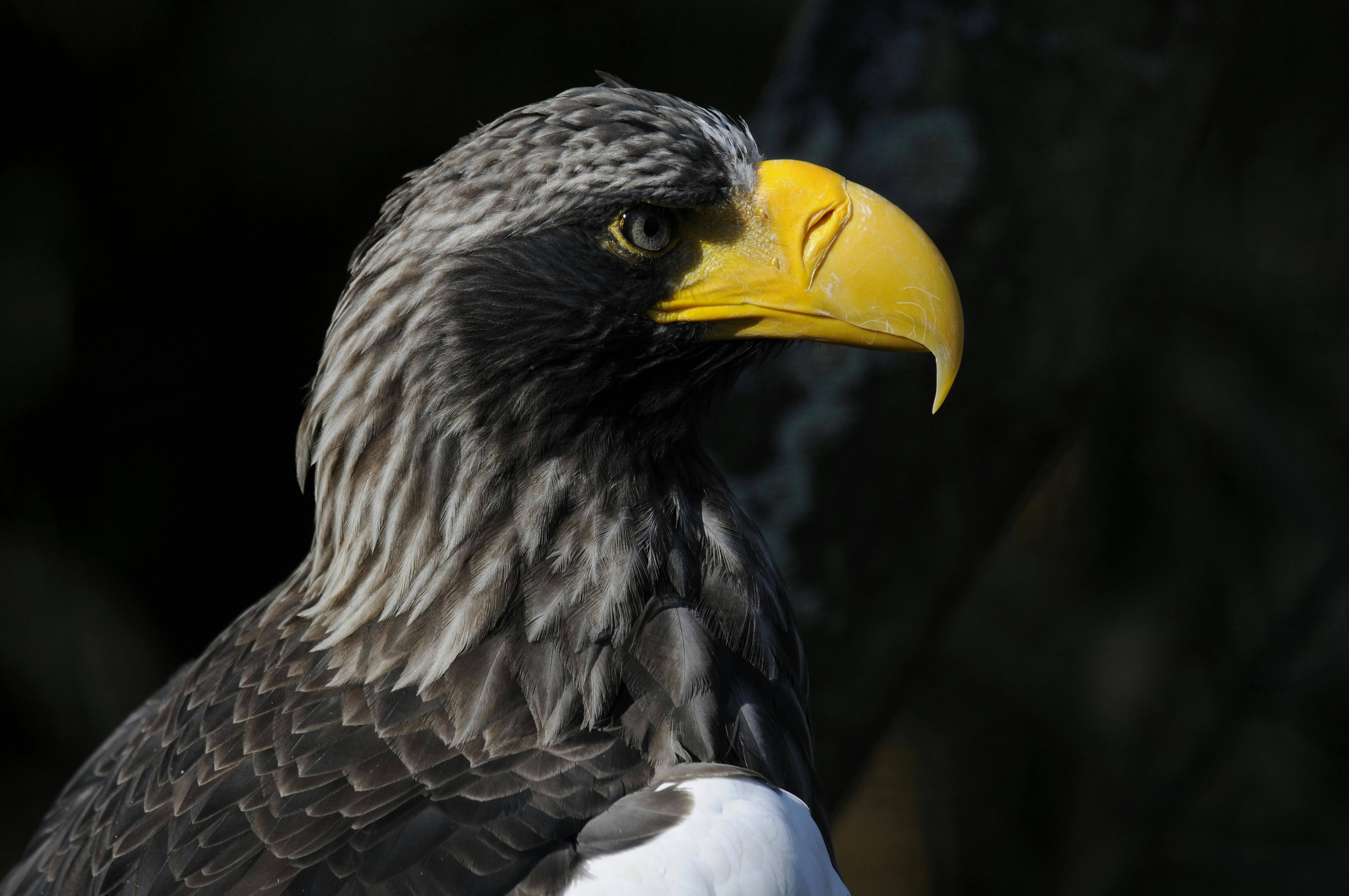
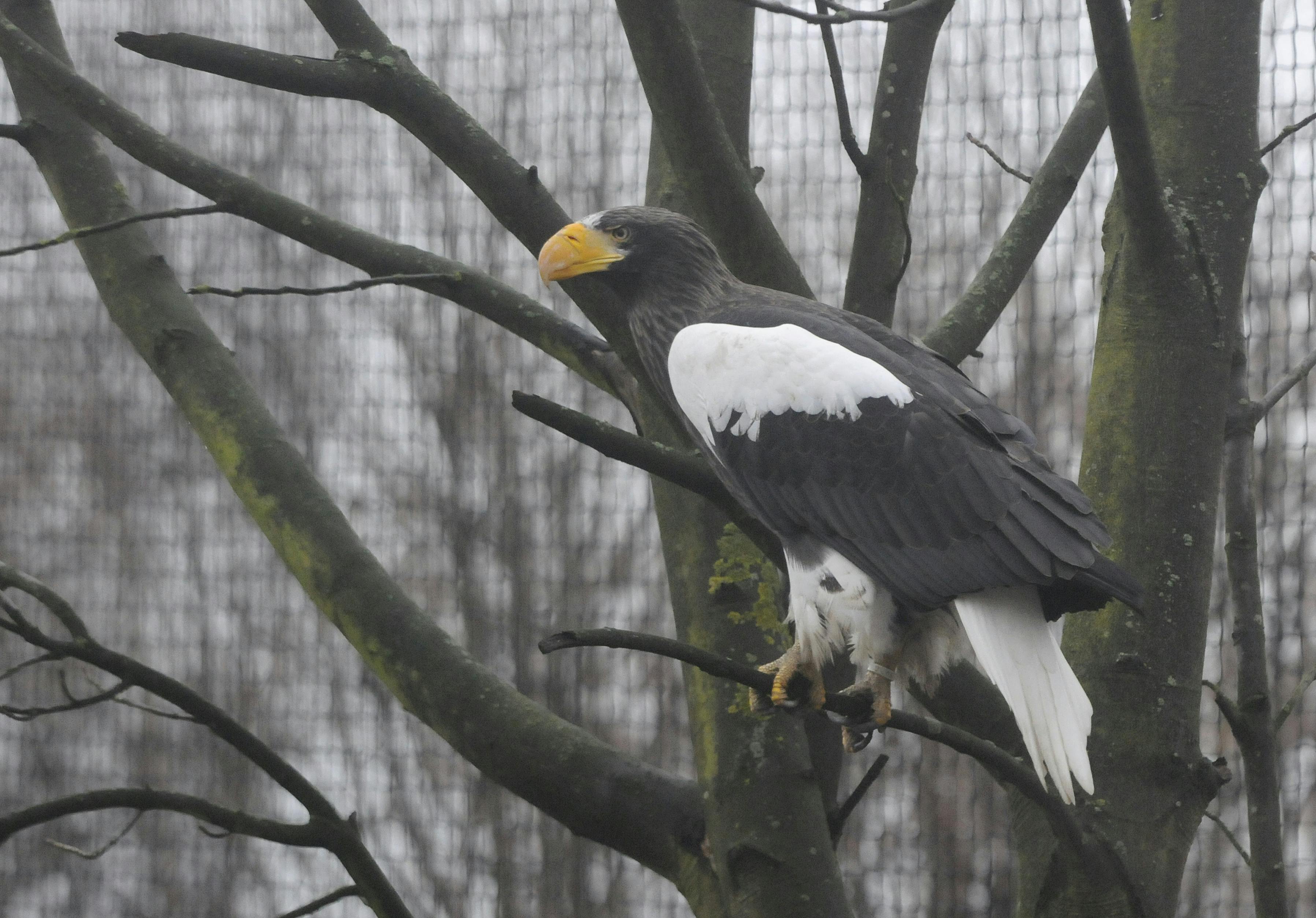
If you know what to look for, the Steller's sea eagle is difficult to confuse with any other bird. It has mainly dark brown feathers, with white shoulders, tail feathers and legs. The beak and toes are bright yellow. There is no difference in colour between males and females, but females are generally much larger than males.
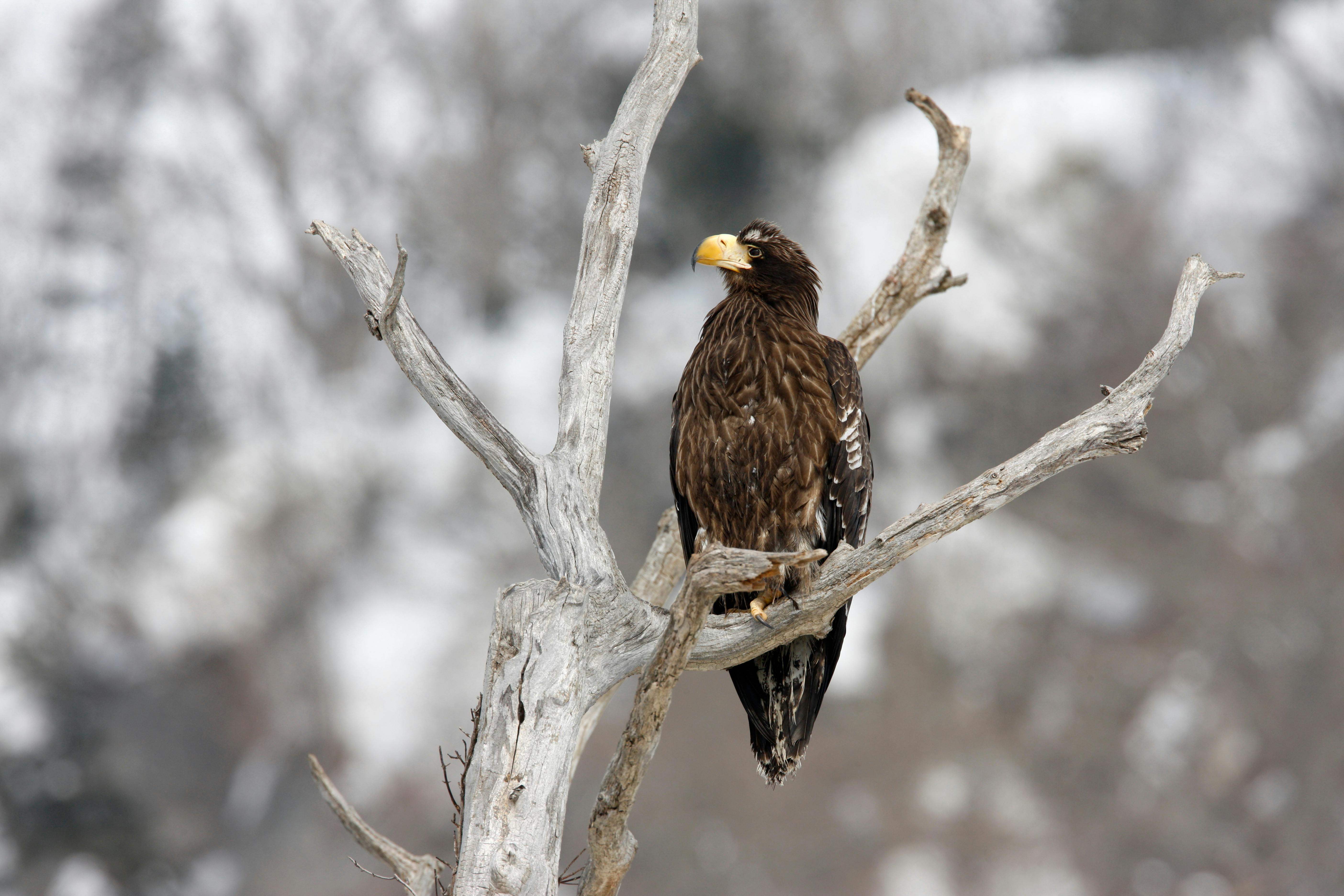
Young adult Steller's sea eagles mainly have brown feathers. They only grow their characteristic white feathers when they reach adulthood.
Steller's sea eagles live on the northern coast of the Pacific Ocean. They are mainly found in Russia, Korea and Japan. Sometimes a Steller's sea eagle crosses over to North America, but it does not occur there naturally.
These sea eagles prefer to build their nests in places where there are lots of fish, such as at river mouths. They are also sometimes found further inland near rivers and lakes.
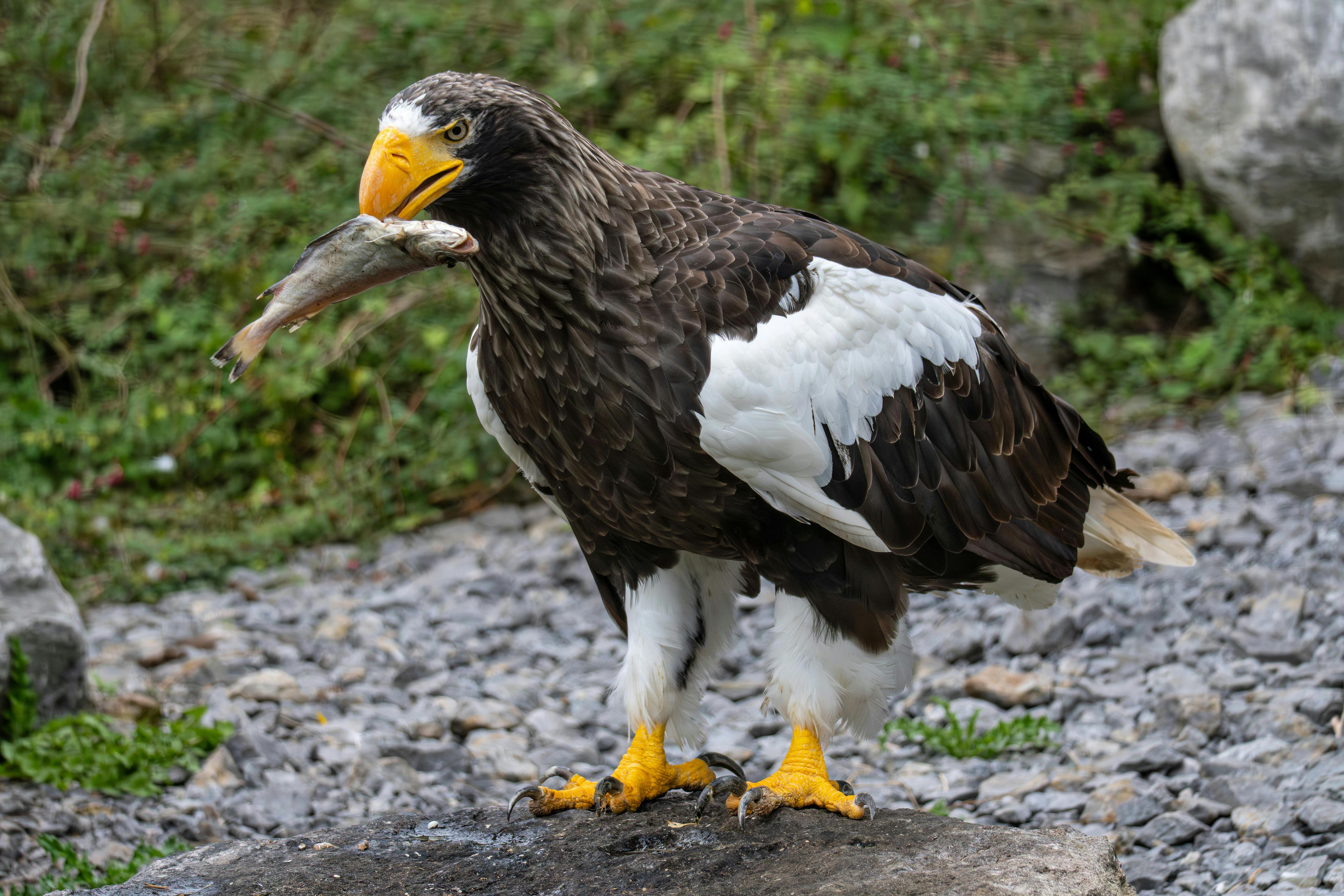
A Steller's sea eagle loves nothing more than fish. Its favourite kind is salmon. When these fish swim up the river to reproduce, the sea eagle easily snatches one with its sharp talons.
When fish are not available, the Steller's sea eagle also hunts other animals, such as gulls, hares and even arctic foxes! In addition, it will not pass up a dead seal or deer. As a scavenger, it scores a free meal in this way.
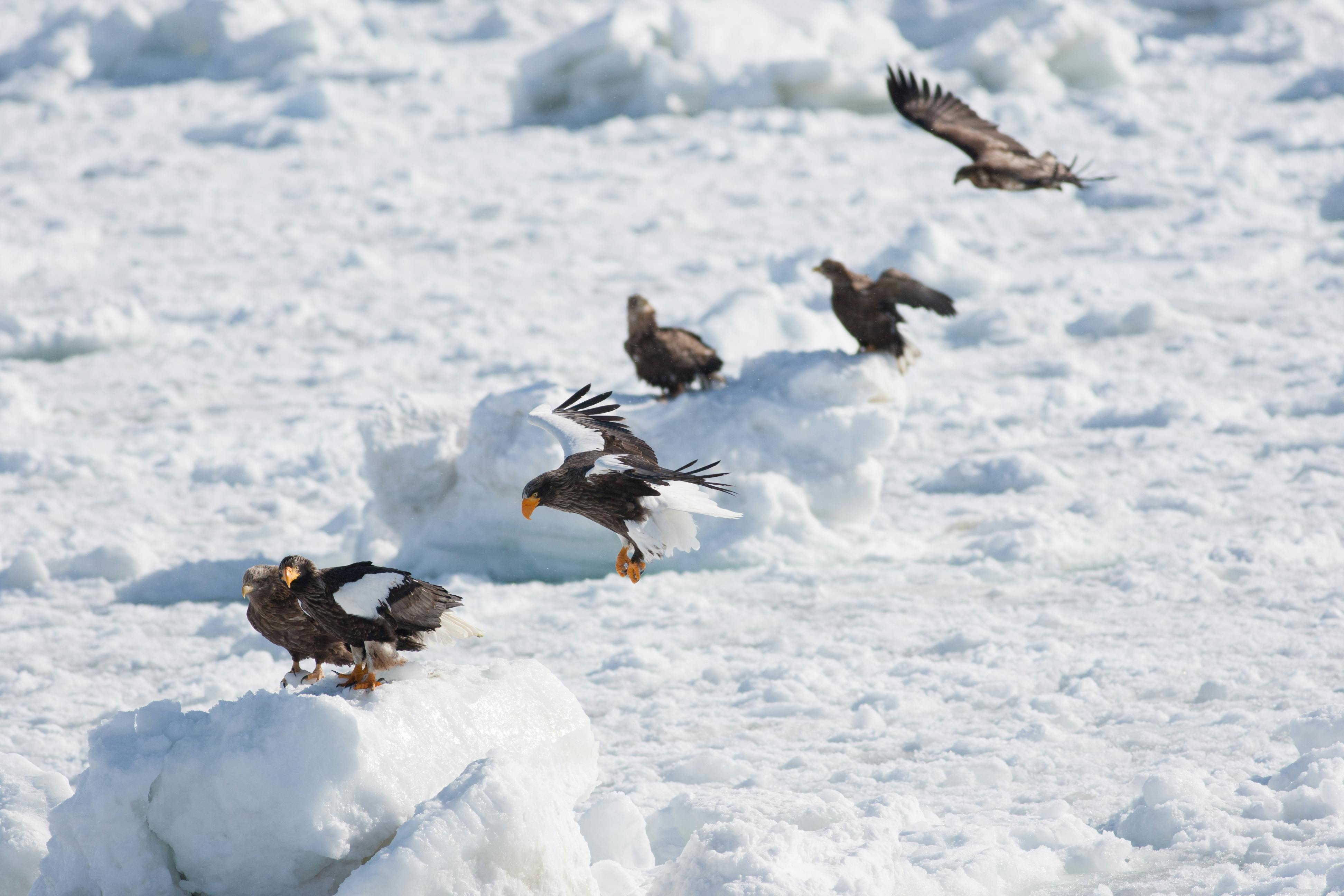
Depending on the season, Steller's sea eagles prefer to live alone or together. During mating season and when raising their young, the parents stay together as a couple. Together, they fiercely defend their territory against other sea eagles. Outside of this period, they usually live alone, but sometimes encounter each other in places where there is plenty of food.
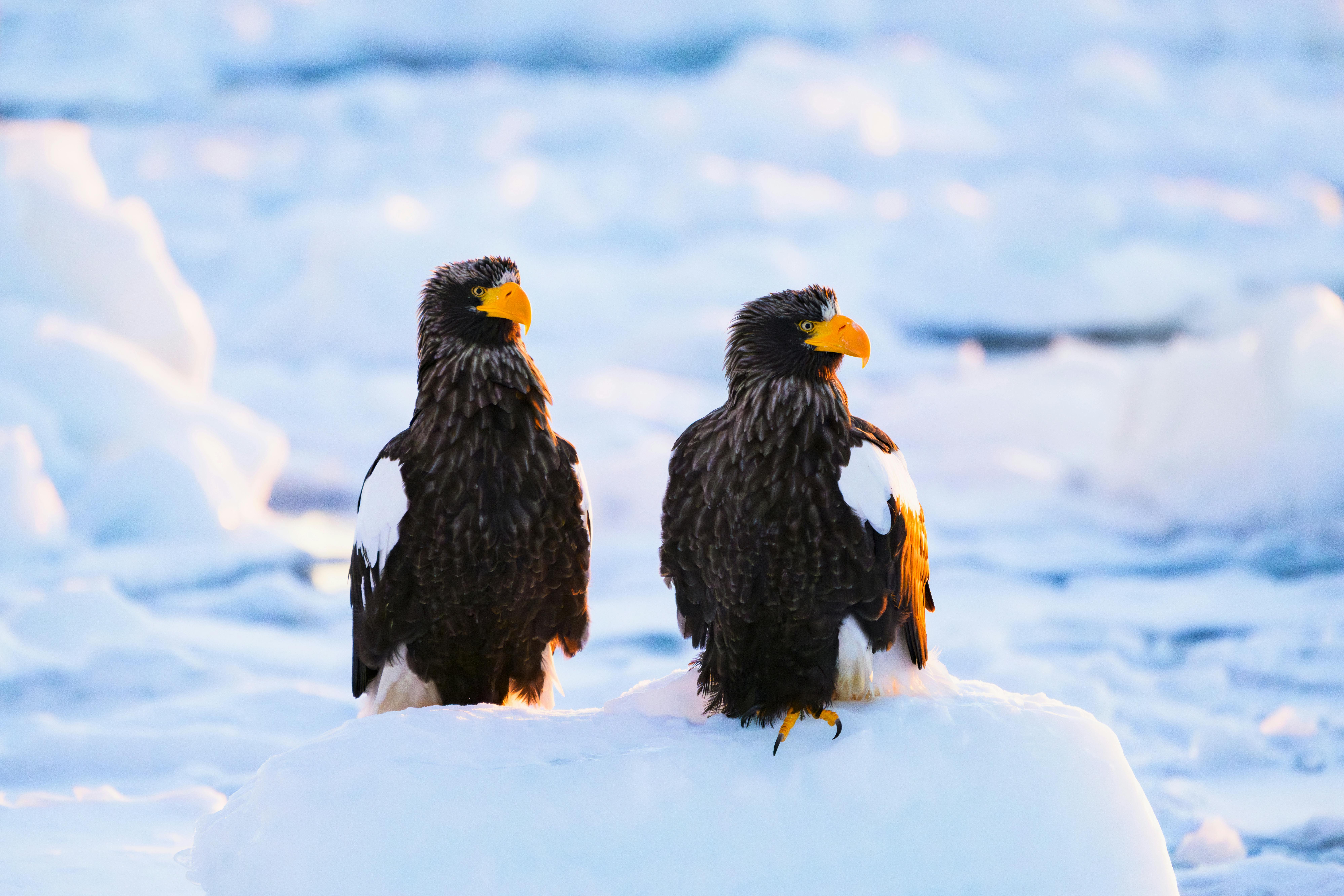
Steller's sea eagles usually mate at the end of winter. To impress each other, they fly around each other like acrobats and screech like loud seagulls. Partners build nests together in trees and on rocks near the water. The female usually lays her eggs in April. After that, both parents take turns incubating the eggs. Many pairs maintain more than one nest and alternate which nesting site they use each year.
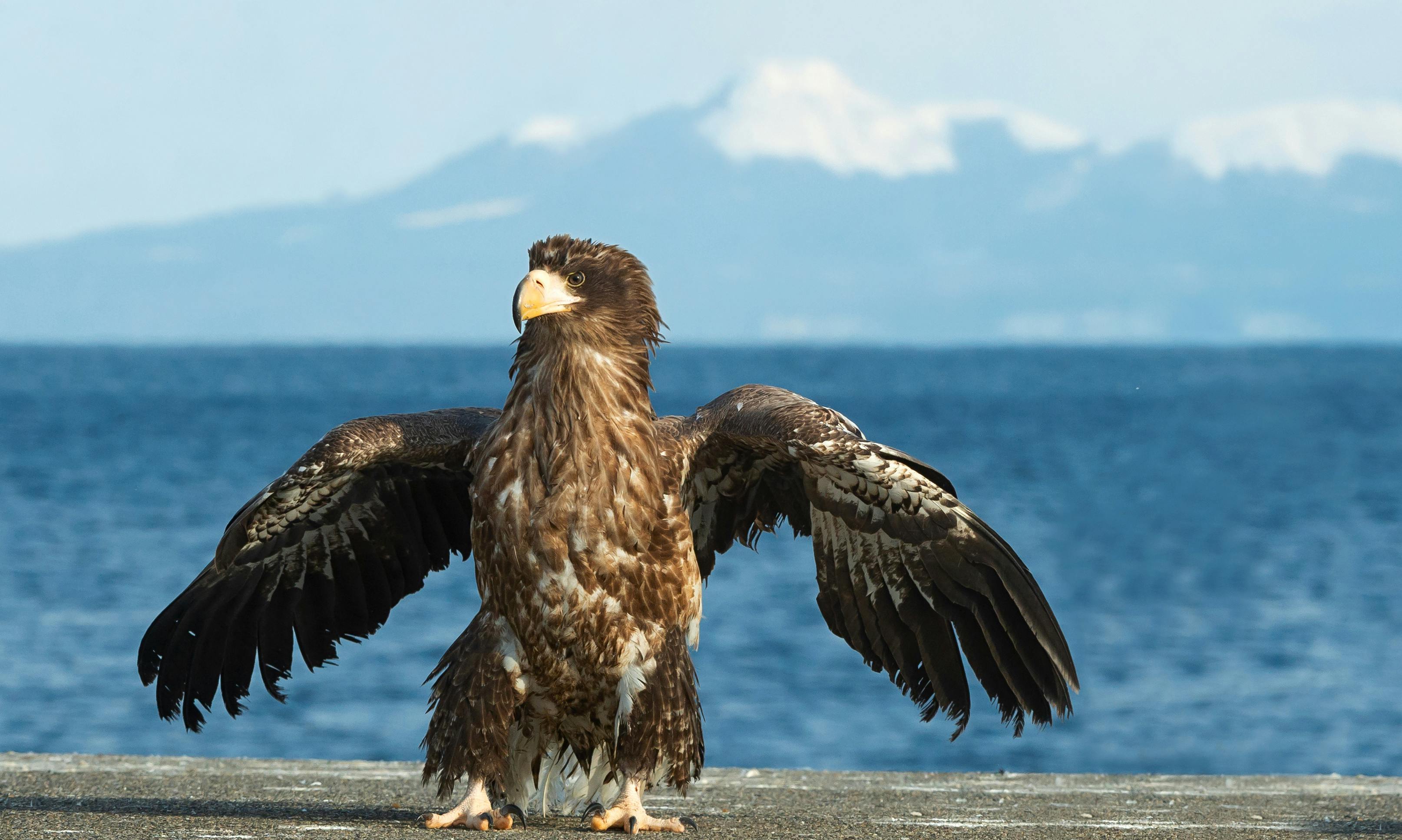
Usually, one to three white chicks hatch from their eggs at the end of May. Their down feathers quickly turn brown. These chicks are completely dependent on their parents for food and warmth in the cold wind. The mother usually stays on the nest to feed the young while the father hunts, although the parents sometimes switch roles.
The life of a young eagle is not without danger. Disease, hunger and nest predators greatly reduce the chicks' chances of survival. Usually, only one of the chicks survives to the moment of fledging.
Steller's sea eagles are large predators that are high up in the food chain. However, they share their habitat with other hunters, such as the white-tailed eagle. Sometimes these raptors attack each other to fight over prey.
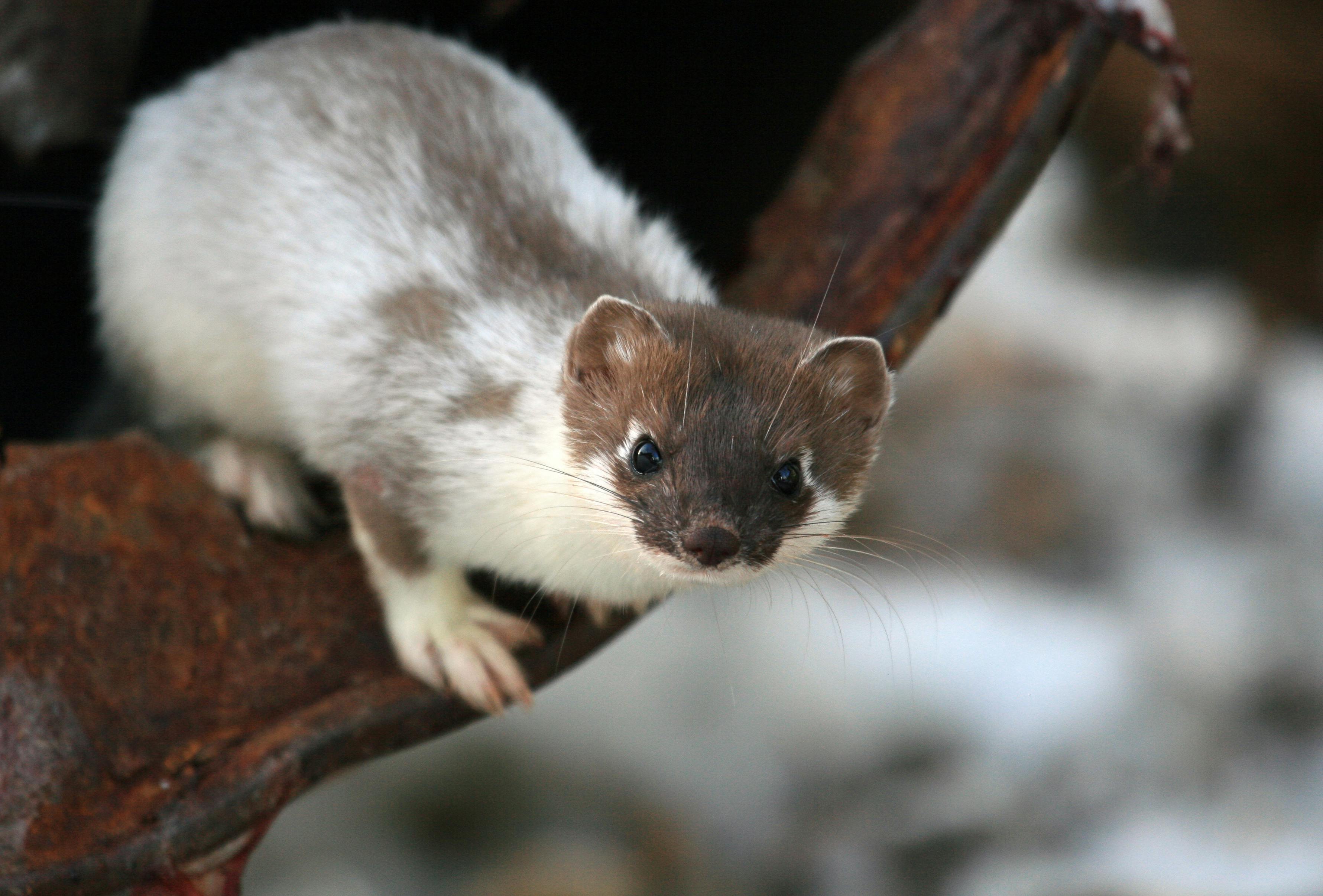
In addition, brown bears pose a major threat to both adult and young sea eagles. The bears sometimes climb trees to snatch young sea eagles from their nests. Other common nest robbers are sable martens and stoats.

Steller's sea eagles are not doing well in the wild. Overfishing has made their favourite food harder to find. As a result, sea eagles in Japan are increasingly eating shot deer. Unfortunately, the lead bullets used by hunters mean that the risk of lead poisoning is high. Industrial and agricultural pollutants that end up in the water are also very dangerous for sea eagles.
In addition, the habitat of Steller's sea eagles is disappearing due to deforestation and the construction of dams in rivers. For all these reasons, the Steller's sea eagle is classified as “Vulnerable” on the international red list. Fortunately, this bird of prey is a protected species in both Japan and Russia.
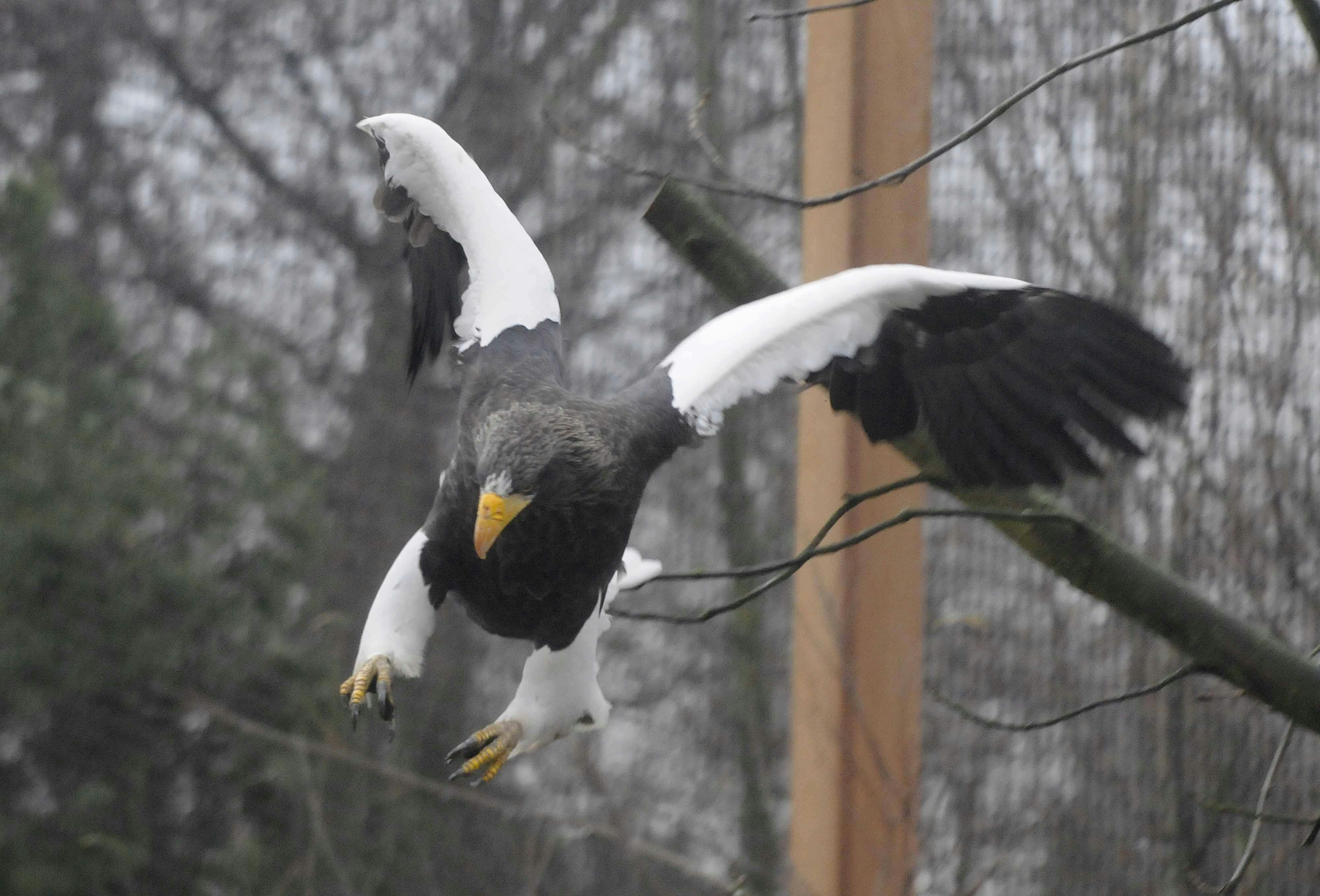
Rotterdam Zoo participates in the European population management programme for Steller's sea eagles. Based on the pedigree of sea eagles in zoos, the coordinator determines which animals are best paired with each other to produce healthy offspring. These young birds are then transferred to other zoos to form the next generation. In this way, we are building up a healthy population as a reserve for wild animals, with the ultimate goal of returning sea eagles to their natural habitat when conditions are favourable.