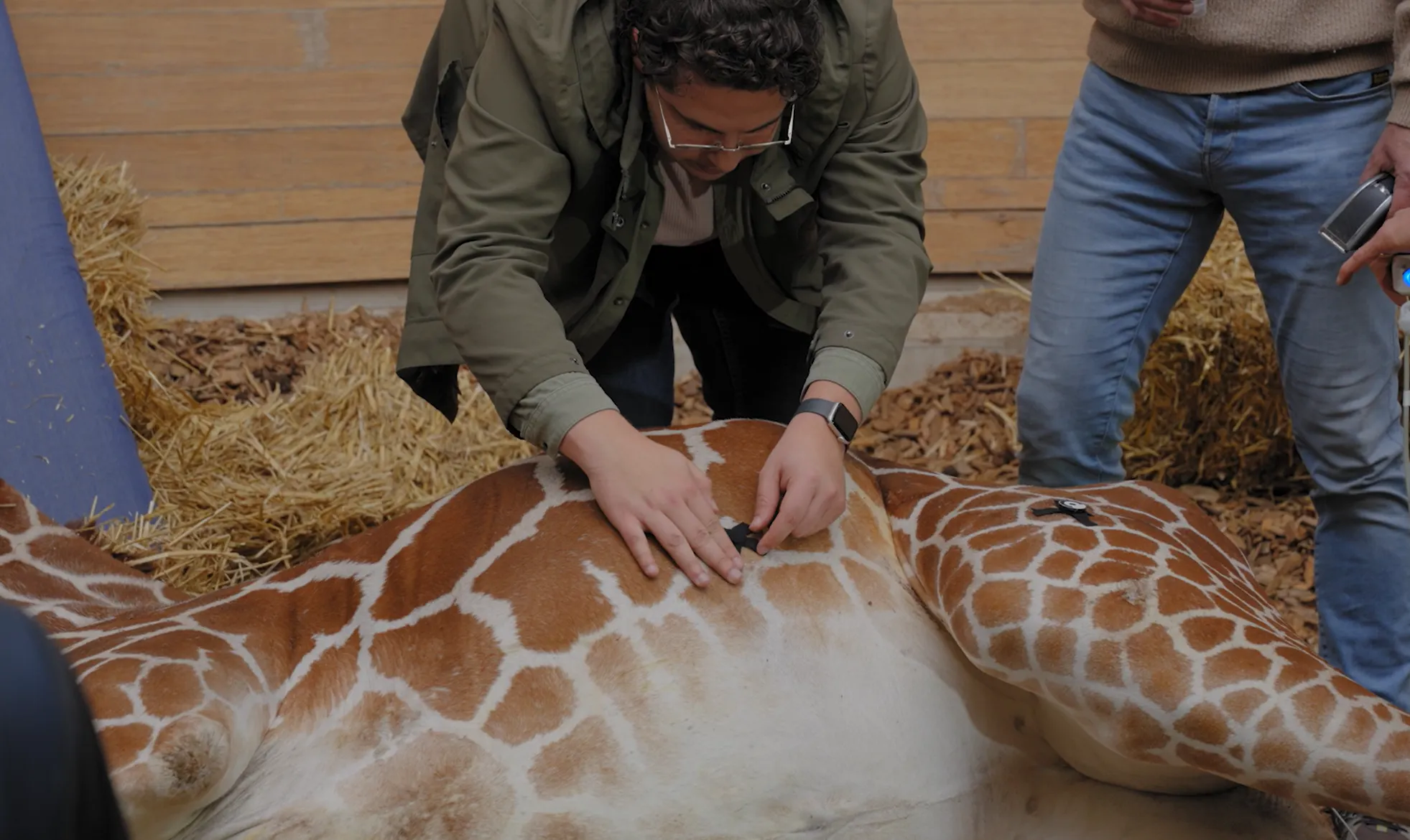
This week giraffe Khaleesi was euthanized at Rotterdam Zoo. The female, who was almost seven years old, had been suffering from health problems for some time and there was no prospect of improvement. However, the animal, which was born in Rotterdam, is set to play an important role in the global fight against poaching.
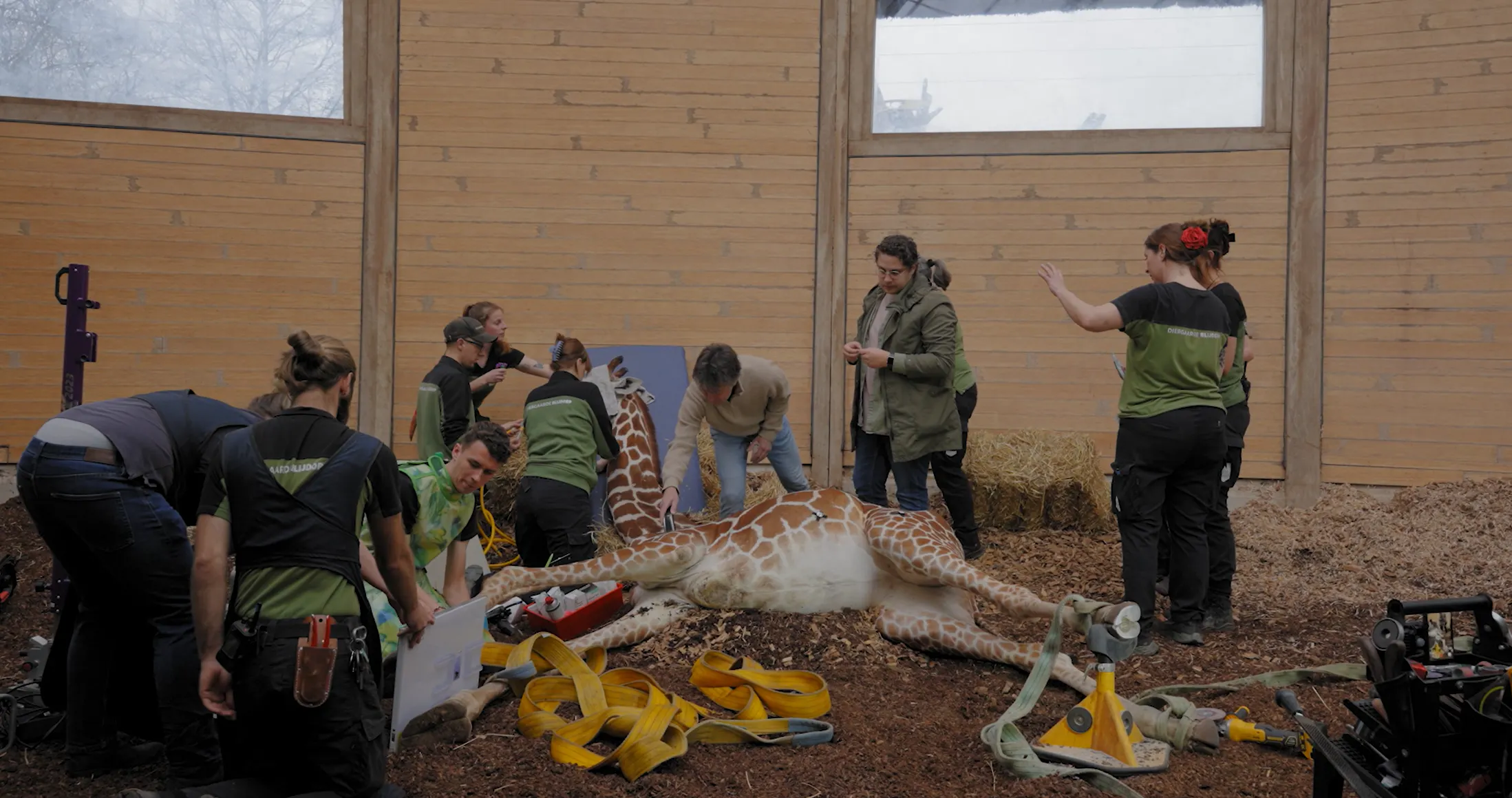
For many animals poaching remains one of the greatest threats. It is not only rhinos and elephants that fall prey to poachers; giraffes are also hunted on a massive scale. Worldwide efforts are made to fight these crimes. To increase the chances of catching poachers, it is vital to act quickly. That is why work is underway on a method to determine, among other things, how long ago an animal died by measuring its body temperature. Immediately after the Rotterdam giraffe’s death, PhD researcher Thomas Shehata therefore attached temperature sensors to the animal’s body. A 3D scan was also carried out.
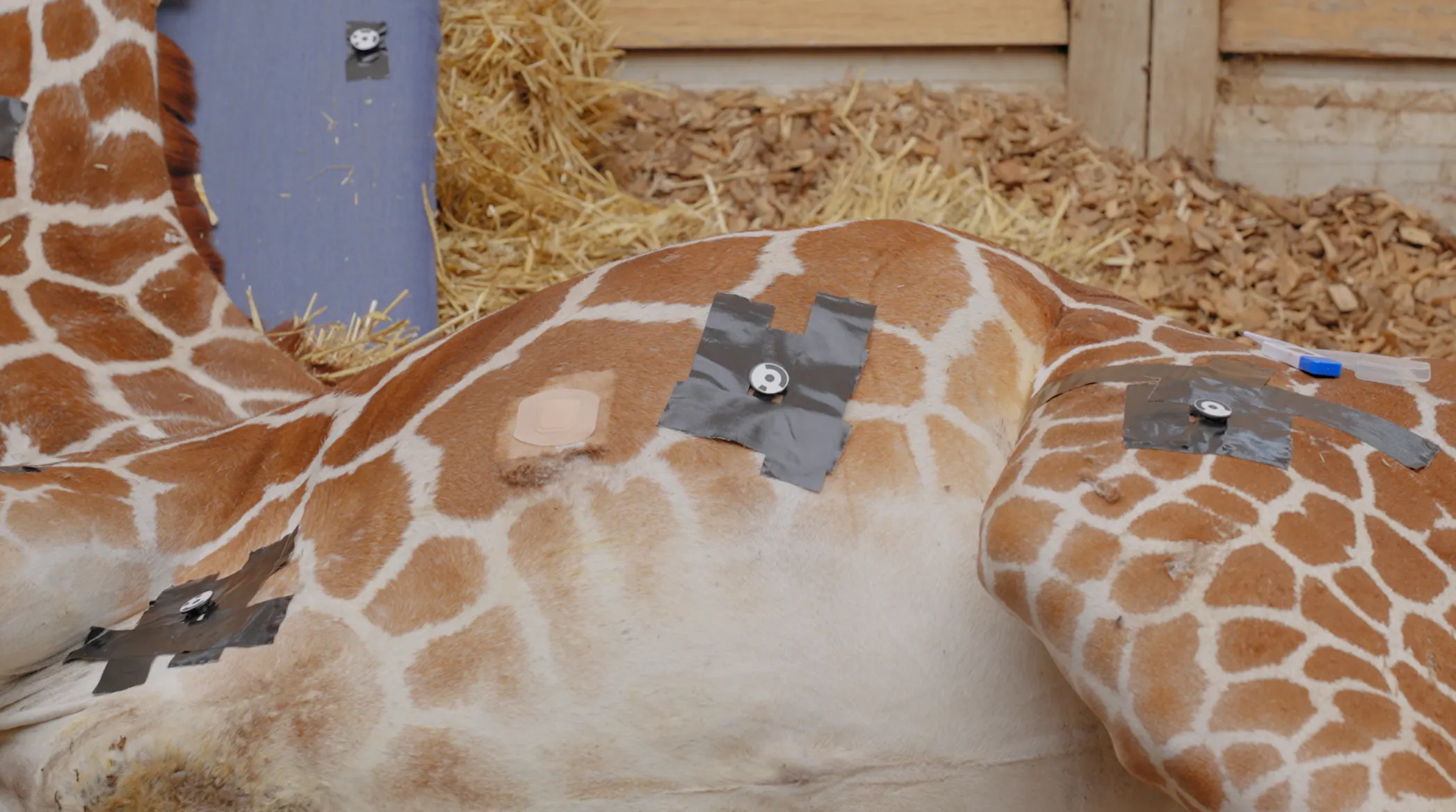
The research project by Rotterdam Zoo, Amsterdam UMC, the University of Cape Town and the Wildlife Forensic Academy combines two interrelated studies: mapping and modelling post-mortem body cooling based on anatomy and thermal properties and determining the age of bloodstains using color changes.
Accurately determining the time of death is essential for reconstructing forensic timelines and linking them to, for example, CCTV footage, alibis and witness statements. This enables events surrounding a crime to be better verified and reconstructed.
By adapting and validating existing human forensic techniques for use on animals, this project contributes to stronger evidence in criminal cases and more effective enforcement against wildlife crime. The result: better protection for both wild and domesticated animals.
In this way, after her death, Khaleesi helps her fellow animals in the wild to survive