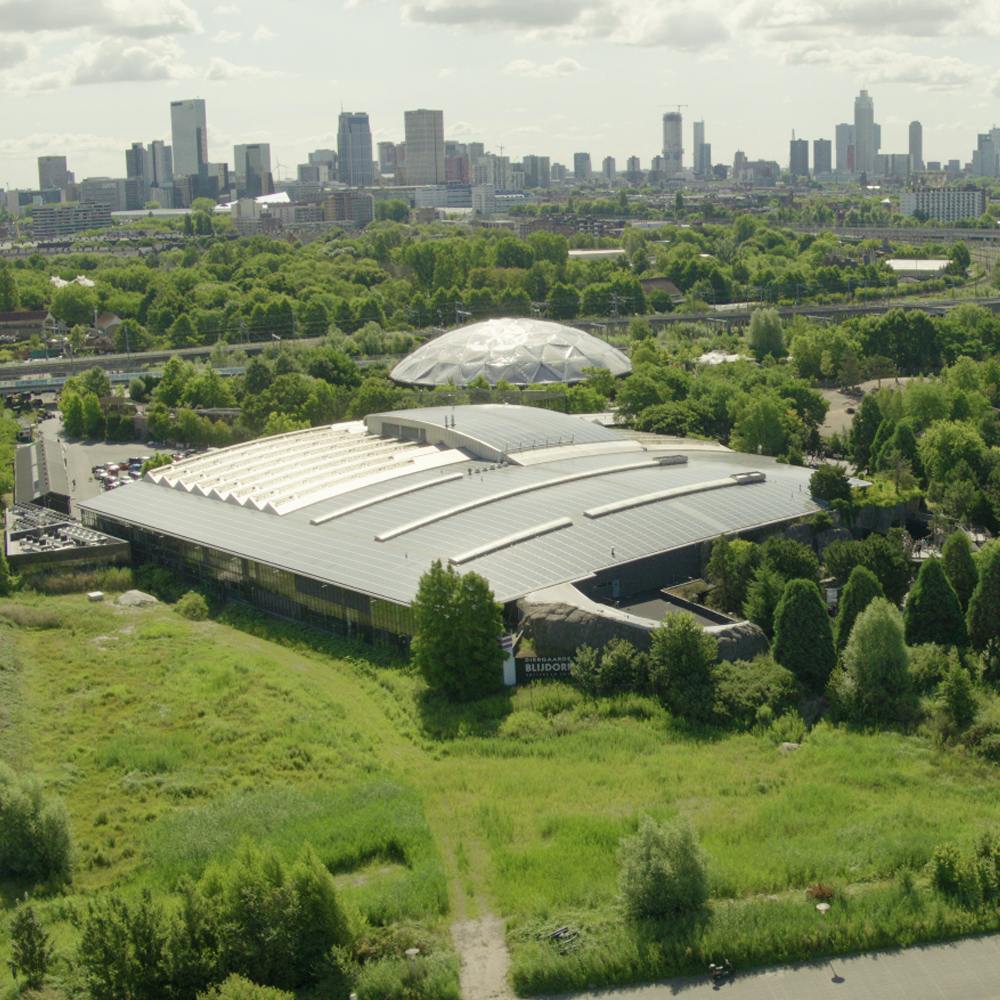
At Rotterdam Zoo, we aim to use sustainable energy as much as possible. A large part of our lighting has been replaced with LED lighting. We also generate our own energy, including through solar panels on the roof of the Oceanium, and we heat the Crocodile River using a wood chip boiler.
Rotterdam Zoo is a frontrunner within the zoo world when it comes to introducing LED lighting. For this reason, we participated in the Illuminate project, a European initiative aimed at reducing energy consumption and costs.
At ten different locations, traditional lighting was replaced, involving more than one thousand lamps. As a result, energy use was reduced by thirty percent, equivalent to approximately 170,650 kWh. This equals the annual energy consumption of nearly fifty households and results in savings of around 38,000 euros per year. This project shows how Rotterdam Zoo becomes more sustainable while also reducing costs.
Since January 2004, a large solar power installation has been located on the roof of the Oceanium. At the time, it was the largest solar energy installation within a built up urban area in the Netherlands. The roof contains 3,400 solar panels, generating enough electricity to supply more than one hundred households.
In a zoo, animal welfare always comes first. The solar energy generated is therefore directly used within the Oceanium to cool the penguin enclosure. Due to its visibility, the solar roof also has an important educational function. To further increase solar energy production, the solar roof will be completely replaced in 2024. After this upgrade, Rotterdam Zoo will be able to generate twice as much solar energy as with the current installation.
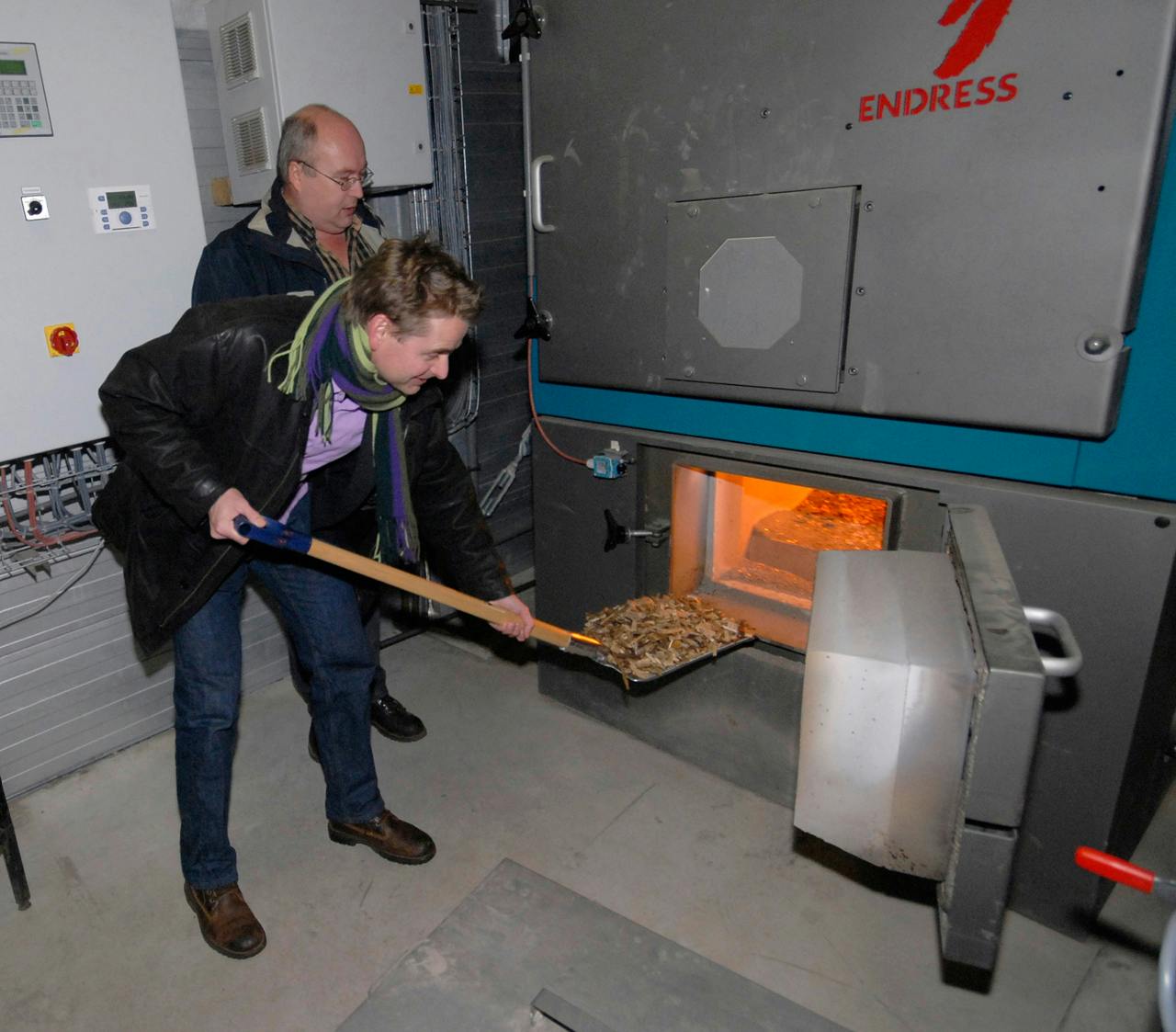
The crocodiles at Rotterdam Zoo stay pleasantly warm thanks to the wood chip boiler located next to the Crocodile River. This heating system uses wood chips instead of fossil fuels, which is better for the environment.
The wood chips originate from sawmills in the Veluwe region and pruning activities carried out by the Municipality of Rotterdam. Trees are responsibly harvested for the sawmills, and leftover wood from this process is reused in the boiler at Rotterdam Zoo. The boiler has a capacity of 350 kilowatts and uses approximately 1,500 cubic metres of wood chips per year.
The energy produced is comparable to the average energy consumption of ninety households, or about 108,000 cubic metres of natural gas. In this way, Rotterdam Zoo significantly reduces its use of fossil fuels.
The wood chip boiler is also relatively clean in terms of emissions. It has a combustion efficiency of ninety percent, resulting in minimal smoke and fine particulate matter. Any gases that are released are filtered through a cyclone cleaner before being emitted.
Rotterdam Zoo also reduces CO₂ emissions through the use of thermal energy storage. In winter, cold air is stored and reused in summer. In summer, the process is reversed, with warm air captured and reused during winter.
With the current system, the Oceanium and the entire entrance area, including restaurant De Lepelaar, can be heated or cooled. When operating at full capacity in the future, this system will reduce CO₂ emissions by approximately 751 kilograms per year. This is equivalent to the annual CO₂ emissions of one hundred households.
Rotterdam Zoo operates a fully electric vehicle, the BMW i3. In addition to not using fossil fuels for driving, this vehicle was produced with a strong focus on sustainability. The energy used during production comes entirely from wind energy. Many components are made from renewable materials, and thirty four percent of the upholstery consists of recycled plastic bottles.
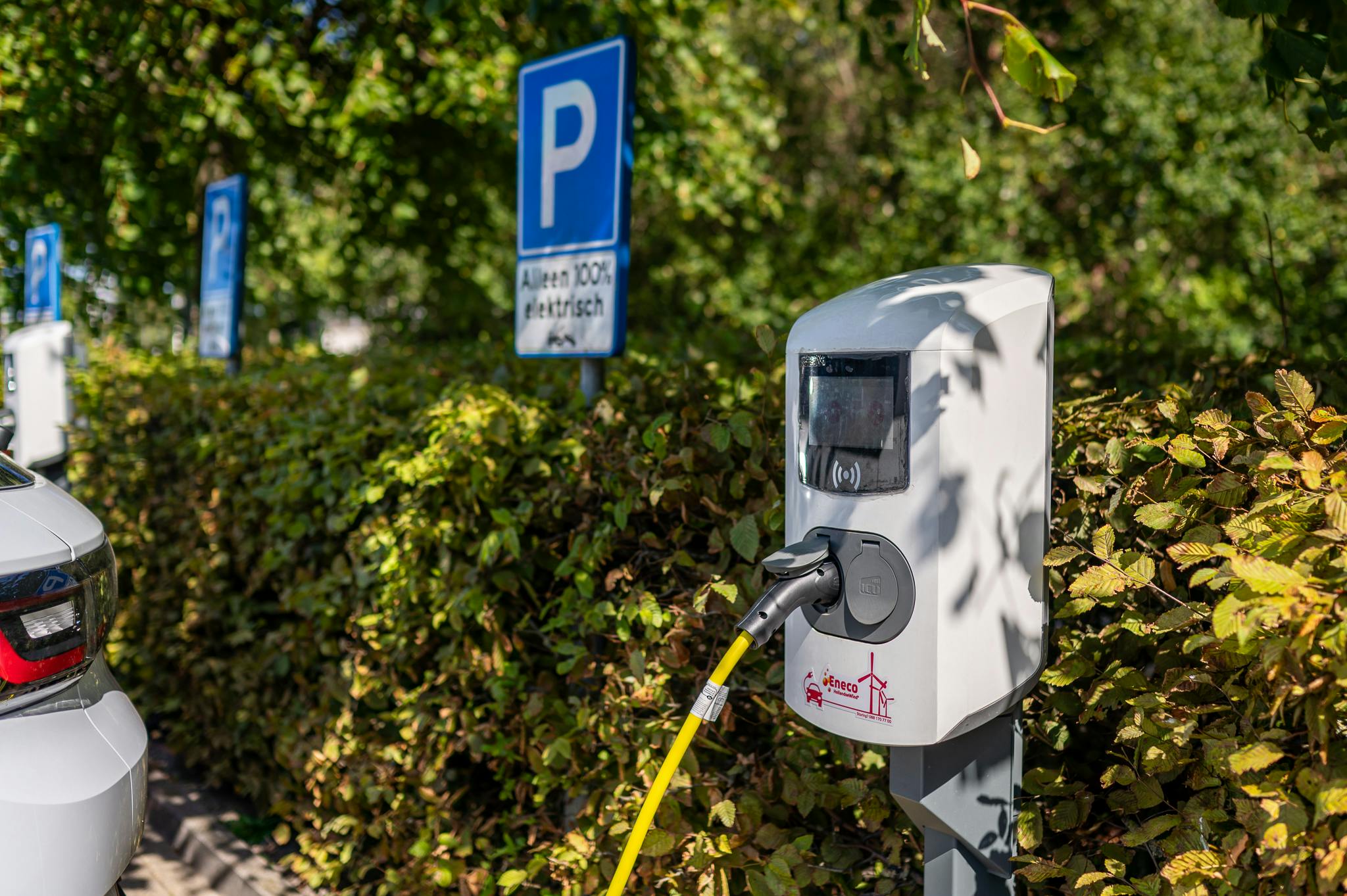
Beyond the zoo itself, Rotterdam Zoo also aims to reduce CO₂ emissions by encouraging sustainable visitor behaviour. The zoo provides ten electric vehicle charging points where visitors can recharge their cars. This has been made possible in cooperation with the Municipality of Rotterdam. In 2024, additional charging points will be installed. This allows visitors to return home worry free after a day at the zoo.
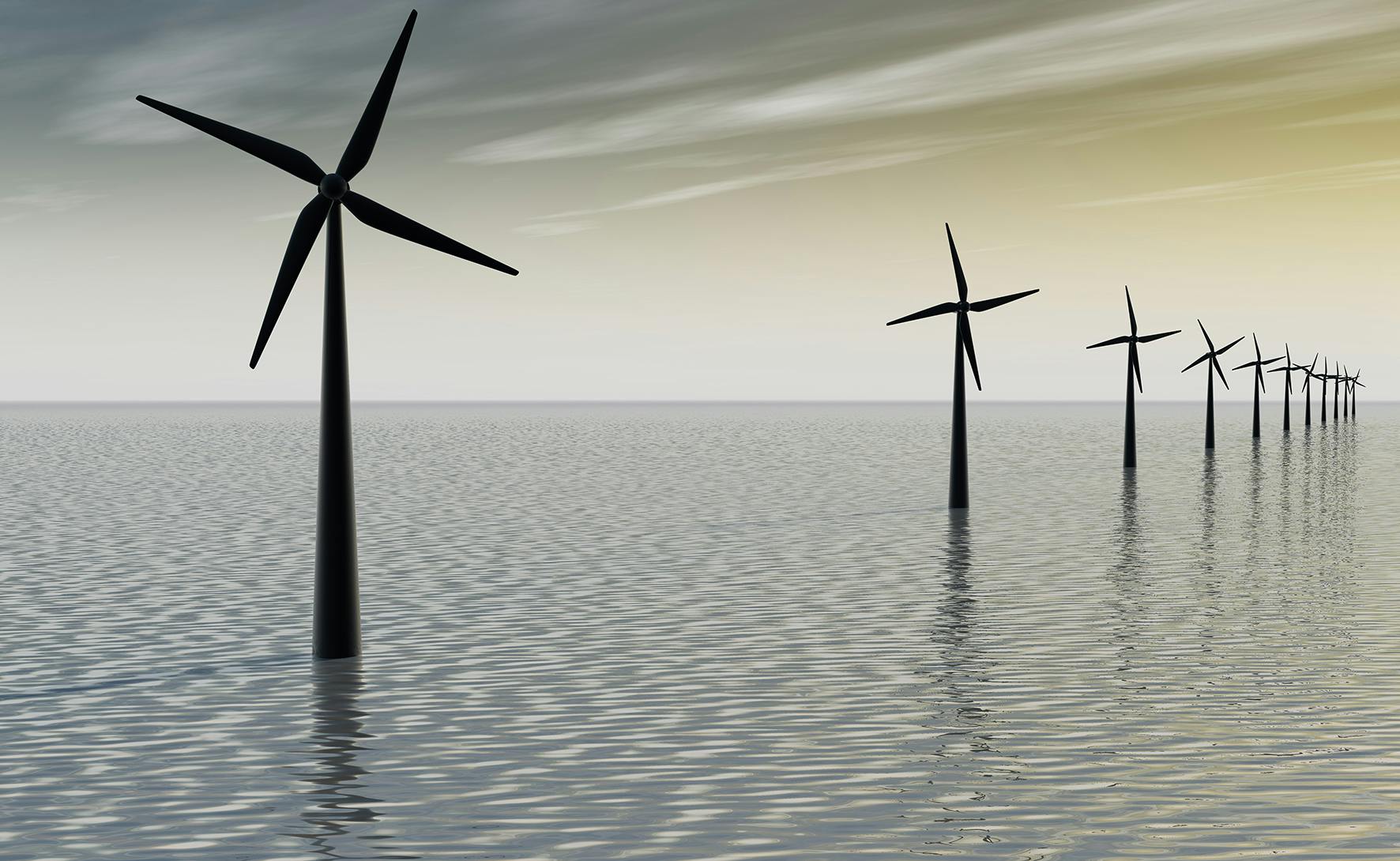
The energy currently purchased by Rotterdam Zoo consists of solar energy generated within Europe. From 2024 onwards, the zoo will transition to more local energy sources, specifically wind energy generated in Rotterdam.
Any gas used is fully compensated through investments in CO₂ reduction projects. Another important goal is for Rotterdam Zoo to become fully climate positive within ten years. This means removing more greenhouse gases from the atmosphere than the zoo emits.